Get Full Government Meeting Transcripts, Videos, & Alerts Forever!
Get email alerts on the K3 Literacy Review topic
No spam. Unsubscribe anytime.
Darien committee advances K–3 literacy review; recommendation and comparison requested for May
Summary
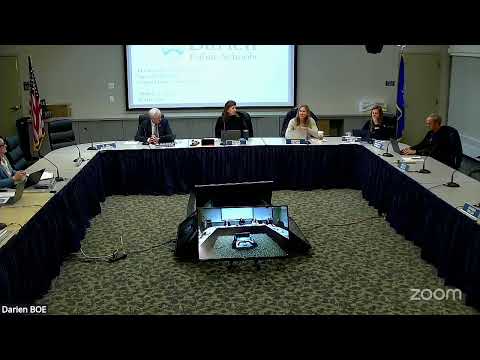
District teachers and administrators updated the curriculum committee on the K–3 literacy core review process and pilot programs during the committee’s special meeting on Wednesday, March 5.
District teachers and administrators updated the curriculum committee on the K–3 literacy core review process and pilot programs during the committee’s special meeting on Wednesday, March 5.
Staff described a year‑long review that included pilot classrooms, student AIMSweb and writing data, and an evaluation tool adapted from the state process. Devon Ciani, a third‑grade teacher serving on the core review team, said teachers felt included in the review and valued being able to provide classroom input.
The review looked at multiple programs and materials. Staff discussed “Into Reading” (HMH) pilots, Teachers College‑aligned units and other resources (referred to in discussion as “WordLove” and new TC units). The district met with state reviewers and considered an external partnership with TNTP (The New Teacher Project); administrators said they chose not to expand external observation this year in order to preserve internal capacity and trust.
Pilot teachers reported that student assessments — including on‑demand writing samples and winter AIMSweb results — did not show clear differences in growth between the materials tested. “We were very pleased to find that regardless of the materials that we were using, our kids were performing well,” an administrator said. The team noted strengths and areas for growth in each program: vocabulary and grammar features in Into Reading, engagement and gestural supports in WordLove, and varied small‑group plans in new Teachers College units.
Staff outlined the decision‑making process: a smaller subgroup of the core review team (administrators and classroom teachers representing all five elementary schools) will synthesize written and oral feedback, student data, and survey responses; that subgroup will use a decision protocol and present a recommendation to the curriculum committee on May 7 and to the full board on May 13. Committee members requested a concise side‑by‑side comparison (a one‑page table) of program components, strengths and weaknesses for board review.
Discussion included how a core program should serve the general population while identifying when specialized instruction is needed. Board members asked whether adopting a core program could reduce special education referrals; administrators said that high‑quality core instruction is important but that specialized interventions and special education remain necessary for some students. Staff also discussed implementation needs such as professional learning time and coaching capacity.
Administrators described next steps: focus groups at each school, surveys, further analysis of student data (including writing samples), and a subgroup synthesis to be used in the May recommendation. No formal decision or vote was taken at the meeting.