Get Full Government Meeting Transcripts, Videos, & Alerts Forever!
Get email alerts on the Hoa Solar Access topic
No spam. Unsubscribe anytime.
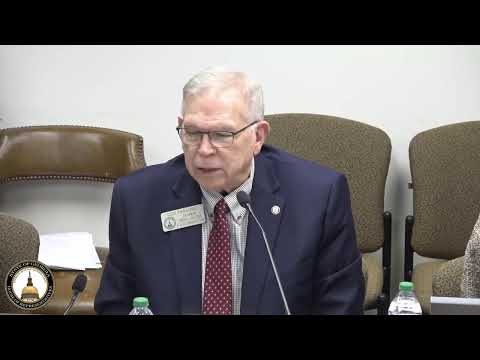
Committee hears bill to limit HOA bans on solar panels; members raise concerns and keep measure in committee
Summary
Representative Lehi presented House Bill 389 to prohibit homeowners associations from broadly banning solar panels; the subcommittee held a hearing, members raised questions about private covenants and litigation costs, an industry group testified in opposition, and the bill was left in committee for further work.
Representative Lehi presented House Bill 389 to the House Energy, Utilities & Telecommunications Subcommittee, proposing to prohibit homeowners associations (HOAs) and property owners associations (POAs) from blocking a homeowner's use of solar panels while still permitting HOAs to refuse a particular panel that "doesn't fit the aesthetic of the community" or is not on the home's roof or behind a privacy fence.
"Currently, there are over 2,000,000 people who live in the pseudo government structures called HOAs or POAs," Representative Lehi said while explaining the scope and motivation for the bill. He said the bill responds to constituent complaints that some HOAs block homeowners from installing panels or require HOA payment for installation or reinstallation on shared roofs.
Committee members questioned whether the state should override private contracts. Chairman Martin asked whether HOAs are not simply private agreements entered voluntarily by homeowners and whether the legislature should intervene. Representative Lehi acknowledged that HOA bylaws differ across communities and that disputes often end up in court; he told the subcommittee that questions about enforcement and litigation costs may need to be addressed in subsequent legislation.
Representative Erwin Kelly pressed the sponsor on dispute resolution and potential litigation costs, offering a hypothetical where litigation could cost $100,000 and be spread across 100 homeowners as a $1,000 assessment. Representative Lehi replied that how litigation expenses are allocated "will be governed by the bylaws of the HOA," and he noted that some issues with HOAs — including foreclosure authority — are topics for broader consideration.
The Georgia Community Associations Institute (CAI) testified in opposition. Shelby Purdue, who identified herself with the Georgia Community Associations Institute, told the panel that CAI represents roughly 11,000 community associations in Georgia and said the organization opposes the bill's language because it could permit installation on common property and create cost-shifting to association members. "We we have problems with this bill because it allows for the installation of solar devices on common property, and that could potentially cause issues with having cost spread to all homeowners by the action of 1 specific homeowner," Purdue said.
A motion to table the bill was made on the floor and then withdrawn; ultimately the sponsor and the chair said the bill would be left in committee for additional work and "lie in the committee till next year." The transcript records that the subcommittee did not advance the bill during the meeting and will consider revisions later.
Members who spoke urged care about unintended consequences for homeowners, HOA governance and litigation exposure. Several representatives suggested the issue of HOA regulation may be better addressed in a committee or bill focused on HOA governance rather than in the energy committee.
The subcommittee did not take a final vote to advance House Bill 389; the measure remains in committee for further drafting and consideration.