Get Full Government Meeting Transcripts, Videos, & Alerts Forever!
Get email alerts on the Immigration Enforcement topic
No spam. Unsubscribe anytime.
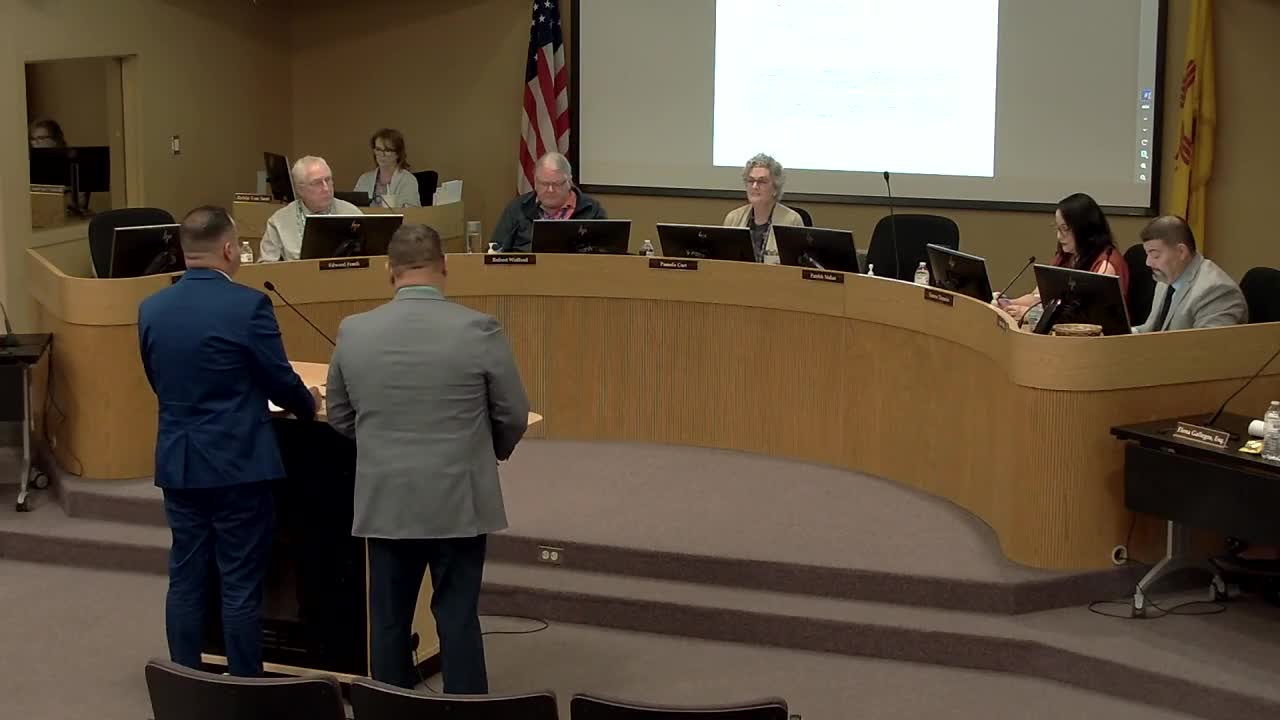
Board reviews first readings of policies limiting immigration enforcement access and restricting student data sharing
Summary
The Las Cruces Public Schools board held first readings March 4 of three related policies designed to limit campus access by immigration agents and to tighten rules on student data sharing and law‑enforcement requests.
Las Cruces — At its March 4 meeting the Las Cruces Public Schools board heard first readings of three interrelated policies intended to clarify when law enforcement, including immigration agencies, may access school grounds or student information.
Dr. Lozano (staff member) introduced updates to policy JB, saying the draft is “rooted in Plater versus DOE” (Platero v. Doe, 1982) and revised to align with federal guidance on sensitive locations and FERPA’s student‑privacy protections. He told the board the changes aim to prevent school districts from denying education based on immigration status while providing staff a procedure to respond to enforcement requests.
The related first readings of KLG (relations with law enforcement authorities) and JIH (student records/access) were presented to make district practice consistent with those protections and with longstanding language used in the district's memoranda of understanding (MOUs) for school resource officers. Revisions clarify that immigration status alone “does not pose a safety threat” and emphasize that law enforcement approaches such as arrest or citation should not be used for nonviolent student behavior that does not present an immediate safety threat.
Board members and staff focused on wording and consistency. Secretary Wofford asked for clearer punctuation and to confirm whether phrases such as “voluntary information sharing” are established legal terms. Board member Gallegos recommended the policy language include measurable goals and to make regulation language carry the implementation details; several board members suggested moving operational details into regulations and the strategic plan where SMART goals and timelines can be specified.
A recurring discussion point concerned who the superintendent's office should notify and when. The draft instructs staff to process requests from immigration enforcement and to require warrants or written documentation when agencies request access; several board members asked staff to clarify the distinction between normal law enforcement requests and exigent circumstances (serious, immediate threats) and to make the text consistent across the three policies.
Why it matters: The policies affect when and how outside law enforcement and immigration authorities interact with students and schools, and they relate to statutory privacy protections (FERPA) and legal precedents about access to public education. Changes could affect student privacy, school safety procedures, and district staff training.
What happened next: The items had first readings only; board members asked staff to revise language for second reading. Staff and legal counsel were asked to ensure consistent terminology across JB, KLG and JIH and to clarify when the superintendent must be notified.
Ending: No votes were taken on these policies at first reading; the board directed staff to return revised drafts for a second reading.