Get Full Government Meeting Transcripts, Videos, & Alerts Forever!
Get email alerts on the Water Systems topic
No spam. Unsubscribe anytime.
Ivins Planning Commission backs removing secondary-water requirement for new subdivisions
Summary
The commission recommended the city council approve an amendment to the subdivision ordinance that would remove the requirement that developers install secondary (nonpotable) water systems for new developments, citing a change in the Conservancy District’s water strategy and high infrastructure costs.
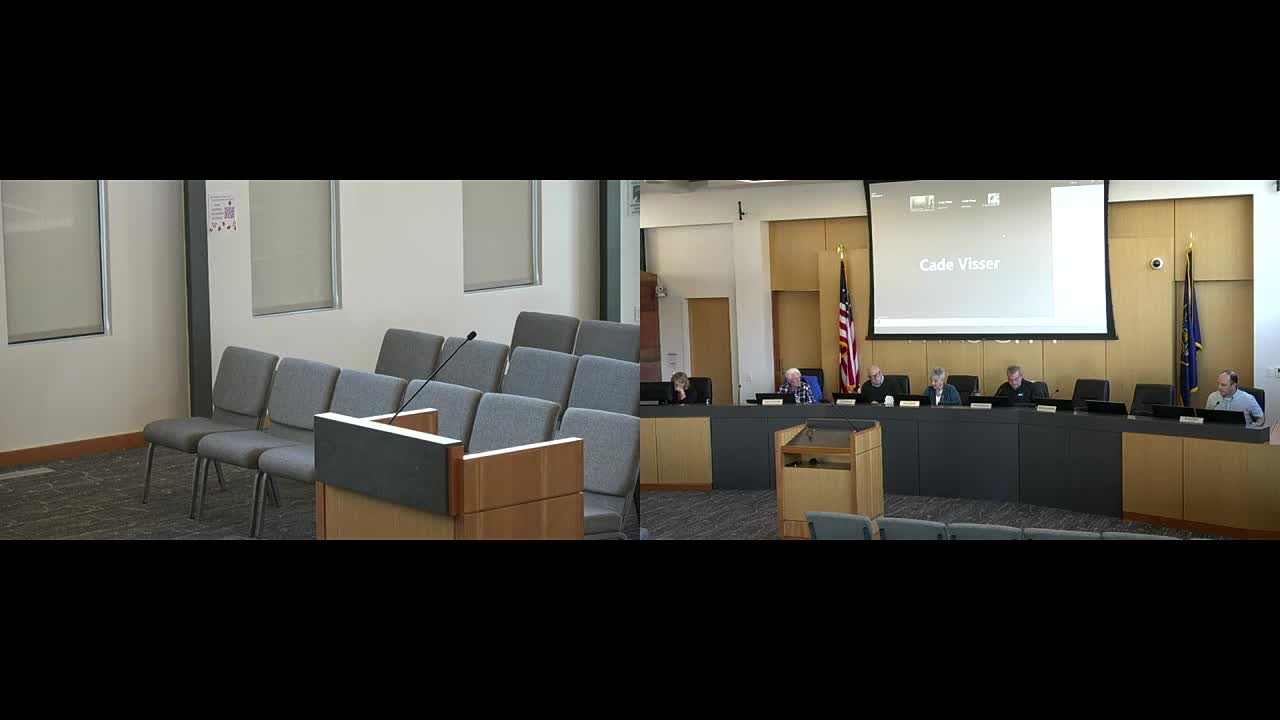
The Ivins City Planning Commission on March 4 recommended that the City Council amend the subdivision ordinance to remove the requirement that developers install secondary (nonpotable) water systems in new residential developments.
The recommendation followed a public hearing in which residents and commissioners discussed costs, system reliability and the Conservancy District’s revised water-delivery strategy. "I fully support this move," resident Wayne Pennington said, citing his research into recycled water systems. "Secondary water systems require far more plumbing than is needed. It's far too expensive to put them in." Lisa Ganz, who spoke remotely, said she was unsure which side to favor but asked the commission for more information on how much installing a secondary system had cost developers and, potentially, buyers.
Commissioners and staff said the Conservancy District no longer plans to provide secondary water for landscape irrigation and instead is pursuing expanded culinary water processing and delivery. "With the conservancy district's change in strategy, that will save the city tens of millions of dollars and not having to install the secondary infrastructure to deliver the water to the different subdivisions," a staff member, Mr. Haycock, said.
Commissioner Jason Clifford described how older communities that were designed for secondary systems installed both delivery and distribution infrastructure decades ago, but said Ivins lacks a reliable source and citywide trunk lines. "Tearing up those streets to get trunk lines to each subdivision ... is where the huge cost to the city would be," Clifford said, and he described operational problems such as sediment clogging sprinklers when the secondary supply is cycled.
After discussion, a commissioner moved that the Planning Commission recommend the drafted amendment to the City Council; another commissioner seconded the motion. A roll-call voice vote was recorded with Commissioners Waite, Robinson, Brown and Clifford voting in the affirmative. The motion carried. Mr. Haycock said the Planning Commission's recommendation will go to the City Council, which will hold its own public hearing in about two weeks.
Commissioners and speakers framed the item as a near-term policy alignment with the Conservancy District's strategy rather than a permanent bar on installing secondary systems if conditions change. Staff and several commissioners noted that reintroducing a citywide secondary delivery system later would require substantial new capital investment and operational arrangements, costs they said were prohibitive at present.