Get Full Government Meeting Transcripts, Videos, & Alerts Forever!
Get email alerts on the Administrative Law Judicial Deference topic
No spam. Unsubscribe anytime.
Committee advances bill to limit agency deference in court review after Supreme Court ruling
Summary
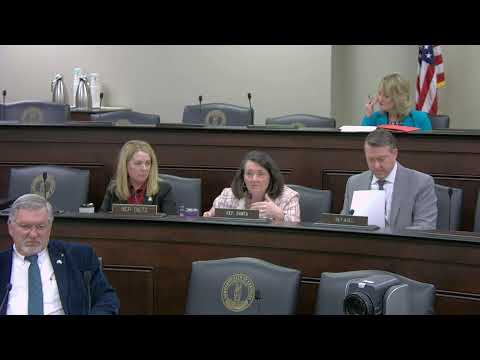
The Committee on Licensing, Occupations, and Administrative Regulations on May 20 approved Senate Bill 84, a bill sponsors said would require courts to apply de novo review when interpreting statutes and administrative rules rather than deferring to agencies’ interpretations.
The Committee on Licensing, Occupations, and Administrative Regulations on May 20 approved Senate Bill 84, a bill sponsors said would require courts to apply de novo review when interpreting statutes and administrative rules rather than deferring to agencies’ interpretations.
Proponents, including Senator Steve Rawlings and Representative Derek Lewis, said the measure responds to the U.S. Supreme Court’s recent Loper Bright v. Raimondo decision and is intended to prevent regulatory policy from swinging with each new administration. “We’re seeking to empower and strengthen the role of the judiciary because it is their function to say what the law is,” counsel Joe Bilby told the committee.
Opponents including Catherine Hargraves and Audrey Ernstberger of the Kentucky Resources Council, argued the bill would unconstitutionally intrude on the judiciary and remove an important tool courts use to weigh agency expertise. Hargraves told the committee that codifying a prohibition on deference “tilts the scales of justice in statutory construction against public and environmental protection” and raised separation-of-powers concerns under the Kentucky Constitution.
Committee members and outside witnesses discussed possible legal limits on the measure. Hargraves pointed to Kentucky case law and federal precedents—Kendall v. Bang and American Beauty Homes among those cited—and argued that outright prohibitions on any consideration of agency interpretations exceed the legislature’s constitutional authority. Counsel for the bill, Joe Bilby, said the House substitute removed a contentious Senate provision that previously would have directed courts to construe remaining ambiguities against agency expansion, and emphasized that the sub aims to press courts to reach “the very best interpretation of the law.”
Members asked technical questions about the bill’s language. Representative Kulkarni expressed concern about the bill’s use of “shall” and broad prohibitions, saying the phrasing could be “prohibitive rather than permissive” and asked sponsors to consider narrower language. Representative Awe asked why the statute uses mandatory language rather than permissive language; sponsors answered that their intent is to make clear the legislature’s expectation that courts perform de novo review of legal questions.
The committee heard that the bill would place language in three places: the Kentucky Administrative Procedure Act’s rulemaking chapter, its adjudication/adjudications chapter, and a chapter of statutes governing statutory interpretation. Sponsors said the change is meant to clarify how courts should approach ambiguous statutory or regulatory language going forward and to reduce regulatory churn that results when agencies interpret statutes one way under one administration and another way under the next.
The committee substitute passed on a roll call; several members explained their votes on record. Representative Gentry and Representative Kulkarni both recorded no votes and explained concerns about the bill’s breadth. Representative Ault briefly explained a no vote on constitutional grounds. The committee chair said the bill will move to the next stage for floor consideration.