Get Full Government Meeting Transcripts, Videos, & Alerts Forever!
Get email alerts on the Health And Provider Services topic
No spam. Unsubscribe anytime.
Committee hears expansion of donor‑registry prompt in state agency transactions; authors and Donate Life attendees urge voluntary sign-ups
Summary
Senate Bill 291 would require state agencies to offer voluntary donor‑registry enrollment during routine transactions and onboarding; sponsors and Donate Life/Indiana Donor Network testified about registration gaps and logistics, and the bill was held for further drafting and agency consultation.
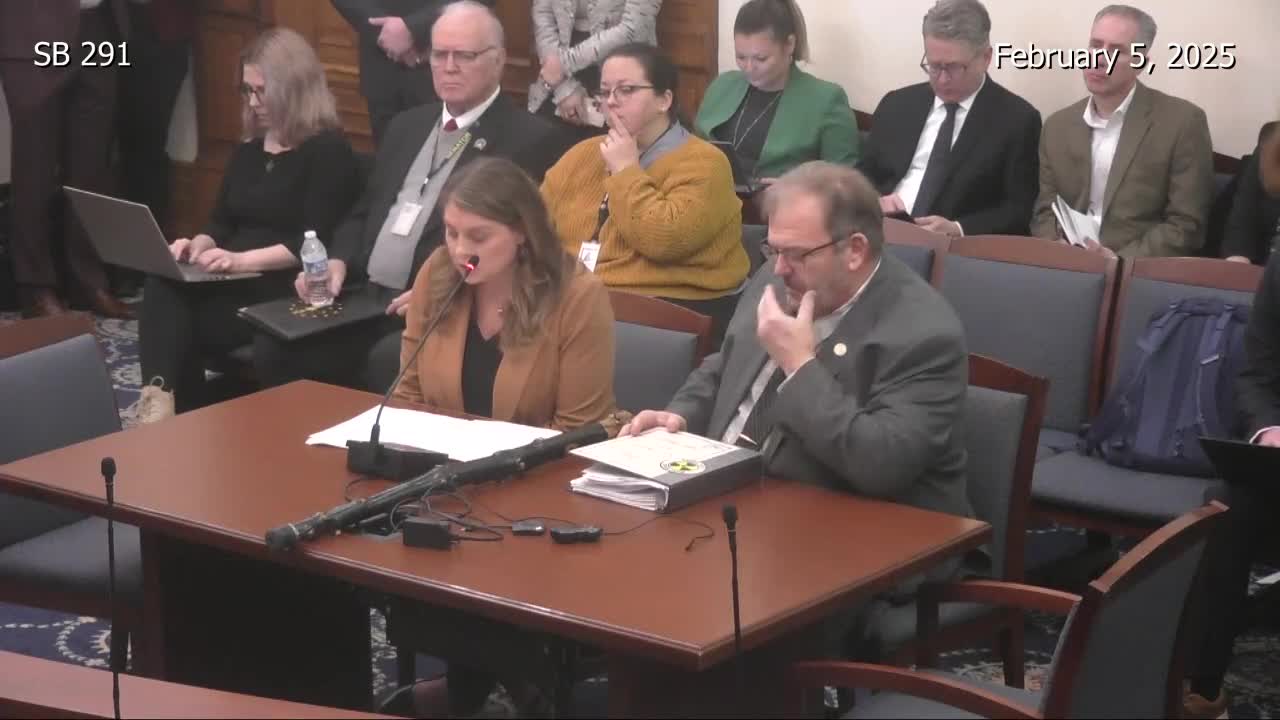
Senator Doriot presented Senate Bill 291, which would direct state agencies to ask individuals during certain public transactions whether they wish to register as organ and tissue donors and to offer registry enrollment during employee onboarding and benefits enrollment. "SB 291 is a simple, cost effective measure that will increase the number of registered donors in Indiana," Lindsay Johnson of the Indiana Donor Network told the committee, describing the organization’s existing imports from the Bureau of Motor Vehicles, the Department of Natural Resources and certain licensing agencies.
Testimony highlighted both numbers and logistics. Johnson said about 1,300 Hoosiers are currently waiting for organ transplants in Indiana and that 90 percent of Hoosiers support organ donation while roughly 60 percent are registered. She and other witnesses said daily data imports from state agencies could be used to transmit registration decisions to the donor registry and offered implementation assistance.
Committee members raised operational and privacy questions. Senator Lacey asked what consignments of tissue donation include (tissue, cornea, bone, tendon) and whether a first‑person authorization on a driver’s license can be overridden; witnesses said first‑person authorization for organ donation applies at age 18 but tissue donation can require additional documentation and medical social‑history workup and family contact is common after a potential donor is identified. Senator Brown and others asked how judicial branch systems and some agencies with legacy case‑management software would supply daily data imports; witnesses said the donor registry works with a host provider and the state’s IT team to create import files but acknowledged the technical lift required to set up daily uploads.
Several witnesses emphasized that the measure is voluntary and designed to capture more registrations through routine interactions with state agencies. No formal committee action was taken; the author said he would work with state agencies and interested stakeholders to adjust the bill language and implementation details.
Why it matters: Proponents argued the measure would be a low‑cost way to increase registrations and save lives by using already‑collected data fields in state transactions. Opponents were not organized at the hearing, but committee members sought safeguards for data transfers and clarity on which agencies would be included.
What comes next: The sponsor and Donate Life partners will work with committee members and agency IT staff to refine the implementation approach and draft any needed carve‑outs for agency systems.