Get Full Government Meeting Transcripts, Videos, & Alerts Forever!
Get email alerts on the Parks And Recreation topic
No spam. Unsubscribe anytime.
Environment Oregon urges Polk County support for voluntary vehicle-fee to shore up state parks
Summary
A representative from Environment Oregon presented a proposal for an optional vehicle-registration fee to fund Oregon State Parks, citing a $215 million deferred maintenance backlog and proposing a $19-per-year opt-in. Commissioners and residents raised concerns about funding sources, administrative fees, and equity.
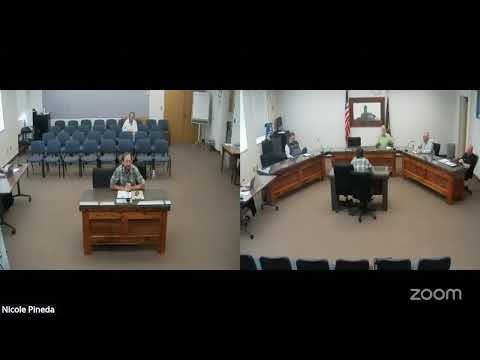
Justin Boyles, a conservation advocate with Environment Oregon, asked the Polk County Board of Commissioners on June 3 to consider building local support for an Oregon Parks for All program that would allow Oregonians to opt in to a small vehicle-registration fee to fund Oregon State Parks.
Boyles told the board that Oregon State Parks face a $215,000,000 deferred maintenance backlog that is growing by about $15,000,000 a year, and said the Parks and Recreation Department has proposed a 30%–40% increase in day-use fees. He presented one funding option: an optional biannual $38 fee (about $19 per year) added to vehicle registration for Oregon residents who opt in, which he said could raise roughly $17,000,000 to $54,000,000 annually depending on participation while allowing participating in-state vehicle owners free day-use access. “By providing an option to pay $38 biannually, so $19 a year through vehicle registration, we could give every Oregonian free day-use access while generating 17 to $54,000,000 each year,” Boyles said.
Why it matters: Boyles framed the proposal as a way to create a stable revenue stream for maintenance, ranger staffing and capital repairs across more than 250 parks, more than 50 campgrounds and roughly 113,000 acres that the Oregon Parks and Recreation Department (OPRD) manages. He said OPRD currently generates about $10,000,000 annually from day-use fees and annual passes and that state parks received about 52,000,000 daytime visitors in 2023.
Commissioners and residents pressed Boyles on several points. One resident who identified himself as from the timber community argued timber harvests historically funded local services and criticized environmental groups for opposing active timber management; he said he would not support even a voluntary vehicle fee. “It’s offensive to me. As a timber guy…we know what we're talking about,” the resident said. Another speaker raised concerns about whether opt-in collections would be equitable and noted administrative fees charged when funds pass through the Oregon Department of Transportation (ODOT).
Boyles acknowledged those concerns and described the fee as one of several options being discussed, including seeking additional general-fund appropriations or restoring lottery allocations. He said the optional-fee design is intended to avoid constitutional constraints on mandatory DMV-collected charges that must go to the Highway Fund and pointed to participation ranges observed in other states (he cited Montana at about 86% participation in a similar program) to explain the $17M–$54M revenue range.
Questions centered on verification of the numbers and on which organizations or agencies would collect and administer funds. Commissioners urged Boyles to corroborate agency figures and historical lottery allocations with independent sources; Boyles cited OPRD and Travel Oregon as primary sources for visitation and revenue figures and said his group is surveying park visitors and organizing local events, including a scheduled walk at Luckiamute State Natural Area with OPRD staff.
Other issues raised during public discussion included: whether timber revenues historically supported parks and schools; the role of state lottery funds and whether those funds have been redirected over time; the administrative cut ODOT would take for collection and distribution; and impacts of homelessness and litter on park resources. No decision or formal action was taken by the Polk County Board of Commissioners on the proposal during the June 3 meeting.
The presentation and discussion did not include a formal vote. Boyles said Environment Oregon is organizing statewide outreach to measure public support for an opt-in vehicle fee and to collect additional data on park use and priorities.