Get Full Government Meeting Transcripts, Videos, & Alerts Forever!
Get email alerts on the Municipal Budget Property Tax topic
No spam. Unsubscribe anytime.
Town of Nolensville manager outlines 5‑year budget, proposes raise in municipal tax rate to fund public safety and road projects
Summary
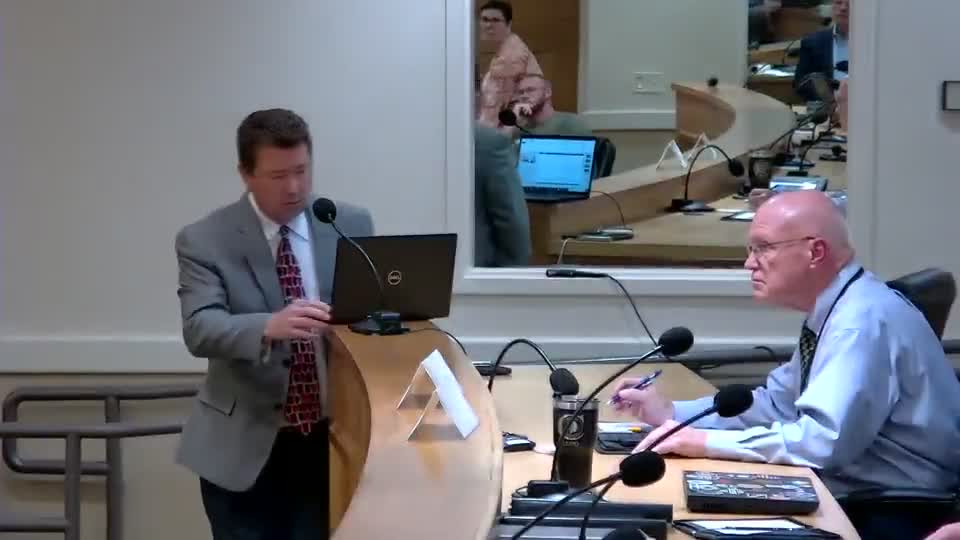
Town Manager Victor Lay told residents at a Town of Nolensville budget Q&A that the administration is recommending a municipal property tax increase to about 55¢ per $100 of assessed value to fund a five‑year plan focused on public safety hires and road and capital projects.
Town Manager Victor Lay told residents at a Town of Nolensville budget Q&A that the administration is recommending a municipal property tax increase to about 55¢ per $100 of assessed value to fund a five‑year plan focused on public safety hires and road and capital projects.
The presentation said Nolensvillecurrently has a municipal tax rate of 29¢. Because county appraisals rose this year, Lay said, the certified rate that would hold revenue flat is about 18.92¢, and the administrationis proposing a higher 55¢ rate to capture additional revenue for staffing and projects. "We were recommending a tax rate of about 55¢," Lay said during the presentation.
Lay outlined staffing requests that would be phased into the plan: three additional full‑time firefighters, three additional full‑time police officers, one IT position and one public‑works position; a construction‑inspection position would be funded largely by related inspection fees. The presentation said roughly 56% of the coming yearbudget is earmarked for public safety (police and fire), 12% for planning/engineering/codes, 21% for administration and 10% for public works.
Why the tax increase now: Lay said the townexpects the proposed rate would support hiring, raise operating capacity and create cash to advance capital projects sooner than pay‑as‑you‑go funding would allow. He said putting the tax in place now could produce roughly $5 million to $7 million in cash over five years that could be used for right‑of‑way purchases and initial construction for projects such as the Rocky Fork Road improvements, Sunset Road phase work and historic‑district streetscape work.
Roads, TDOT and grant competition: Lay described efforts to get Nolensville Road onto the Tennessee Department of Transportation (TDOT) plan and said TDOT grant or partnership programs often expect local matching cash or completed studies and right‑of‑way. He pointed to Thompson Station, where local cash commitments returned a project to TDOTplanning. Lay said the proposed local cash would help the town be competitive for state funds.
Capital‑project estimates and impact‑fee uncertainty: Commissioners and staff discussed cost estimates: Rocky Fork Phase 1 was cited at roughly $4.5 million; an intersection turn lane on Sunset Road was cited at about $550,000; right‑of‑way acquisition this year for Sunset Road was said to be about $2 million. Lay said the town has previously spent roughly $950,000 on a Nolensville Road (Knowlesville/Nolensville) study and that about $400,000 of that has been spent and about $500,000 remains to finish environmental/right‑of‑way steps.
Lay also warned that roughly $8 million in traffic/impact fee funds is being held in restricted accounts and is the subject of litigation brought by home builders over whether the town can retain or continue collecting those fees. "If we lose the lawsuit, then that money's at jeopardy," Lay said. He added any judicial resolution and appeals could take years and limit the town's ability to spend those funds for road projects.
Development, sales tax and sewer capacity: Lay compared Nolensville's sales tax base to neighboring communities and said Nolensville currently generates about $2.7 million in sales tax, below nearby communities that have major retail. He noted a Publix project is under way and a Kroger proposal is approved but said even if both come online the sales‑tax gain would not fully cover all needs. Staff also said sewer capacity constraints at the regional sewer provider have limited which approved developments have usable capacity; revenues from developments were included in conservative fashion only when sewer capacity was already purchased.
Police and fire facilities and operations: Police Chief Dale Armour said the department currently has 19 sworn officers with one vacancy and that detectives and patrol staff are working in crowded, undersized space at town facilities. He described privacy and evidence‑handling issues for the investigations unit and said limited office space and no on‑site shower facilities are hampering operations.
Fire Chief Matthew Lupo described current staffing patterns: crews operate on a 48‑on/96‑off schedule with five firefighters on duty under current staffing. The department said the three new firefighter positions are meant to add one additional firefighter to each shift (effectively one per shift for the year) so the town can crew the new ladder truck and staff apparatus already purchased and in service. Chief Lupo explained the department uses automatic mutual‑aid agreements with Brentwood and other neighboring departments when multiple calls occur.
Public reaction and procedural objections: Several residents objected to the timing and notice of public hearings and to transparency in the budget documents. Kevin Donovan, a resident, cited Tennessee statutory notice requirements and called for more disclosure and review; he said he planned a legal challenge if the full process and notice required by state law were not followed. Other residents said they could not afford a large increase; others supported the increase as necessary to pay for roads and public safety. Commissioner comments ranged from supporting a multi‑year plan to advocating a smaller immediate increase and earmarking tax‑proceeds to capital projects rather than ongoing operating costs.
Next steps: Commissioners said the budget process includes multiple steps and that a second reading and final vote on the budget is scheduled at the town's June meeting (the commission's next regular meeting). The town manager said the budget spreadsheets referenced in the presentation are available on request and provided his town email (vlay@knowensvilletn.gov) for follow‑up.
No final tax‑rate vote was taken at the town hall session; the meeting was an informational Q&A to collect public feedback prior to the commission's formal readings and vote.
Ending: Commissioners and staff said they would continue to refine revenue and cost estimates, monitor the impact‑fee lawsuit and sewer capacity limits, and consider options that reduce the proposed rate while preserving key hires and some capital funding. Residents were told to expect additional public hearings and the formal readings required by state law.