Get Full Government Meeting Transcripts, Videos, & Alerts Forever!
Get email alerts on the School Employment topic
No spam. Unsubscribe anytime.
Committee approves change to local waiver process for classified employee background checks
Summary
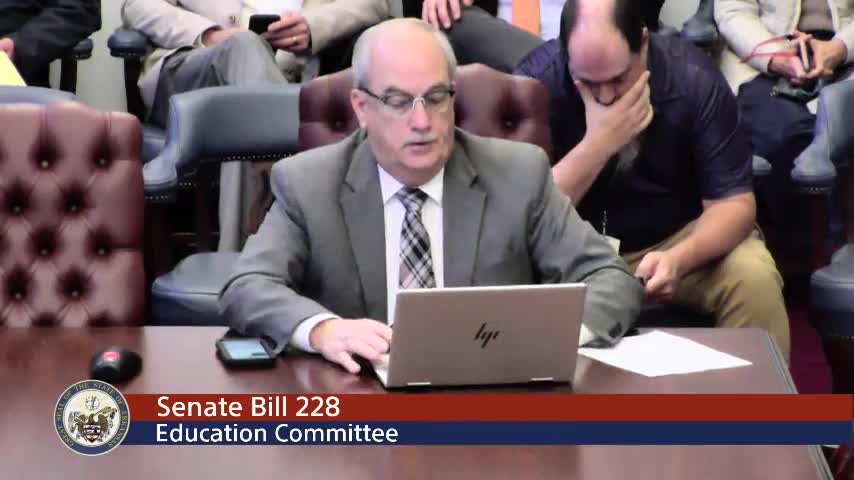
Senate Bill 228 would let local school boards keep a previously granted classified-employee background-check waiver in effect for as long as the employee remains continuously employed and does not receive a new disqualifying conviction.
Senator Kim Hammer presented SB 228, asking the committee to allow school districts to retain a previously granted local waiver of a disqualifying conviction for classified (nonlicensed) employees so long as the employee does not have a break in employment with the district and does not incur an additional disqualifying conviction.
Hammer said the change was requested by a school district that routinely had to reconvene to reconsider the same employee every five years. He described the bill as "common sense" and said it would spare districts and long-term employees repeated review of long-ago conduct when performance has otherwise been satisfactory.
Senator Sullivan and others raised hypothetical questions about what would happen if the statutory periodicity or qualifications for waivers changed after a waiver was granted. Courtney Salasford, chief of staff for the Department of Education, clarified that the bill pertains to locally granted classified-employee offense waivers (not the state licensure waivers granted by the State Board), and explained that a law change could not be retroactively applied to invalidate a local waiver; a school board retains discretion to revoke or condition a waiver.
After discussion and clarifications, the committee approved the bill on a voice vote; the transcript records an "Aye."