Get Full Government Meeting Transcripts, Videos, & Alerts Forever!
Get email alerts on the Local History topic
No spam. Unsubscribe anytime.
Keynote traces Jacksonville’s Black history, links local figures to Great Migration
Summary
Historian Ennis Davis recounted histories of Black leaders and entrepreneurs from Jacksonville, connecting local stories to the Great Migration and urging the community to preserve local memory.
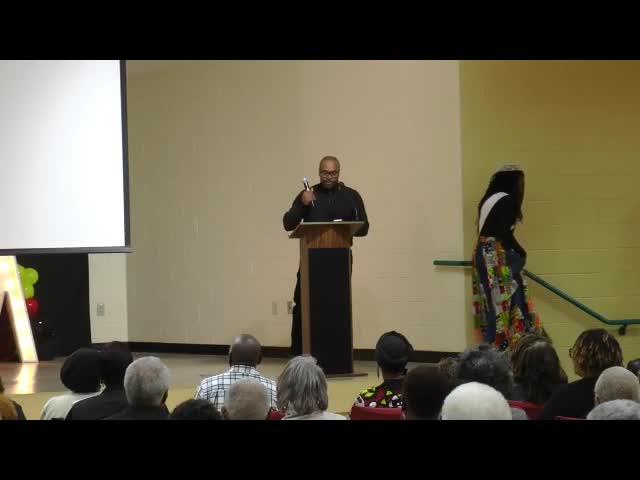
Historian Ennis Davis, introduced as the incoming president of Lord of Trust Historic Preservation, highlighted Jacksonville-area Black leaders and entrepreneurs Monday night, connecting their stories to the Great Migration and urging residents to preserve and celebrate local history.
Davis traced the lives of several local figures, including Charlotte Scott Anderson, who he said was born into slavery outside Savannah and later amassed property and business interests in the Jacksonville area; A. L. Lewis, whom Davis identified as among Florida’s earliest Black millionaires; and Charles B. McIntosh, who opened a medical practice in 1958 on property acquired by Anderson’s family.
Davis also discussed athletes and civic leaders with Jacksonville ties, and he placed those local stories in a broader historical frame. “So despite not being able to read and write, Aunt Charlotte had mastered a fortune by the time of her death in 1928,” Davis said. He told the audience that between 1916 and 1970 “over 6,000,000 African Americans left the South to go to the North,” and said Jacksonville became a key departure point during the Great Migration.
He described other local figures in the presentation, including Samuel Adams Hall (a World War I first lieutenant), members of early Black manufacturing enterprises, and leaders connected to the Back-to-Africa movement and the Universal Negro Improvement Association. Davis also noted the role of local rail infrastructure and newspapers, saying the city’s train station served as a major regional terminus for migration.
Davis framed those histories as the foundation for contemporary community identity and said the evening’s honorees continue that legacy. His remarks were part of a broader program honoring more than 50 local figures in categories such as athletes, educators, musicians and civil-rights activists.
Speakers and organizers at the event urged residents to preserve cemeteries and local archives and to support initiatives that keep these histories visible, including the Cultural Council’s new projection project.
Speakers stressed that many of the honorees and their families remain local and asked residents to help preserve those stories in public memory and city records.