Get Full Government Meeting Transcripts, Videos, & Alerts Forever!
Get email alerts on the Vision Benefit Managers topic
No spam. Unsubscribe anytime.
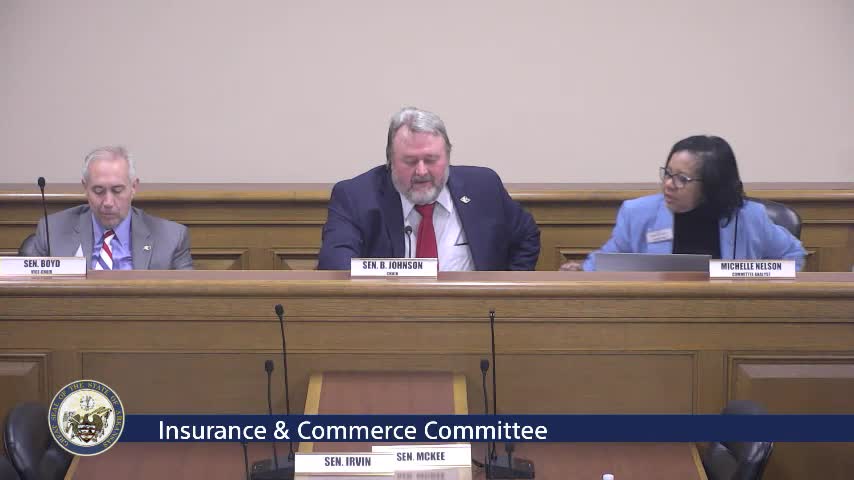
Senate committee advances HB1353 to curb vision‑plan steering, set Medicare floor for reimbursements
Summary
The Senate Insurance & Commerce Committee advanced House Bill 1353 after testimony from Arkansas optometrists who said vertically integrated vision benefit managers steer patients and depress reimbursements, and from industry and insurance‑department witnesses who warned of transparency and cost risks.
The Senate Insurance & Commerce Committee advanced House Bill 1353, which would restrict certain practices by vision benefit managers, require a Medicare‑rate floor for some reimbursements and limit some directory and marketing disclosures, after more than an hour of testimony from optometrists, industry trade representatives and the Arkansas Insurance Department.
Supporters said the bill aims to protect patient choice and local eye‑care providers from vertical integration in the vision market. "This bill will present measures to ensure the patient's choice and for access to eye care while leveling the playing field between the large vertically integrated vision benefit managers and our small business owners," Senator Wallace said in opening remarks.
The bill’s backers told the committee they are responding to what they described as a consolidation of the vision market. "There’s been massive vertical integration in the vision care market with two VBMs controlling more than 80% of all vision plans sold," Joe Sugg, an optometrist and representative of the Arkansas Optometric Association, said. Sugg told senators the combined ownership of labs, retail outlets, manufacturers and claim services allows some plans to steer patients to products and sites the plans or their affiliates own.
Matt Jones, an optometrist who practices in northeast Arkansas, told the committee reimbursement rates paid by many vision plans have not kept pace with costs. "For more than 30 years, there has not been an increase in service reimbursement from any of these plans," Jones said. He described contracts with plans as "contracts of adhesion" that leave individual providers little room to negotiate.
Opponents cautioned the committee that the bill could raise costs for employers and reduce transparency. Lisa Ann Hurt Forsyth, representing the National Association of Vision Care Plans, said vision benefits have remained relatively stable and estimated that the bill could increase costs to Arkansas employers by as much as 30%. "This is the one small area of health insurance that's actually working," Hurt Forsyth said, adding that vision coverage encourages people to get routine exams and mitigates out‑of‑pocket costs.
Attorneys and industry witnesses also focused on proposed limits on what plans could disclose to consumers. Derek Smith of the Mitchell Williams law firm, speaking for the American Council of Life Insurers, said the bill’s language prohibiting plans from disclosing differences in discounts or products offered by network providers is broad and raised constitutional concerns. He noted similar provisions in other states have been enjoined and are under appeal.
Ben Rand, general counsel for the Arkansas Insurance Department, told senators the department lacks current authority to set reimbursement amounts and that the bill’s proposed Medicare‑rate floor would be a significant regulatory change. "One of the most significant parts of this bill to me is the provision that requires that all covered materials and services at least have to be reimbursed at Medicare rates," Rand said, and he added the department has not completed an actuarial analysis of the bill’s cost impact.
Committee members asked detailed questions about how plans contract with labs and suppliers, how affiliated relationships operate in practice, and whether the bill might unintentionally lower some payments if a Medicare floor became the new baseline. Senator Urban pressed supporters on language that would bar "nominal or de minimis" reimbursements and whether setting a floor could cause other reimbursements to settle at that floor; proponents said current reimbursements are often below the Medicare level and that the floor is intended to prevent exploitative practices.
After questions and final remarks, the committee approved a motion to advance the bill. The committee conducted the final action by voice; the chair announced the bill was passed out of committee.
The bill would: prohibit certain steering and affiliate‑preference practices by vision benefit managers as written; require that covered services and materials not be reimbursed below a de minimis level or the current calendar‑year Medicare reimbursement for the covered item; and restrict certain plan directory and marketing disclosures as drafted. The Insurance Department witness said the department currently lacks explicit authority to set reimbursement levels and has not completed a premium‑impact study for the proposal.
The committee hearing combined testimony offered in support, from optometrists who said the market consolidation reduces competition and patient choice, and testimony in opposition from vision‑plan trade representatives and insurers who warned of higher premiums and limits on consumer information. The bill will return to the committee for further consideration if formally scheduled by the Senate calendar.