Get Full Government Meeting Transcripts, Videos, & Alerts Forever!
Get email alerts on the Merchant Cash Advance topic
No spam. Unsubscribe anytime.
Lenders press lawmakers to restore limited prejudgment remedy for large merchant‑cash advances; opponents urge caution
Summary
A contentious public hearing explored whether Connecticut should allow merchant‑cash‑advance companies to use extradudicial assets freezes — prejudgment remedies (PJR) — in cases involving smaller financing amounts.
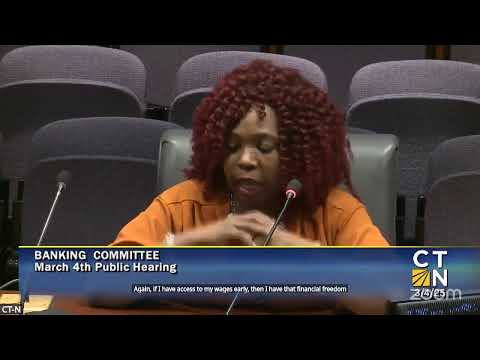
The Joint Committee on Banking heard sharply divided testimony on proposals to change Connecticut’s prejudgment‑remedy law for commercial transactions after MCA funders asked the Legislature to allow PJR attachments in smaller cases.
Representative Jonathan Jacobson, a longtime Connecticut litigation attorney who testified on the danger side, told the panel that the statute MCA funders are seeking to change — codified as part of the General Statutes and discussed at the hearing as §36a‑868 — was intentionally designed to limit ex‑parte civil attachments for commercial financing below a high dollar threshold. Jacobson testified “I would respectfully urge my colleagues on this committee to vote against this bill,” arguing that the Merchant Cash Advance industry has both rapid growth and evidence of abusive practices in other jurisdictions and that a carve‑out would undo a carefully balanced due‑process protection.
Industry arguments: MCA funders described the PJR as a narrowly targeted tool that prevents fraud and asset dissipation after an advance. George Reimer of Instafunding and other funders said their businesses are business‑to‑business commercial transactions and that, for larger advances, the ability to request an ex‑parte attachment is an essential risk‑management tool that enables them to offer capital to companies that banks will not serve on short notice. One practitioner summed up the industry argument: without a remedy, funders said, they must tighten underwriting or pull back capital from the market.
“PJR waiver” background: Connecticut law currently permits certain commercial waivers but caps the practice for many ordinary financing transactions. Witnesses described a legal environment in which other states’ courts have sometimes found abusive MCA practices and where New York federal courts have seen litigation alleging abusive tactics; funders countered that such cases involve bad actors and that the majority of MCA transactions benefit legitimate businesses.
Context and committee questions: The Chairs pressed funders and lawyers on how a statutorily allowed PJR would be used and on differences between consumer and commercial transactions. Committee members asked whether lowering the threshold to $100,000 would help small‑ and mid‑sized businesses or instead increase the frequency of ex‑parte freezes in modest disputes. Several lenders described the transactions that justify six‑figure advances — higher‑revenue, sophisticated merchants — and suggested a lower threshold would be limited to those large businesses. Opponents answered that the threshold change would still leave many businesses with inadequate process protections.
No vote was taken. The proposal remains controversial and likely to return for additional drafting, with members requesting additional specificity on procedural safeguards, timelines for returning cases to court after an ex‑parte attachment, and anti‑abuse measures.
Ending: The committee did not adopt a position. Representatives from both sides said they would continue to work with staff on narrowing language and adding procedural protections if the proposal advances.