Get Full Government Meeting Transcripts, Videos, & Alerts Forever!
Get email alerts on the Education Finance Flexibility topic
No spam. Unsubscribe anytime.
Committee adopts amendment and re‑refers bill to Education Finance to give districts temporary funding flexibility
Summary
The committee adopted an author's amendment and re‑referred House File 9‑57 to the Education Finance Committee. The bill would allow districts temporary flexibility in implementing certain mandates and using funding through the 2028‑29 school year, but it preserves compliance with federal law.
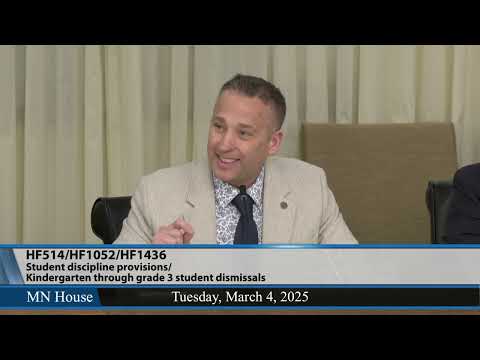
The House Education Policy Committee on March 4, 2025, adopted an author—s amendment and re‑referred House File 9‑57 to the Education Finance Committee. Representative Ben Bakeberg presented the bill as a measure to provide school districts temporary flexibility with funding and mandate implementation through the 2028‑29 school year "unless it is otherwise encumbered under federal law." The amendment adopted in committee clarifies that any provision in the bill that would conflict with federal law would not be subject to delay or waiver.
Representative Jordan raised a constitutional concern during discussion, asking whether allowing districts to delay certain mandates would run afoul of the Minnesota Constitution—s requirement for a uniform system of public education. Representative Bakeberg and other members responded that districts have long had operational differences and that the bill was meant to provide local flexibility while preserving federal requirements. "If a school chooses to not pursue a grant, that is their prerogative to do," Bakeberg said during member Q&A, noting per‑pupil funding and grant application processes.
The committee adopted the A‑1 author—s amendment by voice vote and then approved referral of the amended bill to the Education Finance Committee by voice vote. The chair recorded the motions as adopted and the bill as re‑referred.
Why it matters: HF 9‑57 would allow districts to stagger implementation of certain new requirements and to use funding more flexibly during the covered period, a response by some districts to recent budget and implementation pressures. The committee—s clarification that federal law takes precedence leaves federal obligations intact.
Next steps: The bill moves to the House Education Finance Committee for further consideration and possible fiscal analysis.