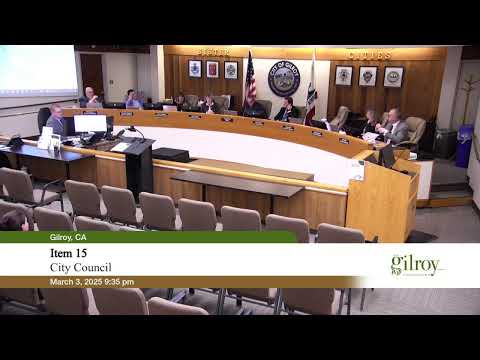
Gilroy council approves pilot to preserve below-market-rate home sales and amends budget for one-time acquisition funds

2498704 · March 4, 2025

Loading...

AI-Generated Content: All content on this page was generated by AI to highlight key points from the meeting. For complete details and context, we recommend watching the full video. so we can fix them.

Summary

Council authorized a pilot below-market-rate (BMR) preservation program that uses a county zero-interest bridge loan and CalHome/City down-payment assistance to buy, repair and resell at-risk deed-restricted homes; council also adopted a budget amendment to cover holding and repair costs. Motion passed 5–1.

The City Council voted March 3 to launch a pilot program to preserve below-market-rate (BMR) homeownership units that will begin to "age out" of their resale restrictions, using a short-term bridge loan offered through a Santa Clara County program and city housing trust funds to repair and resell homes to income-qualified buyers.

Christy Thomas, housing and community services manager, told council Gilroy’s BMR portfolio consists of about 300 deed-restricted ownership units, many built between 1998 and 2013, and that the city has lost 13 units since 2017 when properties were sold at market rate without deed restrictions. "The portfolio has been administered since 2017 by an affordable housing nonprofit called HouseKeys," Thomas said, and she explained the county’s BMR Partnership program offers jurisdictional acquisition loans at 0% interest for up to 12 months.

How the pilot works: Under the proposed pilot the city would use the county’s bridge loan to purchase a resale BMR home at the price due to the owner, use the housing trust fund to make minor repairs and cover holding costs, and resell the unit to an income-qualified household with CalHome and county deferred down-payment assistance and a 30-year resale restriction. Thomas presented a worked example: an appraised market value of $670,000, a household payout of roughly $515,354 under the existing equity formula, acquisition-and-closing costs and modest repairs; resale would use a combination of county ($250,000 deferred) and city down-payment assistance plus a first mortgage for the buyer.

Budget action and vote: Council voted to direct staff to create the pilot, become a partner with the county BMR Partnership Program and to execute necessary loan documents (motion passed 5–1). The council also adopted a resolution amending the FY 2024–25 budget to appropriate approximately $111,000 to the housing trust fund to cover holding costs, minor repairs and resale transaction expenses related to the pilot; that budget amendment passed 5–1. Council member Fugazi recorded the lone no vote on both items; one council seat was absent for parts of the meeting.

Why it matters: Thomas said the pilot is designed to preserve existing deed-restricted ownership housing for low-income households and to comply with the housing element’s requirement to monitor and preserve units at risk of conversion. She told the council the pilot is intended to be limited in scope; staff estimated the program would likely acquire no more than two or three units in the near term given county funding capacity and the city’s short-term loan repayment requirement.

Implementation: HouseKeys, the city’s BMR administrator, would manage due diligence, appraisals, inspections, minor rehabilitation oversight and resales. Thomas said sales proceeds would be used to repay the county bridge loan and housing trust fund advances, and that the city could choose to forego its equity share to lower the sale price when appropriate.

Ending: Council requested more specific cost estimates and a future report after the first acquisition; staff will incorporate the pilot into next fiscal year’s budget work and return with additional implementation details as transactions progress.