Get Full Government Meeting Transcripts, Videos, & Alerts Forever!
Get email alerts on the Special Events topic
No spam. Unsubscribe anytime.
Gilroy staff proposes downtown "event zones" and continued fee waivers as costs climb for large gatherings
Summary
City staff outlined proposed downtown event zones and asked whether the council wants to continue waiving event day fees for nonprofit organizers after staff found roughly $154,089 in city costs were waived June–Dec 2024. Business groups urged continuation; staff said zones and new bollards should cut traffic-control costs.
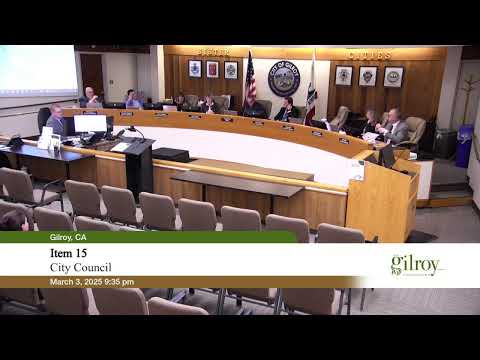
Gilroy economic development staff told the City Council on March 3 that the city is drafting a new special-events ordinance that would create standardized downtown event zones, streamline traffic-control planning and reconsider continued fee waivers for nonprofit organizers.
The report, delivered by Victoria Valencia, economic development manager, said staff had calculated $154,089 in city day-of-event costs waived for nonprofit downtown events between June and December 2024. "Following previous council direction, fees related to special events held by nonprofit organizations in and adjacent to the downtown area have been waived," Valencia said. She told the council police overtime and traffic control were the largest single day costs and that the city’s new rapid-deployment bollards should reduce those expenses.
Staff presented a proposal that would designate a set of event zones in and around downtown — including a "Gourmet Alley" zone and larger closures extending from Fourth to Seventh streets — and publish standardized traffic-control templates for those zones so staff can reuse plans instead of rebuilding them for each event. Valencia said the city’s event-application review currently requires input from planning, building, fire, hazmat, police, public works and risk management and that an earlier survey of 26 event organizers yielded 10 responses to guide the changes.
Why it matters: Valencia said the changes aim to increase transparency and make it financially sustainable for volunteer-run and nonprofit events to continue. The downtown business association and event organizers warned the council that without waivers some events would no longer be viable.
Details and council questions: Valencia summarized analyses of four large downtown events from 2024, noting many drew 10,000 visitors or more and that approximately 40–50% of attendees were Gilroy residents (the holiday parade drew 62% local participation). She listed day-of-event staffing costs: police officers ($41,973), traffic control (about $17,000) and other expenses including cleanup and barricade rentals. Valencia said staff expects costs to fall "to a couple of thousand dollars per event" in some zones once the city uses purchased Meridian Rapid Defense barricades instead of renting barriers.
Council members pressed staff on defensibility and safety of using parking lots versus full street closures and on aligning a fee-waiver policy to the municipal budget cycle. Council member Klein noted parks events use a separate recreation permitting process and asked that the downtown zones not interfere with park permitting.
Public response: Dozens of downtown merchants, nonprofit volunteers and event organizers asked the council to continue fee waivers for nonprofit-run events and to adopt the zone approach. Jeff Worth, president of the Gilroy Downtown Business Association (GDBA), told the council the GDBA runs multiple annual events and that last year’s fee waivers were essential to staging those programs. Jay Sanchez, co-chair of Downtown Live, said organizers also share event security costs and favored continued city support rather than a competitive grant process that could create perceived favoritism.
Next steps: Staff asked for direction to proceed. Valencia said if council directs staff to continue, staff will return in April with a draft fee-waiver policy and hold outreach with past event organizers on proposed zones and ordinance updates. Council gave staff informal guidance to continue developing the zones and to plan fee-waiver options for council consideration during the next budget cycle.
Ending: Council members emphasized safety and clearer timelines for applications, with several members asking for a single annual application deadline tied to budget planning. No formal policy was adopted on March 3; staff will return with a draft policy and proposed ordinance language for a future meeting.