Get Full Government Meeting Transcripts, Videos, & Alerts Forever!
Get email alerts on the Stevens Creek Vision topic
No spam. Unsubscribe anytime.
Multi‑agency Stevens Creek Boulevard vision study advances; Santa Clara council to 'note and file'
Summary
A multi‑agency study offered a high‑level vision for Stevens Creek Boulevard from downtown San Jose to Cupertino, emphasizing safer walking and bicycling, improved transit and long‑term possibilities for high‑capacity separated transit. The steering committee approved a recommendation that each jurisdiction consider the report; Santa Clara's City
City staff and a consultant team presented an update and recommended “vision” for the Stevens Creek Boulevard corridor — a multi‑jurisdiction study that covers the corridor from downtown San Jose through Santa Clara and into Cupertino and De Anza College. Jevon Grogan, the city manager, described the project as a cooperative effort among Santa Clara, San Jose, Cupertino, the County of Santa Clara and the Valley Transportation Authority to develop a unified, high‑level transportation vision for Stevens Creek.
Why it matters: Stevens Creek is a major east‑west corridor connecting neighborhoods, business districts, transit hubs and campuses. The study aims to identify near‑, mid‑ and long‑term strategies to improve transit speed and reliability, walking and bicycling conditions, intersection safety and multimodal connections across city boundaries.
Assistant Public Works Director Mike Lou summarized outreach and the study’s scope. The study grouped recommendations by near‑term, mid‑term and long‑term actions. Near‑term items included maintenance and coordinated corridor identity work, small transit reliability improvements and improved bus information. Mid‑term and long‑term items included protected and buffered bike lanes, enhanced pedestrian crossings and, on the long end, study of a separated high‑capacity transit guideway (e.g., an elevated or trench alignment) that could link Diridon Station, downtown San Jose and the western corridor to De Anza College and Cupertino.
Steering‑committee and community feedback: staff said the corridor advisory group, steering committee and a community advisory group provided extended input through community workshops, pop‑ups and online tools. Common themes included requests for protected bike facilities, more shade trees, safer crossings, better last‑mile connections and improved transit priority. The presentation stressed that the study is a planning document, not a construction contract: it lays out options that would require separate design, environmental review and funding.
Timeline and next steps: the consultant’s draft was forwarded with a recommendation that each jurisdiction consider the plan. Staff noted San Jose planned to proceed to city action and requested Santa Clara “note and file” the study tonight; staff said the city would return with an adoption item in mid‑2025. Board and public commenters urged quicker movement from planning to action, and several speakers recommended prioritizing bus lanes and protected bike lanes as cost‑effective near‑term improvements.
Public comment: residents and active‑transportation advocates told the council they favor protected bike lanes, faster bus service and better pedestrian crossings. Several speakers noted the corridor’s regional importance and urged jurisdictions to seek joint funding applications to advance coordinated projects.
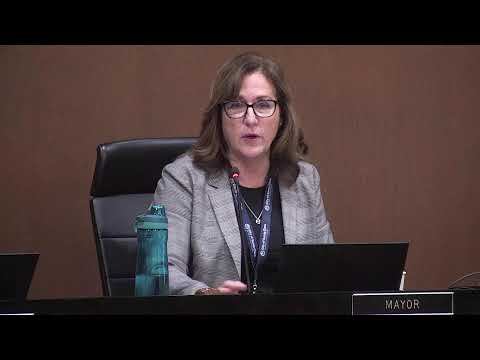
Council action: the council voted unanimously to note and file the study and directed staff to return with an action item for formal adoption at a future meeting. Staff also said the steering committee would reconvene to oversee the next stage of project development and funding pursuit.
Ending: the study provides a framework of near‑, mid‑ and long‑term options. Staff recommended reconvening the steering committee and pursuing grant opportunities; the council’s formal adoption process and subsequent project design steps will determine which recommendations move forward and when.