Get Full Government Meeting Transcripts, Videos, & Alerts Forever!
Get email alerts on the Scope Of Practice topic
No spam. Unsubscribe anytime.
Panel splits as committee hears bill to let licensed naturopathic doctors prescribe wider drug classes
Summary
The Health & Government Operations Committee heard conflicting testimony on House Bill 867, which would expand drug-prescribing authority for Maryland-licensed naturopathic doctors; supporters said it would reduce care delays, opponents cited residency-driven clinical experience and patient-safety concerns.
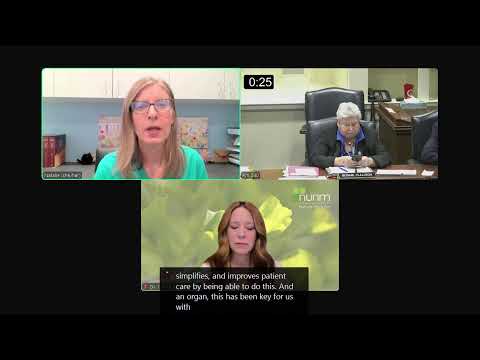
The House Health & Government Operations Committee heard extended testimony on House Bill 867 to expand prescriptive authority for Maryland-licensed naturopathic doctors (NDs). The measure would remove statutory limits that largely bar NDs from prescribing common pharmaceuticals and would authorize NDs to prescribe certain non–Schedule II controlled substances and other prescription medications subject to board rules.
Supporters — patient advocates, naturopathic doctors and some conventionally trained physicians — told the panel that licensed NDs complete four‑year graduate medical programs with extensive pharmacology coursework and clinical rotations and are trained to treat complex primary‑care patients. Clinicians said the current law forces NDs to diagnose patients but then refer them elsewhere for commonly needed medications, delaying care and adding administrative friction. Supporters pointed to long wait times for some primary‑care appointments and to other states’ regulatory models: proponents said 14 states permit broader prescriptive authority for licensed naturopathic doctors and that disciplinary records in states with authority show low complaint rates.
Patients testified with personal stories in support. One witness described delays in accessing progesterone after miscarriages; another described a cancer diagnosis and ongoing coordinated care with an ND and oncologists.
Opponents included the Maryland Medical Society and hospital-based physicians, who said physician residency training and thousands more hours of clinical exposure distinguish MD/DO training and reduce risk in prescribing. Physician witnesses stressed that residents’ hospital-based experience gives them regular exposure to rare but dangerous medication side effects. Opponents also reminded the committee that many other authorized prescribers (physicians, nurse practitioners, physician assistants) already care for the same populations, and that adding prescriptive authority to NDs in statute would create potential patient-safety concerns if the ND workforce remains small and concentrated in areas already served by primary-care providers.
The panel discussed specific categories of drugs. Supporters reiterated that the bill excludes Schedule II controlled substances and that naturopathic curricula include pharmacology and supervised clinical prescribing in accredited training programs. Opponents warned that ketamine and some other Schedule III agents are used in monitored settings and argued that prescriptive authority for those drugs should be restricted. Some committee members asked for comparative curriculum and testing materials so the committee could compare ND training and board exams to other prescribers’ credentials.
No vote was held. Committee members requested follow-up materials: audited disciplinary data from multi‑state regulators, comparative curricula and board-exam descriptions, and more detailed fiscal and implementation information from the medical board and other licensing bodies. Supporters offered to provide the committee with data and other documentation on pharmacology hours, clinical training, and disciplinary histories from jurisdictions with broader ND prescriptive authority.