Get Full Government Meeting Transcripts, Videos, & Alerts Forever!
Get email alerts on the Tipped Wages Taxes topic
No spam. Unsubscribe anytime.
Debate over tips tax explodes as Maryland hearing draws servers, owners and advocates
Summary
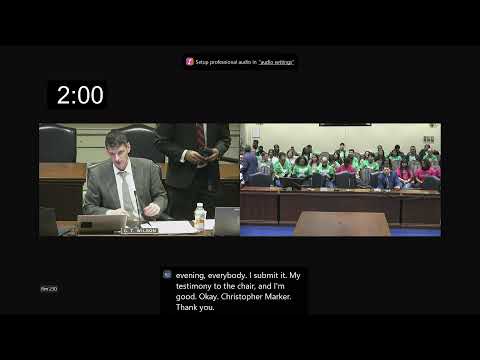
House Economic Matters Committee — HB 14‑00, a wide‑ranging measure touching tipped wages, taxes and workplace training, drew one of the largest and most emotional hearings on March 4 as restaurant workers, business owners and labor advocates packed the room.
House Economic Matters Committee — HB 14‑00, a wide‑ranging measure touching tipped wages, taxes and workplace training, drew one of the largest and most emotional hearings on March 4 as restaurant workers, business owners and labor advocates packed the room.
Sponsor Delegate Adrian Buwaffe said the bill aims to reduce tax burdens on tipped workers, strengthen harassment prevention training and require clear disclosure of service fees. "This bill allows us to cut taxes for working families by allowing a subtraction under state income tax for tips received by individuals during the course of employment," Buwaffe told the committee, adding the measure also directs a study of the full minimum wage and the impact of removing a subminimum tipped wage.
Workers and labor advocates urged passage. Rebecca Paris, organizing director with 1 Fair Wage Maryland Coalition, told lawmakers tipped workers are disproportionately women of color, earn low median incomes and report high rates of economic insecurity and harassment. Servers who testified said they relied on tips to cover rent and food and said a guaranteed base wage would permit them to set boundaries against harassment and better enforce wage‑theft protections. Jacqueline Littleton, who said she worked under a subminimum wage and later moved to a full‑wage state, described the policy difference as "basic justice."
Business groups opposing the bill or portions of it included the Restaurant Association of Maryland, the Maryland Hotel & Lodging Association and trade groups that represent small hoteliers. Melvin Thompson of the Restaurant Association said many members were relieved that some earlier provisions were removed in late amendments, but said the association would take time to evaluate the new language and could not support measures that risk job losses or business closures. Hotel executives and restaurateurs told the committee Maryland businesses operate on narrow margins and that higher wage costs can produce reductions in hours or staffing.
Economic and policy witnesses diverged. The Employment Policies Institute warned against eliminating the tip credit and cited job losses that followed a ballot initiative in Washington, D.C., while the Maryland Center on Economic Policy offered informational testimony documenting that tipped workers as a group have lower incomes and higher food insecurity rates than other workers.
Specific points of debate included whether the bill—s tax subtraction would encourage avoidance tactics, how disclosed service fees should be handled, and how a training requirement tied to liquor license renewals would be implemented. Lawmakers asked both sides about unintended consequences, whether tips would actually be preserved under the proposal and whether the bill—s study would produce usable data.
Ending: HB 14‑00 remains contested. The hearing underscored conflicting priorities: workers and labor groups pressing for more predictable wages and protections against harassment, and many business owners warning that wage or regulatory changes could reduce hours, eliminate jobs or force closures.