Get Full Government Meeting Transcripts, Videos, & Alerts Forever!
Get email alerts on the Artificial Intelligence Governance topic
No spam. Unsubscribe anytime.
Lawmakers weigh AI disclosure, auditing bill after labor and civil‑rights groups back stronger rules and industry urges sector‑by‑sector approach
Summary
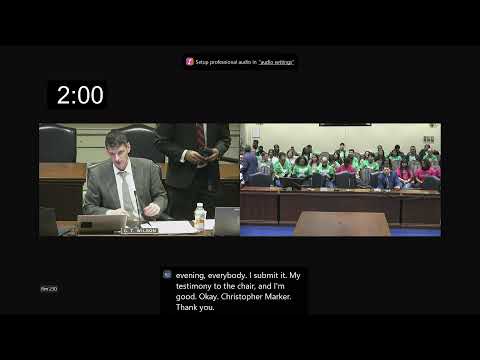
House Economic Matters Committee — A broad bill requiring disclosures and risk management for high‑risk automated decision systems (ADS) drew a wide array of testimony on March 4 as lawmakers considered HB 13‑31.
House Economic Matters Committee — A broad bill requiring disclosures and risk management for high‑risk automated decision systems (ADS) drew a wide array of testimony on March 4 as lawmakers considered HB 13‑31.
Sponsor Delegate Lalichi (District 21) said the measure would require developers and deployers of "high‑risk" AI systems to produce standardized disclosures to purchasers, to allow deployers to conduct regular impact assessments, and to give consumers notice and recourse when systems make consequential decisions. The bill would require developers to disclose purpose, training data categories, known limitations and mitigation steps — without forcing public release of proprietary source code or training sets.
Labor and civil‑rights groups supported the measure and urged additional worker protections. Crystal Wise of the AFL‑CIO Tech Institute told lawmakers AI is already being used in workplaces for surveillance and personnel decisions and said workers need mandatory consultation and redress. Zoe Gallagher of Economic Action Maryland urged full transparency in housing, hiring and government benefits decisions where biased models can cause life‑altering harms.
Privacy advocates at EPIC and consumer groups called for strengthening the draft to ensure mandatory impact assessments, robust disclosure language, and clear enforcement. The Center for Democracy & Technology—s virtual witness also urged clearer thresholds: he said the bill—s "substantial factor" test for coverage is ambiguous and could be exploited by companies to avoid requirements.
Industry groups and technology associations pushed back. TechNet and the Chamber of Progress urged a sector‑by‑sector regulatory path and warned a broad, omnibus statute risks constitutional and implementation issues. Trade and business witnesses expressed concern about a private right of action and urged that enforcement be centered in the attorney general—s office. Several witnesses said the bill—s definitions and disclosure obligations could chill innovation if drafted too broadly.
Lawmakers and witnesses debated narrow technical points — the meaning of "high‑risk," how to define "substantial factor" as the trigger for coverage, whether to carve out small businesses, and which agency should oversee enforcement. The sponsor said many of the bill's details could be refined, and several witnesses urged a committee work group or targeted amendments.
Ending: HB 13‑31 places Maryland among states testing how to require transparency and accountability as AI systems touch housing, hiring, lending and public benefits decisions. The bill prompted broad consensus on the need for guardrails, but no consensus on design: labor and civil‑rights groups want mandatory, enforceable worker and consumer safeguards; industry wants narrower, sectoral rules and clearer limits on private litigation.