Get Full Government Meeting Transcripts, Videos, & Alerts Forever!
Get email alerts on the Advisory Reform topic
No spam. Unsubscribe anytime.
Board pulls proposed advisory‑committee overhaul after chairs demand input; superintendent to form task force
Summary
After a planned presentation proposing consolidation of advisory committees triggered sustained criticism from advisory chairs, the board agreed to pause the item and seek broader input. The superintendent will present a time‑limited task force to review committee structure and procedures.
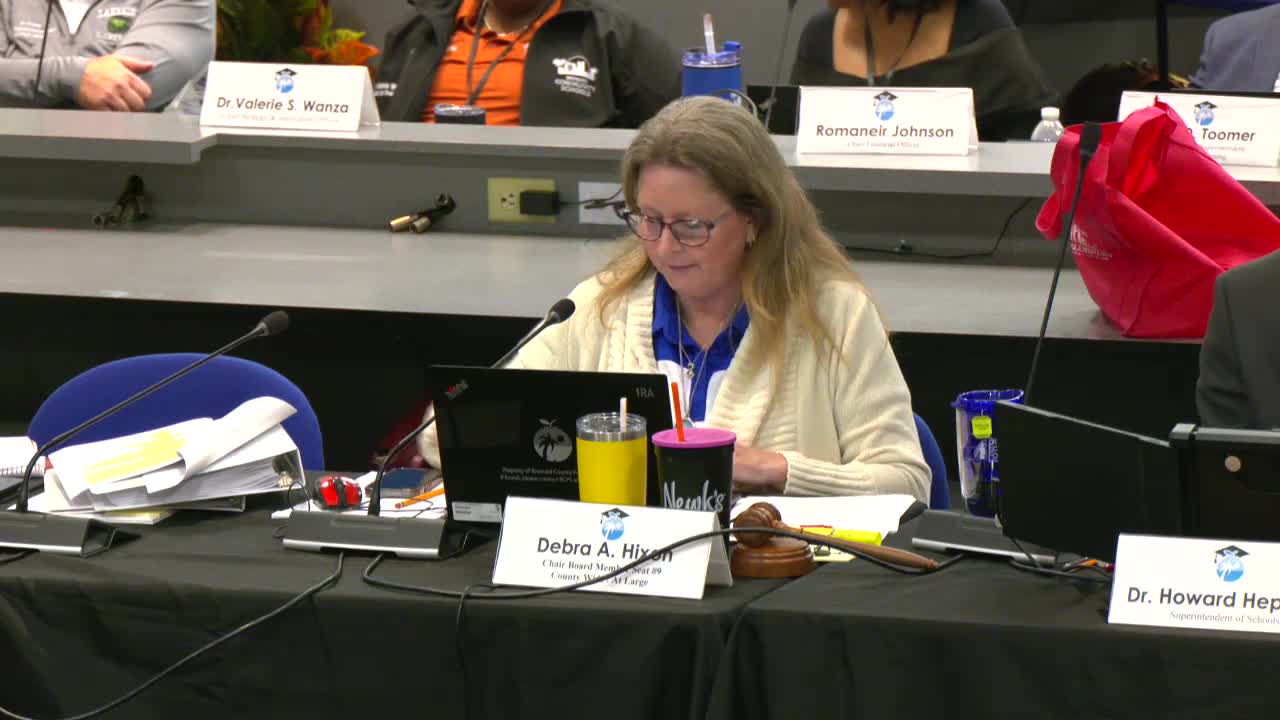
Chairs of Broward County’s advisory groups used a quarterly joint meeting on March 4 to object to a staff presentation that proposed consolidating or restructuring advisory committees. The board, hearing broad and repeated objections, paused the item and agreed to a short task‑force process to gather further input.
Why it matters: The advisory committees — which include parent, student, facilities, ESE, ESOL, gifted and other groups — are a primary venue for parental and community input. Several chairs said the proposal was circulated with insufficient notice, contained factual errors about committee activities and membership, and risked silencing volunteers who provide long‑standing oversight and advice.
During the meeting, dozens of advisory chairs and members described the work that their volunteer groups do, including student leadership outreach, special education advocacy, bilingual family outreach and facilities oversight. Several chairs said they lack consistent staff support, record retention and a standard orientation. They urged the board and administration to produce better onboarding, a public‑facing repository of minutes and bylaws, and clearer liaison responsibilities before changing structures.
Key complaints included: inaccurate attendance and membership counts in the staff deck; limited notice to committees before the presentation; and concerns that boards might be penalized for the actions of individual chairs. ESE and ESOL leaders warned that federal or consent‑decree requirements (ESOL was cited in testimony) require district‑level parent engagement structures and should not be eliminated.
Board response and next steps: After extended discussion, Superintendent Hepburn and Chief of Staff John Sullivan said they will prepare a board item to form a time‑limited task force that will review the advisory structure and recommend changes. Sullivan said the proposed task force would allow each board member to appoint one representative; the superintendent would appoint two additional members. The board discussed a 60‑ to 90‑day review timeline; the board will vote on forming the task force at an upcoming meeting. Sullivan said the task force will report back and its findings could be folded into a May workshop and a June board action if timing allows.
Chairs pressed for concrete safeguards during any redesign. Suggestions included: a public handbook for chairs and liaisons, clear expectations for liaisons and public records access, a proposed cadence of meetings and a process for succession and training of volunteer leaders. Several chairs said they would welcome being part of task‑force membership and urged that any review be collaborative rather than top‑down.
What the board asked staff to do: Board members asked staff to prepare a task‑force proposal for next week’s agenda that specifies membership, public‑meeting procedures, timeline and interim reporting. Several trustees asked staff to prioritize a procedural manual for advisory chairs and clarifying guidance on public records and liaison duties. Sullivan said staff would present a task‑force item for board consideration and that he would try to compress timing so recommendations could be considered before the next school year.
The decision paused a planned rule‑making step on policy 10‑70 that would have changed committee membership and leadership terms. Board members said they and the superintendent wanted broader input before asking trustees to adopt structural changes.
Quote: "We need to have a pattern interrupt of how things have been progressing," said one board member, calling for a careful, collaborative review. Multiple chairs urged that any reforms not curb the voices of parents and community volunteers.
Bottom line: The board did not adopt structural changes at the workshop. Instead, trustees and staff agreed to a formally constituted, time‑limited task force to gather input and make specific recommendations for how advisory and volunteer committees should operate going forward.