Get Full Government Meeting Transcripts, Videos, & Alerts Forever!
Get email alerts on the Energy Solar Net Metering topic
No spam. Unsubscribe anytime.
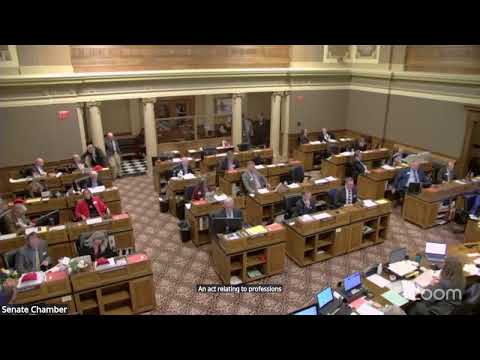
Senate rejects House Bill 183 on net metering after extended floor debate; measure fails by one vote
Summary
After hours of amendments and debate over grandfathering, aggregation and rate authority, the Wyoming Senate declined to pass House Bill 183 (net metering amendments). Final roll call on third reading resulted in a narrow defeat.
The Wyoming Senate declined to pass House Bill 183 — the net metering amendments — after extended floor debate about how to treat existing on‑site solar systems, the size of customer generators and who can set rates. The final third‑reading vote failed by one vote: 15 ayes, 16 noes.
What the bill proposed: HB183 would have created a new class of customer‑generators and set rules for how they interact with utilities. Floor amendments discussed and adopted in the Senate changed the bill’s scope several times during debate. Key elements discussed on the floor included a 200‑kilowatt cap associated with customer generators, whether systems should be grandfathered, and whether multiple meters could be aggregated. Senate debate also addressed the distinction between co‑op utilities (which are largely member‑owned) and investor‑owned utilities and whether the Public Service Commission should retain oversight of cooperative rates for certain customer generators.
Debate highlights: ‘‘This is not my bill,’’ Senator Scott said during debate, but he urged support because ‘‘it is taking a step that we need to take…if we’re ever gonna make rational sense out of the fearful and wonderful process we now have in health care pricing and billing of hospitals’’ (note: Senator Scott’s remarks were about a different bill in the same section; his principle‑style comments on utility pricing were used on the floor to support clearer, state‑level standards). Proponents argued the measure balanced the state’s interest in encouraging distributed generation while beginning to address cost shifts to non‑participating customers.
Opponents argued the bill, even as amended, either left unresolved fairness concerns or failed to protect customers who had already invested under existing rules. Senator Case urged caution and said he could not support the final draft. Other senators raised uncertainty around the detailed mechanics — for example, whether grandfathering would apply to a customer or to the installed system and whether aggregation rules would allow circumvention of the bill’s size limits.
Outcome and context: The Senate vote on third reading closed the measure with 15 ayes and 16 noes, so HB183 failed to pass the Senate. The transcript shows many floor amendments adopted earlier in the day; senators said the bill moved the debate forward, but several expressed concern that the package as amended left open too many practical and fairness questions to enact it successfully in this session.
Next steps: With the Senate’s failure to pass HB183, the existing statutory and regulatory framework for net metering remains in place. Sponsors and interested legislators signaled interest in continuing study or negotiating a revised approach in an interim process or the next legislative session.