Get Full Government Meeting Transcripts, Videos, & Alerts Forever!
Get email alerts on the Drones Critical Infrastructure topic
No spam. Unsubscribe anytime.
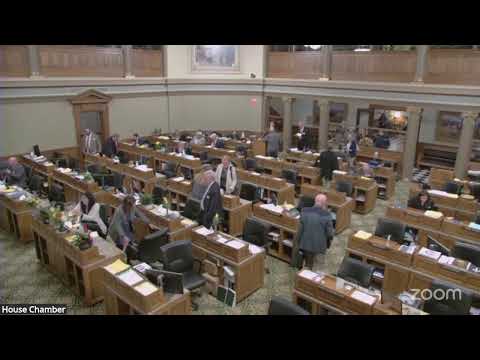
House overrides governor veto on drone bill after debate on federal conflict and law enforcement risk
Summary
The Wyoming House voted to override the governor's veto of Senate Enrolled Act 58 (original Senate File 132), a measure restricting unmanned aircraft around critical infrastructure. Debate centered on law-enforcement liability, federal preemption and the bill's similarity to prior prison-related statutes.
The Wyoming House of Representatives voted to override Governor's veto of Senate Enrolled Act No. 58, original Senate File 132, a bill addressing unmanned aircraft operations near critical infrastructure.
The motion to override was introduced under the Wyoming Constitution; supporters said the measure reiterated protections the Legislature adopted two years earlier for prisons and related facilities. Representative JT Larson urged members to "stick to our guns," saying the bill previously passed this chamber with the required margin. Representative Clauston said the bill used language similar to statutes the Legislature passed two years ago and asked for an aye vote on the override. Representative Jarvis, who said he had originally cosigned the bill, described new federal statements and urged caution, but stopped short of opposing the override. Representative Provenza warned the House the bill could place state law enforcement in direct conflict with federal law, risking federal penalties and potential prison terms.
Supporters framed the override as a statement that Wyoming is prepared to defend airspace over critical infrastructure. Representative Behr, a former Navy member, argued for overriding the veto, saying, "This bill just drones on and on. Let's vote I and get it over with." Opponents highlighted the potential for conflict with federal aviation law and the risk to officers tasked with enforcement.
The override vote requires a two-thirds majority of members elected. The chief clerk called the roll; the final tally recorded 47 ayes, 13 noes, and 2 excused. By that count the House voted to override the governor's veto of the enrolled act. The presiding officer announced: "By your vote, you have voted to override the governor's veto of Senate enrolled act number 58 being original Senate file number 132."
The House proceeded to enrolled acts and other business after the vote.
Ending: With the override adopted, the enrolled act will move forward under state legislative procedure; the transcript records the House's override vote and the floor debate that preceded it.