Get Full Government Meeting Transcripts, Videos, & Alerts Forever!
Get email alerts on the Community Development Cdbg topic
No spam. Unsubscribe anytime.
Long Beach holds CDBG hearing as city readies application to Nassau County; council ratifies $106,000 subrecipient award
Summary
At a public hearing and later on the regular calendar, Long Beach staff outlined priorities for the city's Community Development Block Grant application to Nassau County, described how HUD eligibility maps limit where funds may be used, and the council ratified a subrecipient agreement accepting an additional $106,000 for the prior program year.
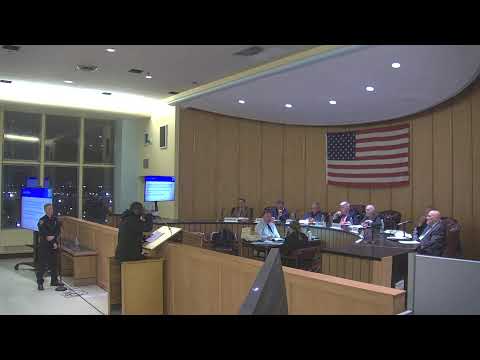
City officials held a public hearing March 4 to collect public input for the city’s Community Development Block Grant application to Nassau County and later ratified a subrecipient agreement formalizing an additional $106,000 award for a prior program year.
The hearing opened with Patty Born, the city’s director of economic development and planning, explaining the purpose: “The purpose of the hearing is to allow the public to propose activities for inclusion in the city’s CDBG Community Development Block Grant Funding application.” Born and Tyler Hoffman, director of community development, said the city will align grant priorities with its capital plan and HUD program rules.
Hoffman described how last year’s allocation was used and the program’s limits: “Last year’s allocation was $600,000…about 65% is used for public facilities and infrastructure,” and he added that “for public service programs, at least half of the participants that benefit from the funding have to be low to moderate income.” He also said the city opened a subrecipient solicitation for small nonprofit grants of $5,000–$10,000 and had received 10 applications.
The hearing drew multiple public comments about how HUD’s eligibility mapping affects which neighborhoods can receive infrastructure and program funds. Resident James Hodge and others asked which census tracts the county used; staff said the new HUD-derived map had altered eligibility and that some previously eligible parts of the city are no longer eligible. Hoffman said the map and its dual statutory formula ‘‘uses several objective measures of community needs, including the extent of poverty, population, housing overcrowding, age of housing, and population growth lag in relationship to other metropolitan areas.’’
Council members pressed staff on project beneficiary counts and allocations to seniors. Council member Lester questioned senior-services line items that showed “approximately 20 seniors” as beneficiaries; Hoffman and Born said that figure was project-specific (for example, an internship program might directly serve 7–10 youth) and that staff would review contract documents for any typographical errors. Born said the city had requested higher senior funding in prior applications but that county award decisions and HUD rules on category allotments determine final distributions.
On the regular agenda the council considered and approved a resolution to ratify the county subrecipient agreement that allows the city to accept an additional $106,000 in CDBG funds for the fiftieth program year. City manager Dan Creighton praised the grants team: “This award highlights the great job that our grants team does on a daily basis,” and the council approved the measure as part of a block vote later in the meeting.
What happened next
The city will finalize its fiscal-year application to Nassau County on March 19. Comments recorded at the hearing will be assembled for consideration in that submission. The small-grant subrecipient decisions will be included in the city’s application and, if awarded by the county, will be announced in the fall; Hoffman said activities funded by the award could not begin until January 2026 even if approved.
Why it matters
CDBG funds reimburse municipalities for eligible capital, infrastructure and public-service projects that benefit low-to-moderate-income residents. Changes in HUD’s eligibility mapping and county allocation formulas can shrink the areas where large portions of infrastructure dollars may be spent. Local advocates at the hearing urged clearer outreach and more consistent funding for senior programs, and staff committed to follow up on apparent discrepancies in beneficiary counts.
Votes and next steps
The council later ratified the subrecipient agreement accepting the additional $106,000 as part of a block vote on items 1–11, which passed on a roll call vote.