
Long Beach council presses to fund Rescue 2 after firefighters and chiefs warn EMS system is strained
Get AI-powered insights, summaries, and transcripts
Sign Up Free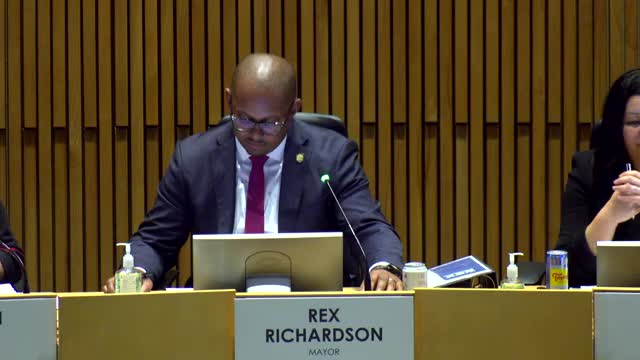
Summary
After firefighters and city officials described persistent shortages of paramedic ambulances and heavy workloads, the City Council directed staff to identify funding to extend the Rescue 2 peak‑load ambulance pilot and referred structural funding questions to the Budget Oversight Committee.
The Long Beach City Council on Tuesday asked the city manager to seek uncommitted funds and return within two weeks with options to restore Rescue 2 to full service and asked the Budget Oversight Committee to consider structural funding for the unit in the FY 2026 budget.
The action followed a detailed presentation by the Long Beach Fire Department on Rescue 2, the department’s so‑called peak‑load ambulance pilot, and a public comment period in which more than a dozen firefighters and paramedics described frequent periods when no Advanced Life Support (ALS) ambulances were available in the city.
Why it matters: Firefighters and department leaders told the council that shortages of ALS ambulances have become routine as emergency medical demand has steadily risen. The Rescue 2 pilot was created to relieve the busiest units in the downtown and port areas; council members and the fire chief said the unit reduced the number of times the city was “out of units” but funding constraints have forced the pilot to operate fewer days than initially planned.
Chief Dennis Buchanan told the council the Rescue 2 peak‑load unit “respond[ed] to close to nearly 3,000 total calls,” and said the department recorded 67 incidents in 2023 when the city was without an ALS ambulance for more than five minutes; after the Rescue 2 pilot that figure fell to 42 in 2024. At one point during questioning, Buchanan said flatly, “No. You should never be out of rescues.”
Council discussion and motion: Councilmember Cindy Allen, who brought the item forward for further funding consideration, described repeated occasions when residents called 911 and paramedic ambulances were not immediately available. Allen moved to have the city manager “look into any funds, that aren't obligated or any funding sources to fully, restore Rescue 2 ... till the end of the year” and to pursue structural funding in FY 2026; the vice mayor seconded the motion. Council later incorporated Rescue 2 as a priority within the year‑end budget review and voted to have staff return within two weeks with specific recommendations for funding the pilot through the end of the fiscal year and pathways for longer‑term support.
Costs and options presented: The fire department estimated personnel costs to operate Rescue 2 on a 12‑hour, seven‑day schedule at roughly $419,840 for the remainder of FY 2025; running the same 12‑hour, seven‑day schedule for a full year was presented at about $1.2 million for FY 2026. Chief Buchanan also presented a far larger estimate for a traditional 24‑hour, seven‑day, full‑staff ALS ambulance operation; the number cited in the meeting transcript was an approximate figure presented by the chief as the 24/7 personnel cost for a replacement unit.
Officials’ budget context: City Manager Tom Modica and budget staff cautioned that Long Beach faces structural budget challenges and described limited one‑time funds available for the current year. Modica said the city would explore options—including reprioritizing unspent one‑time items and other available balances—but also emphasized fiscal constraints and the need to weigh priorities citywide.
Public testimony: More than a dozen Long Beach Fire Department personnel and other residents spoke during public comment. Firefighter Philip Hanlon recounted a call in which his unit arrived to find a patient with life‑threatening chest pain but no ALS ambulance available; he said, “After about 15 minutes, she stopped breathing then went into cardiac arrest ... Despite our efforts ... she didn't survive.” Several other sworn personnel described long shifts, rising call volumes, and recruitment and retention challenges.
Council response and next steps: Mayor Rex Richardson and other councilmembers said the testimony underscored a need to invest in public safety and to consider longer‑term funding strategies. The council approved the request to have staff return quickly with funding options to continue Rescue 2 through the end of the year and directed that structural funding for a permanent solution be considered in the FY 2026 budget and by the Budget Oversight Committee.
Ending: The council framed the request as an interim step: staff will present specific funding sources and options to extend Rescue 2 in the near term while the council and budget committee consider structural approaches during the next budget cycle.