Get Full Government Meeting Transcripts, Videos, & Alerts Forever!
Get email alerts on the Transit topic
No spam. Unsubscribe anytime.
Porterville outlines five-year short range transit plan, approves new Americana bus branding
Summary
City staff and consultants presented a short range transit plan (SRTP) aimed at improving routes, on‑time performance and rider experience. Council approved a branding design and directed staff to pursue procurement for vehicle liveries and bus stop updates.
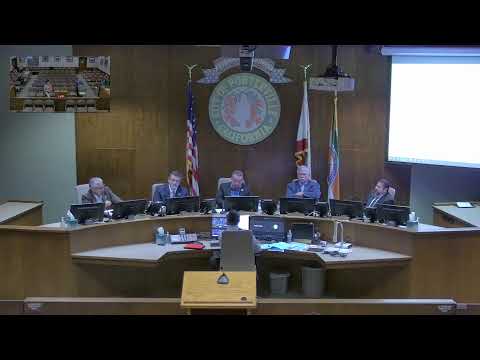
Porterville officials on March 4 reviewed a five‑year short range transit plan intended to improve reliability, align service with demand and make transit a more usable option for residents.
Transportation Director Rich Tree told the City Council the SRTP will analyze existing routes and ridership, gather community input and use performance metrics to guide route and budgeting decisions. Tree said the plan is required by the Tulare County Association of Governments to remain eligible for certain funding and will follow Federal Transit Administration best practices for service planning.
"The SRTP is our five‑year game plan to ensure that transit services are safe, reliable, efficient, easy to use and meet the needs of our community," Tree said during the presentation. Consultants from Fair & Pierce, who are drafting the plan, told the council they are completing an existing‑conditions analysis and beginning community engagement; public meetings and a rider survey are scheduled as part of phase two.
Council members asked about low‑ridership routes and options to improve efficiency. Fair & Pierce consultant Jeremiah said the team is considering combinations of routes, seasonal adjustments and partnerships with regional providers to better match service to demand. Council members and staff discussed the East Side (Route 3) as a high‑ridership corridor and noted Routes 4 and 6 had lower boardings; staff said data analysis will guide any consolidation or seasonal changes.
Separately, staff presented three concept designs for an updated transit livery. The council directed staff to adopt a hybrid design that uses Concept 1 as the base with the "All‑America" badge from Concept 3 and instructed staff to proceed with competitive procurement for application to the fleet. Council also directed staff to obtain quotes and to move forward with implementation for 11 vehicles (including micro‑transit units), with funding to come from the transit division operating budget (federal FTA funds and local match).
Tree emphasized that the SRTP is not merely a report but a framework for changes that will be measured: "We're going to analyze existing services, gather input from the community, which will drive how we apply resources to achieve a return on investment, and then hold ourselves accountable by measuring our performance."
What’s next: staff will continue the community engagement phases, return to council with draft recommendations and begin the procurement process for the vehicle liveries and bus‑stop improvements approved by the council.