Get Full Government Meeting Transcripts, Videos, & Alerts Forever!
Get email alerts on the Policy Safe Inclusive topic
No spam. Unsubscribe anytime.
Board takes first read of ‘Safe and inclusive school environments’ policy; trustees ask clarifying edits
Summary
The board reviewed a first reading of a proposed policy addressing immigration–related law-enforcement access and student protections. Members asked for clarified definitions of 'access,' clearer treatment of law enforcement across policies, and broader staff/contractor awareness or training options before a second reading.
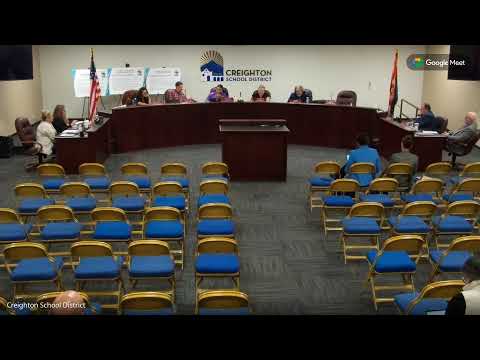
The Creighton Elementary District Governing Board on March 11 considered a first reading of a proposed policy titled in materials as “Safe and inclusive school environments.” The draft policy consolidates guidance on how the district will respond to requests for access or information from immigration-related law enforcement and describes designated-response roles, privacy protections and staff responsibilities.
Board members asked the administration and counsel for several clarifications before a second reading, including clearer definitions of “access,” how the policy interacts with other board policies governing law-enforcement contact, and whether the district should explicitly require awareness or conditional training for contracted workers and bus, food-service, or other staff who might encounter law enforcement at campus access points.
Key discussion points Board member Marquez proposed specific language to expand awareness and optional training obligations beyond administrators and front-office staff. She suggested adding a clause that “all district employees, including any contracted workers, shall be made aware of this policy” and that, “if deemed necessary by the superintendent or school principal, [they] shall undergo training to ensure proper adherence to this policy.” Marquez cited scenarios such as bus stops, after-school partners and maintenance staff where nonadministrative staff might encounter law enforcement.
Board member Katie Gibson McLean raised structural and policy-overlap questions. She said parts of the draft appear to conflict with existing policies that govern law-enforcement access and student privacy, and she asked the administration to clarify whether “access” means access to people, property, or both. She also noted a numbering/formatting error in the draft and asked for consistent cross-references to existing board policies.
Administration response Superintendent Mann and staff said the draft policy was intended to consolidate protections and make the district’s stance clear to families, noting statutes and privacy protections already constrain information sharing in many circumstances. Mann described the policy as a way to “pull all of the critical pertinent pieces of information into one place and also makes it a lot easier to communicate the governing board’s policy based stance with members of our community and our families.”
Next steps and committee input Board members asked administration to circulate revised language and to solicit input from the district advisory committee and legal counsel; the board did not vote on the policy at first read. Mann and board members indicated they'd like the policy to be vetted with the student-conduct policy updates and with the district’s attorney to ensure consistent cross-references to mandatory reporting, FERPA, and other statutes.
What was not decided No board vote was taken on this first read. Board members asked for drafting edits on title, definitions, cross-policy consistency and for clearer language about role designations (the draft uses “DSO” to identify a designated safety officer role). Several members requested that the administration provide model language and examples of training options that could be required for contractors or campus staff if the board decides an explicit training obligation is appropriate.