Get Full Government Meeting Transcripts, Videos, & Alerts Forever!
Get email alerts on the Education topic
No spam. Unsubscribe anytime.
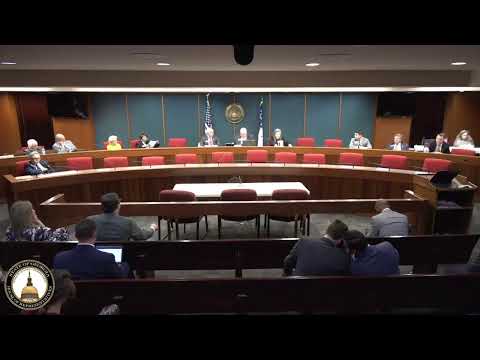
House higher education committee holds hearing on online sports-betting constitutional amendment and enabling bill
Summary
The House Higher Education Committee heard testimony on House Resolution 450, a proposed constitutional amendment to allow only online sports betting, and House Bill 686, the related enabling law. Supporters emphasized revenue for pre-K and HOPE scholarships; opponents warned of increased problem gambling and social costs.
The House Higher Education Committee on the evening of the hearing took testimony on two related measures: House Resolution 450, a proposed constitutional amendment to place a 2026 ballot question asking Georgians whether to legalize online-only sports betting, and House Bill 686, the enabling legislation that would set rules, licensing and taxes if the amendment passes.
The measures were presented together for the hearing but would be voted on separately. Chairman Weidower, sponsor of both measures, said HR 450 would ask voters in 2026 “whether or not they want to legalize online sports betting only,” and that proceeds would be routed to the Georgia Lottery for education programs. He described the revenue split in HB 686 as 85% to pre-K and HOPE scholarships and 15% of the first $150,000,000 set aside for responsible-gaming measures.
“Each one of us can pick up our phone, place bets, with 0 to no regulations whatsoever,” Chairman Weidower said, arguing that the bills aim to regulate a market that now operates largely outside state oversight and to “capture the tax dollars that are leaving the state.”
Key provisions outlined in HB 686 during the hearing include: a 20% tax on operator revenue; designation of the Georgia Lottery as the master sports-betting licensee; a cap on certain licenses (16 total, with set allocations for professional teams and marquee events); prohibition of promotions and player credits; a ban on prop bets for collegiate sports; a minimum wagering age of 21; requirements for two-factor authentication and account verification; geofencing to prevent out-of-state play; and separate accounting for application, annual license and fine revenue. Fee levels noted in the bill text during the hearing include an application fee of $100,000 and an annual license fee of $1,000,000 for major licensees, with service-provider fees described as a $10,000 application fee and $100,000 license fee.
HB 686 would give the Lottery Corporation investigatory and enforcement powers, including on-site inspections, hearings on suspected violations, administrative fines up to $25,000 per violation, and civil penalties not to exceed $5,000 per violation. The bill text discussed criminal-law cross references to Title 16 and to a code section identified in the hearing as 50-27-162 for prohibiting wagers by certain people; the sponsor said the enabling law as drafted could not operate without passage of the constitutional amendment. The bill sets a prospective effective date of Jan. 1, 2027, contingent on the amendment’s approval in 2026.
Opponents and proponents presented sharply different assessments of the likely social and economic effects. Speakers opposing the bills warned of increased problem gambling, harms to families and communities, and overstated fiscal benefits. Mac Parnell of the Georgia Faith and Freedom Coalition said the group “is opposed to the expansion of gambling in our state, including sports betting,” and argued mitigation language in the bill did not justify legalization.
A spokesman identified as Mister Griffin speaking for Georgia Baptist urged lawmakers to reject the measures, saying legalization would “put gasoline on a dumpster fire” and citing research he said tied gambling revenue to greater social costs than revenues produced.
Retired academic Dr. [name redacted in transcript] (who described a decades-long teaching career) testified that research from other states shows large increases in problem and pathological gambling after legalization, calling the policy “lose lose for the state.”
Groups supporting the bills included industry representatives and business organizations. A representative from Capital City Public Affairs, speaking for the Sports Betting Alliance (operators such as FanDuel, DraftKings and BetMGM), said the organization was “very much in support of this legislation.” Nick Fernandez of the Metro Atlanta Chamber said the chamber supports the measures, arguing the revenue could benefit pre-K and higher-education efforts and that the licensing approach balances opportunities for Georgia sports brands with open-license procurement.
Committee members discussed procedure and timing. Several members noted the constitutional amendment would go on the 2026 ballot if HR 450 advances, and the enabling law would be required for an operational market; as drafted, the sponsor said, the enabling law could not become effective absent the amendment. The chair announced the committee will continue work on the bills at future meetings and that the hearing record was open for testimony; no votes on either measure were taken at the hearing.
Speakers who testified at the hearing urged different next steps: supporters asked for continued drafting and stakeholder engagement, while opponents urged lawmakers not to put the question before voters. The committee postponed action on unrelated House Bills 88 and 541 to hold the hearing on HR 450 and HB 686. The committee adjourned following the testimony and said it may resume consideration at a scheduled committee day or at a follow-up session.
Background and next steps: If HR 450 were approved by the General Assembly and adopted by voters in 2026, HB 686’s provisions — licensing, taxation, and the Lottery Corporation’s regulatory role — would govern online sports betting in Georgia, with a stated implementation date of Jan. 1, 2027. The committee did not take final action on either measure during the evening’s hearing.