Get Full Government Meeting Transcripts, Videos, & Alerts Forever!
Get email alerts on the Traffic Enforcement topic
No spam. Unsubscribe anytime.
House splits on school-zone cameras: one bill repeals automated enforcement, another tightens rules; both pass
Summary
Lawmakers passed two competing measures: House Bill 225 would repeal automated traffic enforcement in school zones, while House Bill 651 tightens rules and guardrails for camera use. Supporters of repeal cited abuses and revenue concerns; opponents argued cameras save lives if properly regulated. HB 225 passed 129–37; HB 651 passed 164–8.
The Georgia House took two separate actions on automated school-zone traffic enforcement on the same day, approving a repeal in one bill and, separately, a regulatory reform package in another.
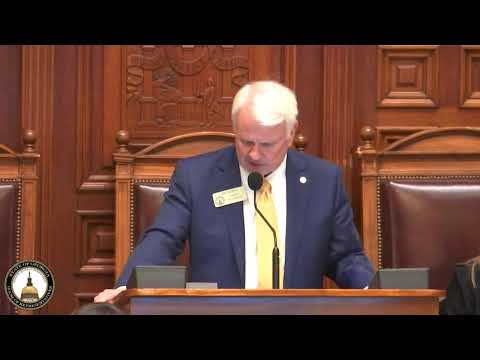
Representative Washburn introduced House Bill 225 to repeal laws authorizing automated speed-enforcement cameras in school zones, saying cameras have become a "profitable revenue stream" for private companies and some local governments and that enforcement has been unfairly administered. He cited investigations and constituent complaints about erroneous or extraneous ticketing and said camera revenues had produced millions of dollars in some counties. HB 225 passed on the floor 129–37.
Later the chamber approved House Bill 651, presented by Representative Allen Powell, a rules-and-guardrails substitute that would retain automated enforcement but impose strict conditions: prominent signs 500 feet before the zone, flashing yellow warning lights and a requirement that the warning lights be active before citations can be issued; a 10-mile-per-hour (10 mph) tolerance (consistent with radar practice) before citations issue; specified operating windows (one hour before and after school start and end times); capped fines ($75 first offense, $125 second offense) with no added administrative surcharges; restrictions on how jurisdictions may rely on camera revenue (a 35% revenue rule and a 50% set-aside to school-safety uses); and strengthened transparency and reporting requirements.
Supporters of the reform bill said it restores the program to safety-focused operation and returns a greater share of revenue to school-safety programs. Supporters of repeal said reforms do not address documented abuse in some jurisdictions and that the easiest remedy is to end automated enforcement.
Floor votes: HB 225 passed by a margin of 129 yeas to 37 nays. HB 651 passed later by 164 yeas to 8 nays.
What members asked: Lawmakers questioned the hours of operation, signage, how photographic evidence and human review would be handled, the distribution of proceeds, and whether cameras had demonstrably reduced speeding near schools. Sponsors of the rules bill said it restored key safeguards and put clearer limits on revenue use; the repeal sponsor said he would support the rules bill as a second-choice solution but preferred a statewide ban.
Next steps: Both passed the House and will be transmitted to the Senate. The Senate will need to reconcile or choose between the repeal and the reform language.