Get Full Government Meeting Transcripts, Videos, & Alerts Forever!
Get email alerts on the Housing Tenant Protections topic
No spam. Unsubscribe anytime.
Santa Barbara council agrees to put tighter tenant-protection ordinance back on the calendar after weeks of public pressure
Summary
After hours of public testimony from tenants and housing advocates, the Santa Barbara City Council voted 5–2 to agendize an amendment to municipal code Chapter 26.50 aimed at closing a loophole advocates say enables "renovictions." The item will return for full discussion March 11 using staff material prepared Jan. 9, 2024.
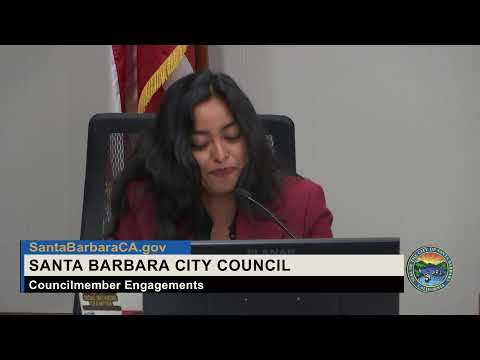
The Santa Barbara City Council voted 5–2 on March 4 to return for a full hearing an ordinance that would amend municipal code Chapter 26.50 to tighten tenant protections for residents displaced during renovations.
The move followed more than two hours of public testimony and several council members’ appeals to move the matter forward quickly. The motion to agendize was made by Councilmember Wendy Santa Maria and seconded by Councilmember Heather Harmon; the final vote was 5 in favor, 2 opposed (Mayor Rouse and Councilmember Mike Jordan).
Councilmember Wendy Santa Maria, who introduced the memo, told the council the amendments would “close an existing, ongoing, and well-documented loophole” and would reflect language previously approved by the ordinance committee and reviewed by the city attorney.
Public commenters pressed the council to act immediately. Alex Entrenkin, managing attorney for housing at the Legal Aid Foundation, urged councilmembers to consider the item’s urgency: “I looked at numbers first... I can’t say, but I just want you to feel what it... feels like for these families,” Entrenkin said, describing tenants driven from units and dispersed across the region. Lisa Carlos, who said she grew up in Santa Barbara, told the council she had watched families lose homes and asked the council to “protect the people who work in our community.”
Supporters described the change as a narrowly drawn fix to an ordinance they said had left tenants exposed after owners completed renovations and reset rents at market rates. Pam Flint Tambo of the League of Women Voters’ Housing Committee cited the California Tenant Protection Act (AB 1482) as part of the broader context and urged the council to move the local ordinance “to prevent further harm.”
Council discussion centered on procedure and timing as well as the substance of the proposed changes. Councilmember Santa Maria and co-author Councilmember Sneddon asked the council to use the version unanimously recommended by the ordinance committee in December 2023 and to rely initially on the staff report prepared Jan. 9, 2024 so the item could return quickly for deliberation and direction.
Councilmember Heather Harmon said she agreed with residents’ urgency and that the earlier vote in January 2024 had been “painful,” arguing the ordinance without the return-right conditions had “virtually no effect.” Councilmember Jordan said he wanted more analysis of the broader economic effects on the housing supply and of similar ordinances elsewhere before committing to policy changes.
After an initial motion to schedule a special meeting stalled amid calendar and staffing concerns, the council modified the action and agreed to place the item on the agenda of the regular council meeting on March 11 using the Jan. 9 staff materials as the starting point, with the understanding the council could request additional research at that hearing. The agendize motion passed 5–2; Mayor Rouse and Councilmember Jordan voted no.
What’s next: The March 11 agenda will include the ordinance package and related staff report that the council instructed staff to make available; if the council directs revisions or additional research the city attorney and staff will prepare a revised ordinance for a subsequent introduction hearing. If the council ultimately adopts an ordinance, local law includes standard notice and referendum windows before an ordinance becomes effective.
Context and public stakes: Supporters said the change would reduce displacement of long-term residents — teachers, service workers and low-income families — after renovation-driven evictions. Opponents, including representatives of real estate interests who spoke at the meeting, argued additional regulation could have unintended consequences for housing providers and the insurance market; some urged the council to allow the housing crisis task-force recommendations to guide policy instead of immediate local action.
Votes at a glance: Motion to agendize and bring back amendments to Santa Barbara Municipal Code Chapter 26.50 — motion by Councilmember Wendy Santa Maria, seconded by Councilmember Heather Harmon; vote 5 yes, 2 no; outcome: agendized for full council discussion on March 11 with Jan. 9, 2024 staff report as baseline.
Local officials who spoke on the record at the March 4 meeting and whose remarks are summarized here included Councilmember Wendy Santa Maria; Councilmember Sneddon; Councilmember Heather Harmon; Councilmember Mike Jordan; Councilmember Oscar Gutierrez; Mayor Rouse; and public commenters and advocates including Alex Entrenkin (Legal Aid Foundation), Lisa Carlos (resident), Declan Claus (resident), Nancy Avos (tenant, Santa Barbara County Action Network), Pam Flint Tambo (League of Women Voters Housing Committee), Jacqueline Inda (Casa de la Raza) and others who asked the council to act to protect tenants’ right to return after renovation evictions.
Why it matters: Tenants’ advocates told the council this is not a theoretical problem: they presented dozens of cases they say show small-property owners and corporate investors use renovation-based no-fault evictions to remove long-term residents and later re-rent units at far higher rates. City staff and the city attorney have reviewed earlier versions of the ordinance; the March 11 hearing will be the next point where the council can adopt changes or request further study.