Get Full Government Meeting Transcripts, Videos, & Alerts Forever!
Get email alerts on the Gun Safety topic
No spam. Unsubscribe anytime.
House approves tax credit to encourage firearm safe handling training and storage; bill remains voluntary
Summary
House Bill 79 creates an optional tax credit for firearm-safe-handling courses and secure-storage devices and passed after extended debate over whether incentives should be paired with mandatory safe-storage laws.
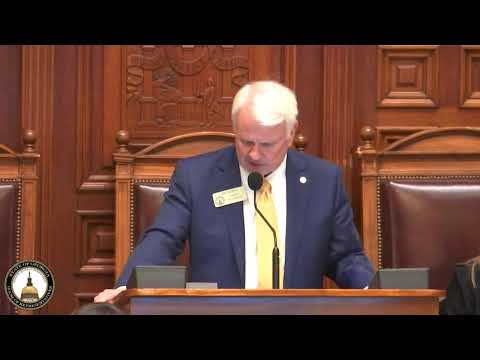
The Georgia House passed House Bill 79, a measure that creates a voluntary tax credit to help pay for firearm safe-handling instruction and secure storage devices. The bill passed on the House floor by a roll-call vote of 165–8.
Sponsor Representative Bruce Williamson (presenting as Chairman Newton in debate) described the measure as an incentive program — not a mandate — that allows taxpayers to use part of a $300 credit to obtain safe-handling instruction or to purchase secure-storage devices such as bedside safes, vehicle safes, trigger locks or cable locks. The sponsor emphasized guardrails in the language: the bill explicitly prohibits establishing a registry of recipients and preserves Second Amendment rights by keeping the program voluntary.
Floor debate was extensive and bipartisan. Supporters, including Representatives Auerl, Oliver, Roberts, Carter and others, framed the bill as a practical public-safety step that can reduce accidental shootings, youth access to firearms and thefts from vehicles. Representative Auerl and Representatives Roberts and Oliver urged the chamber to view the credit as a start and a way to encourage safer storage and training.
Opponents and skeptical speakers pressed for stronger, mandatory interventions. Several lawmakers and commenters asked why the bill did not include a safe-storage requirement or other regulatory measures such as waiting periods or red-flag laws. Supporters responded that those are separate policy debates and that HB 79 is designed to be voluntary and limited in scope while encouraging responsible ownership.
House passage: The House recorded 165 yeas and 8 nays.
Implementation: Supporters said the credit will subsidize typical safety courses (often $100–$150) and storage devices that range from trigger locks to biometric safes. The bill includes statutory guardrails against registries and requires program administration details be specified in accompanying rules.
Next steps: The bill will be transmitted to the Senate. Supporters and many speakers urged follow-up legislative work to pair incentives with other measures addressing gun violence and storage.