Get Full Government Meeting Transcripts, Videos, & Alerts Forever!
Get email alerts on the Behavioral Health Jail Diversion topic
No spam. Unsubscribe anytime.
San Marcos staff, Evoke Wellness describe jail-diversion services; city clarifies ARPA contract balance
Summary
City staff and Evoke Wellness described the provider27s detox, residential and outpatient services for people referred by San Marcos Police Department and clarified that about $70,000 of a $150,000 ARPA contract remains available after an administrative error misreported the balance.
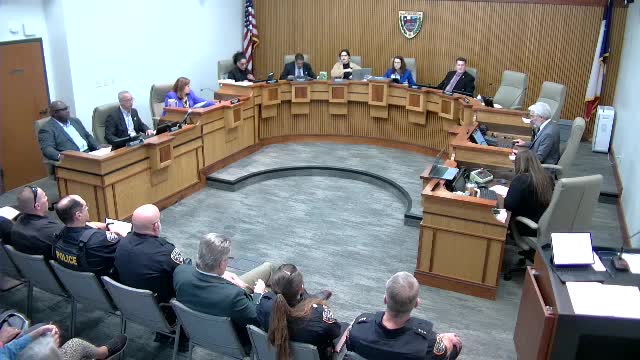
At a March 4 San Marcos City Council work session, city staff and representatives of Evoke Wellness (doing business as Sunrise Rehab and Recovery) outlined the treatment pathway and eligibility for people referred by the San Marcos Police Department as part of a jail-diversion effort, and clarified contract funding sourced from American Rescue Plan Act (ARPA) money.
The presentation was part of a follow-up requested by council after questions raised at a December meeting. Elizabeth Trevino and Chief Stan Standridge told the council the contract had been increased to $150,000 but that administrative paperwork had not reflected the change; Standridge said the actual remaining balance is about $70,000, not the $19,000 that an agenda request form had stated.
The clarification matters because the Evoke Wellness contract is funded through ARPA and is being used to connect San Marcos residents referred by SMPD and the city27s mental-health court to treatment rather than incarceration. "We have about $70,000 remaining, which is a good way to segue into what is the purpose of our collaboration with Evoke Wellness in furtherance of jail diversion," Chief Stan Standridge said.
Evoke Wellness executive director Megan Kowalski described the facility27s clinical model and levels of care. For clients admitted for detoxification, Kowalski said, detox protocols are set by medical staff and typically last five to seven days; residential treatment commonly runs 21 to 28 days; and longer lengths of stay generally lead to better outcomes. She said residential and detox clients receive a biopsychosocial assessment within 72 hours and are provided programming and clinical services while on site. "We27re licensed by the state of Texas for detox, residential, and intensive outpatient," Kowalski said.
Kowalski described staffing and program requirements: behavioral-health technicians monitor clients in a roughly 8-to-1 ratio, nursing staff are on duty 24/7 (two nurses mornings, one at night), clinical staff see clients regularly and clients are required to participate in a treatment plan and a discharge plan before leaving. She said programming requires about six hours per day of group and clinical activity (about 42 hours per week). Kowalski also said Evoke provides detox medications for the first five to seven days free of charge and that discharge coordinators work with clients on follow-up, referrals and, when appropriate, help securing medication assistance through community grants or scholarships.
Council members asked how referrals work and who the contract covers. Chief Standridge and Corporal Joe Osborne of SMPD27s mental-health unit said SMPD vets referrals for residency and need; ARPA funds will not be used for clients whose care is covered by insurance. Standridge said the ARPA-funded portion is limited to San Marcos residents who are indigent. "If they are truly indigent and have no ability to provide pay, then Corporal Osborn and his team will vet that person, and then Evoke is going to vet them additionally to determine if they qualify," Standridge said.
Kowalski said most Evoke clients treated last year had co-occurring substance use and mental-health disorders; she told council that more than 90% of the clients served in the prior year had co-occurring diagnoses. Chief Standridge and Corporal Osborne described the collaboration as part of a multi-pronged local approach that also includes mental-health court and county funding.
Council members pressed for additional local data about Evoke27s impact beyond ARPA-funded placements; Standridge and Kowalski said staff provided summary data packets to the city, and Kowalski said the provider tracks follow-up and outcomes. Standridge offered a case example: he described one referred resident (identified in the meeting only as "Mr. M") who, after repeated arrest and repeated calls for service, was placed into treatment and received active case-management follow-up; Standridge said officers had made 25 follow-up contacts for that person and that he was now living independently and sober.
San Marcos officials urged residents who need help to contact SMPD27s mental-health unit. Chief Standridge said call-takers follow a scripted intake and recommended callers mention Evoke Wellness so dispatchers will route information to SMPD mental-health staff and Corporal Osborne. "You can email or call Corporal Joe Osborne ... We are about jail diversion if your issues are rooted in a behavioral health issue," Standridge said.
No formal council vote occurred during the work session on the Evoke Wellness contract; the item was presented as a work-session briefing and funding details were discussed for future consideration.
What27s next: Council members said they will review the materials and track local placements and outcomes; staff confirmed the remaining ARPA contract balance for Evoke Wellness is roughly $70,000 and said that further budget decisions on sustaining the program would be part of future budget discussions.