Get Full Government Meeting Transcripts, Videos, & Alerts Forever!
Get email alerts on the Public Services Solid Waste topic
No spam. Unsubscribe anytime.
County weighs Sunday landfill reopening; staff proposes 7 a.m.–4 p.m. schedule, one new scale-house hire and 6‑month pilot
Summary
Prince William County public works proposed opening the county landfill on Sundays under a new single‑shift schedule (7 a.m.–4 p.m.), calling for one added scale‑house position and a six‑month pilot, while supervisors pressed for more data on costs, pre‑pandemic usage and private‑sector options.
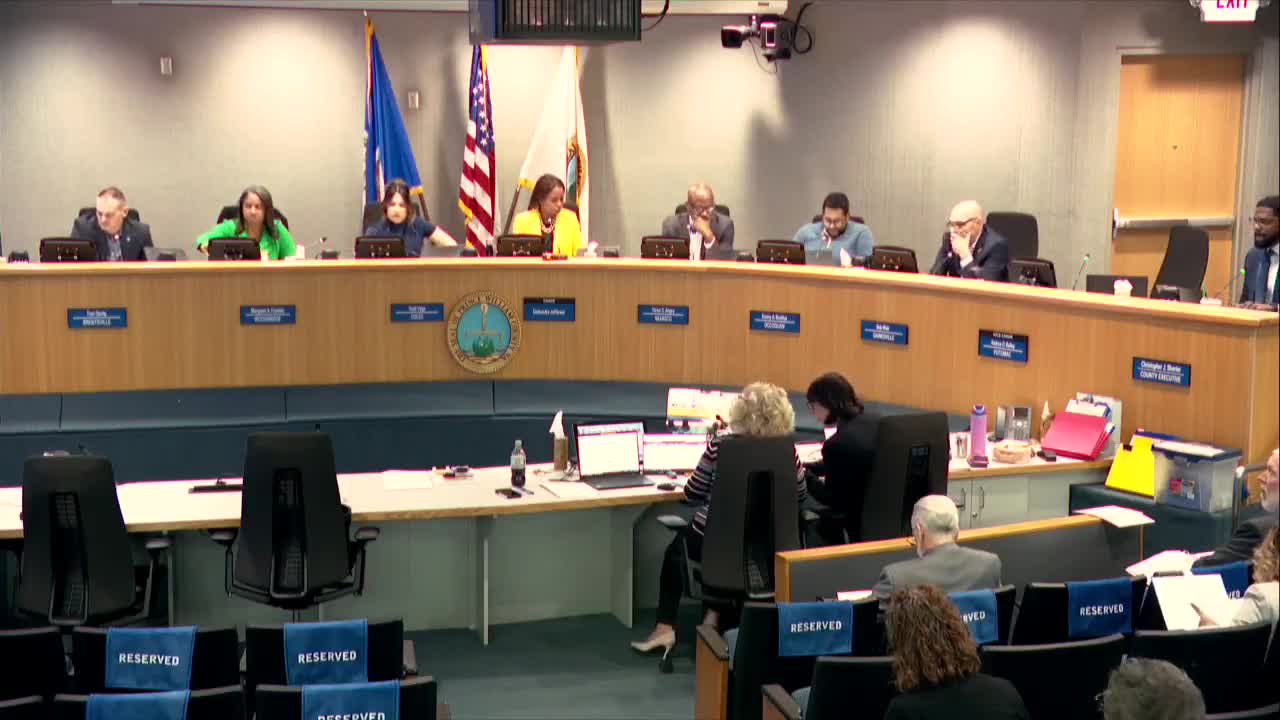
County public works officials presented a detailed review of the county’s solid-waste operations and options to reopen the landfill to the public on Sundays during the March 9, 2025 Board of County Supervisors meeting. The presentation, led by Public Works Director Katab Shorter and Assistant Director Monica Gorman, laid out usage data, capital needs for the landfill, and three staffing/schedule options for board consideration.
The proposal and the stakes: Director Katab Shorter said the county currently operates the landfill and Compass transfer station on a schedule that yields the equivalent of 69 public‑access hours per week (6 a.m.–6 p.m. Monday–Friday plus Saturday hours), and that opening Sundays while keeping the existing two‑shift daily schedule would require adding roughly 14 staff and could raise enterprise fund costs dramatically. "If we left the schedule as is and added Sunday, we're looking at 14 staff members, which we estimated would add about $44,300,000 in additional expenditure," Shorter said during the presentation.
Staff recommendation: Shorter and Solid Waste staff recommended a different approach: change the public hours to a single‑shift, nine‑hour day (7 a.m.–4 p.m.) seven days a week, which would lower routine overtime, preserve alignment between the landfill and Compass, and allow Sunday openings while minimizing budget impact. The recommendation included a six‑month pilot beginning at budget adoption, and a request for one additional scale‑house position and roughly $225,000 in differential/compensation costs drawn from the solid‑waste enterprise fund to make the new schedule operational during the pilot phase.
Why it matters: Landfill hours affect residents’ ability to drop off household waste and bulky items, and weekend access is especially important for residents who work during weekday hours. The landfill is also a capital‑intensive operation: staff presented a multi‑year capital forecast showing hundreds of millions in future investments (for new cells, liners, capping, and a future Phase 4 construction program). Shorter noted that proposed fee increases may be required in future fiscal years (FY27 onward) to sustain long‑term capital needs.
Data points from staff: FY24 metrics presented by Solid Waste: 366,000 tons handled at the landfill with roughly 433,000 transactions; Compass facility processed 57,000 tons of organics. The county currently funds the solid‑waste enterprise via residential/commercial solid‑waste fees and tipping fees. Shorter emphasized the tradeoffs: opening Sundays under the current multi‑shift pattern would raise ongoing staffing costs and impact staff safety and retention; converting to a single nine‑hour shift pattern was the most budget‑neutral approach identified.
Board and public reaction: Several supervisors raised concerns. Supervisor Vega said she found the recommended 7 a.m.–4 p.m. schedule insufficient for residents who work late and pressed staff to test whether additional weekday evening or weekend hours could be feasible. Vega also asked staff to pursue whether the private sector might provide haul‑away options to relieve pressure on county facilities.
Supervisor Bodie asked for seasonal and pre‑pandemic utilization data; staff said they could provide more granular time‑of‑day and seasonal metrics to the board. Supervisor Ware pressed for cost backup for the estimate of the 14‑employee scenario and asked for greater detail about the long‑term capital schedule, especially a $20 million item proposed to move legacy, unlined materials on the site.
What happens next: Staff said they will continue to coordinate with commercial haulers and refine the operational details; if the board wants to pursue the recommended pilot, the county will plan to fund the one‑time differential staffing cost from the enterprise fund, proceed with a phased schedule change at budget adoption, and return with more exact cost analyses and a recommendation on any FY27 fee changes to maintain capital reserves.
Ending: The landfill hours discussion will return to the board in budget deliberations; supervisors asked for more detailed modeling on commercial hauler impacts, seasonal demand, and comparisons with neighboring jurisdictions before making a final, budget‑driven decision.