Get Full Government Meeting Transcripts, Videos, & Alerts Forever!
Get email alerts on the Budget topic
No spam. Unsubscribe anytime.
Waxahachie ISD outlines 2025–26 budget priorities, warns SHARS revenue is shrinking
Summary
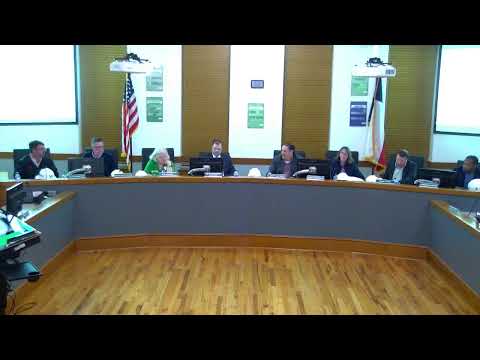
At a March budget workshop, Waxahachie ISD officials said the district is in generally good financial health but flagged declining federal SHARS reimbursements, modest enrollment changes and a set of budget priorities that would require multimillion-dollar choices for staff raises, facilities and transportation.
Brian Calden, the district’s finance presenter, told the Waxahachie ISD Board of Trustees at a March budget workshop that the district’s general fund has rebounded to roughly a 90-day fund balance and that leaders want to preserve that reserve while preparing for continued enrollment growth.
Calden said, “Fund balance is the fund that gives us latitude to be able to go out and do things that we otherwise weren't prepared to do,” and described the fund as the source the district prefers to use for one-time capital items rather than recurring personnel costs.
Board members were shown revenue and expenditure projections and a three-part budget workshop schedule that will continue in June and conclude with adoption in August. Calden said the district expects about 300 additional average daily attendance (ADA) next year and modeled a conservative enrollment increase of 300 students for budgeting rather than a demographer’s higher estimate of roughly 400.
Why it matters
Calden framed several trade-offs that will shape the 2025–26 budget: protecting fund balance for new campus openings, funding a districtwide staff salary increase, and a set of secondary priorities such as bus purchases, maintaining one-to-one student devices and targeted facility work. He said leaders are seeking board feedback on tiered priorities before firming the proposed budget.
Key details
- Fund balance and targets: Calden said the district’s general fund balance sits “right about that the, 90 day mark,” which he calculated at roughly $30,500,000. He cautioned against drawing down fund balance to pay recurring personnel costs. (Transcript excerpt: “We don't like using fund balance for personnel matters because fund balance is an exhaustible resource.”)
- SHARS reimbursements: Calden told trustees that the district’s federal SHARS (School Health and Related Services) revenue has fallen sharply as state rules change. He reported SHARS reimbursements of roughly $2.5 million in earlier years, about $1 million in the prior year and approximately $300,000 in the current year. He said the administration is “exploring whether or not to continue with the SHARS program as a district” and will decide before the federal fiscal year starts in October.
- Enrollment and ADA: The district reported roughly 11,000 students in its enrollment roll and a projected ADA close to budget assumptions; Calden said the district’s modeled ADA-based state funding is more important than raw enrollment because Texas funding currently follows average daily attendance. He noted a small shortfall of about 100 students from earlier estimates and emphasized conservative budgeting to avoid overcounting revenue.
- State and local revenue drivers: Calden showed that local property taxes now provide roughly 50–55% of general fund revenue, with state revenue around 40–43% and federal funds under 1%. He reminded trustees that property tax compression and recapture can shift the net revenue the district receives even when overall property values rise. Calden used an estimated $70 million in property tax revenue to compute that a 1% change equals about $700,000.
- Budget-reduction staffing committee: District leaders described a multi‑year process to trim discretionary spending and review staffing. Calden said a staffing subcommittee convened monthly beginning in October and cabinet recommended approximately $1.3 million in personnel expenditure reductions as a starting point; the framework was still being finalized.
- Priorities and costs: Calden presented tiered priorities for 2025–26. Tier 1 included growing fund balance, providing staff salary increases, and improving the Lumpkins practice field (ballpark estimate about $400,000). He said a 3% districtwide salary increase would cost about $2.4 million (he estimated roughly $800,000 per 1%). He estimated approximately $4 million to cover all Tier 1 items and roughly $5.5–6 million to reach through Tier 2. Bus prices were cited at about $150,000 each. Tier 3 ideas (retirement matching, attendance buyback) were noted as desirable but unlikely this budget year.
- Instructional materials: Trustees asked about the district’s recent switch from Eureka to Bluebonnet math. Calden and staff said the district may receive an additional instructional materials allotment for HQIM (high-quality instructional materials) — roughly $40 per student for HQIM components and an additional $20 if materials are open source — and that staff would follow up with specifics.
Discussion, direction and next steps
Board members asked whether the district should pursue an enrollment-based funding change at the state level and whether pre-K funding could move to full-day. Calden said both topics have bills filed in the legislature but noted no final action yet. Trustees pressed staff to ensure the district applies for all allowable ADA waivers for low-attendance days and to bring waiver decisions to the board before submission.
Calden closed by asking trustees for feedback on the priority tiers; staff will refine the budget model and return in June for the next workshop and again in August for formal adoption. He stressed a conservative approach to avoid hiring on revenue that might not materialize.
Ending
Trustees did not take formal action at the workshop; staff will return with updated enrollment, property-value and revenue figures in June and bring a proposed 2025–26 budget for adoption in August.