Get Full Government Meeting Transcripts, Videos, & Alerts Forever!
Get email alerts on the Public Safety Police Stops topic
No spam. Unsubscribe anytime.
Murphy Police report finds traffic-stop outcomes largely consistent across races; recommends post-stop analysis
Summary
An external review of Murphy Police Department traffic-stop data for 2024 found most stops resulted in verbal warnings, low rates of searches and consent searches, and no reports of force causing bodily injury. The consultant emphasized limits of pre-stop race data and focused the analysis on post-stop outcomes.
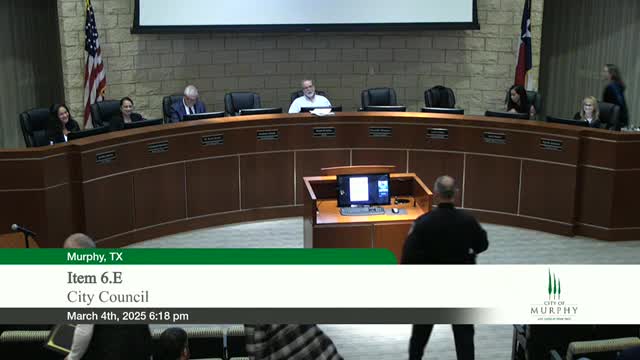
An independent consultant presented the City of Murphy’s 2024 racial-profiling analysis to the City Council on March 4, finding that outcomes of traffic stops—warnings, citations and arrests—were broadly similar across racial and ethnic groups and that no complaints alleging racial profiling were filed in 2024.
The presentation to the council was delivered by Eric Fritch of Justice Research Consultants, who said Murphy Police Department recorded 6,804 motor-vehicle stops in 2024 and that the state-required analysis focuses on what happens after an officer identifies a driver’s race or ethnicity. The consulting report noted that officers rarely know a motorist’s race before a stop—about 0.5% of stops in Murphy in 2024—so the recommended comparison is among outcomes after the stop.
The report showed most stops resulted in verbal warnings (about 70% for White motorists and a similar share for other groups). Citations and arrests represented smaller shares of stops; the consultant said 62% of arrests resulting from traffic stops were for outstanding warrants, with the remainder primarily for penal code violations. Of 6,804 stops, 157 (2.3%) resulted in searches; 61% of those searches were based on probable cause and contraband was discovered in 56% of searches. Consent searches were rare (11 of 157 searches), comprising roughly 0.16% of all traffic stops in 2024.
Fritch emphasized caveats built into the state-prescribed analysis: census population is an imperfect proxy for the driving population, and pre-stop identification of race is infrequently recorded. Because of that limitation, he said, the post-stop outcome distribution is the more reliable comparator. He also reported there were no incidents in 2024 involving physical force that resulted in bodily injury to a motorist and no police injuries recorded in the data set.
The Texas Commission on Law Enforcement prescribes the format and required comparisons under state law; council members asked clarifying questions about the search categories, reasons for searches and the meaning of contraband-discovery rates. Fritch responded that the higher contraband-discovery rate in Murphy (56%) compared with the cited statewide municipal average (about 47%) indicates searches in Murphy produced contraband at a higher rate than the municipal average for the period cited.
The presentation concluded with the consultant inviting questions. No council action was taken at the meeting on the report; the document was provided to council and recorded in the meeting packet for public record.
The report and the consultant’s remarks form the basis of the city’s compliance with Texas Code of Criminal Procedure requirements for racial-profiling reporting and the public education steps that accompany it.
Ending: Council members thanked the consultant and moved on to the next agenda item; no formal policy changes or motions were made during the meeting related to the report.