Get Full Government Meeting Transcripts, Videos, & Alerts Forever!
Get email alerts on the Denmark Unsc Presidency topic
No spam. Unsubscribe anytime.
Denmark outlines priorities as U.N. Security Council president for March
Summary
Denmark’s permanent representative to the United Nations, Ambassador Christina Marcus Lesson, presented a March program focused on mandated Council meetings, a high-level debate on U.N. peace operations, EU‑UN cooperation and issues including Gaza, Syria, Afghanistan, DRC and Ukraine.
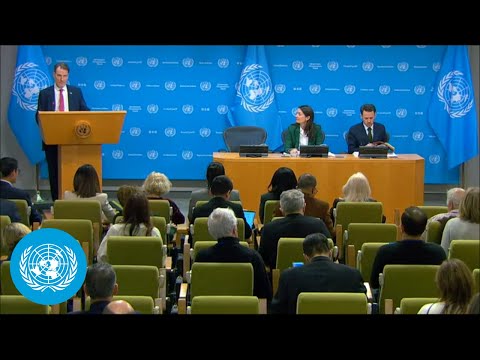
Ambassador Christina Marcus Lesson, Denmark’s permanent representative to the United Nations, on Monday laid out Denmark’s program for its month as president of the U.N. Security Council, saying the country will prioritize mandated Council meetings while seeking to broaden participation and keep the body responsive to urgent developments.
“We focus our program on the mandated meetings because it’s already a very packed agenda for March,” Ambassador Christina Marcus Lesson said. “We would like to have…an honest look at [U.N.] peace operations and discuss how we really make peace operations more adapted to the current realities.”
The program the mission circulated and Lesson described centers on the Security Council’s scheduled, country‑specific meetings and reserves space to convene additional sessions if crises intensify. Key planned events she highlighted include a high‑level open debate on U.N. peace operations, to be chaired by Denmark’s foreign minister; the annual U.N.‑European Union dialogue on cooperation (with the EU high representative briefing); and mandated briefings on Gaza, Yemen, Syria (including a session on chemical weapons), Lebanon and the Democratic Republic of Congo (DRC).
The ambassador said the peace‑operations debate is intended to be operationally focused. “Peace operations are an indispensable tool for conflict management and resolution,” she said, describing the session as an opportunity for the Council to consider how peacekeeping could be adapted to current conflicts.
Lesson also said the mission will keep slots open so the Council can respond to new developments. She listed specific March items and dates mentioned in the briefing: a March 10 meeting on the United Nations Assistance Mission in Afghanistan (UNAMA) with a focus on the situation of women and girls and a civil society briefer; a briefing and consultation on the DRC on March 27 expected to include the Special Representative and a civil society briefer; and several Middle East meetings including Gaza, Israel‑Palestine settlements and a political and humanitarian session on Syria.
On country situations, Lesson noted the Security Council could convene earlier than scheduled if circumstances demand. “We’ve learned that the hard way…how many urgent situations there are and extra meetings being called,” she said, citing Sudan, Ukraine and Haiti as possible items that could require additional Council attention.
In a question‑and‑answer session, reporters pressed Lesson on Ukraine and on recent media attention to Greenland. Edith Lederer of the Associated Press asked whether any meeting requests on Ukraine had been received; Lesson replied none had been formally requested yet and said Council members and the wider U.N. membership are watching developments closely. On Greenland, Lesson said Denmark cooperates closely with the United States on Arctic security but added: “Greenland belongs to the Greenlanders. The future of Greenland is really for the people of Greenland to decide; independence is possible.”
On the Middle East, Lesson reiterated Denmark’s continued support for a two‑state solution. Responding to a question from Abdul Hamid Siam, she said: “We continue to believe in a two‑state solution…we really just urge both parties to continue now the implementation of the ceasefire and the three phases,” and said humanitarian access should not be politicized.
Lesson also addressed Security Council working methods and the veto. Asked whether Chapter VI or other Charter provisions could be used to bar a party to a conflict from participating in a vote, she said such changes would require broad agreement and were unlikely to be realistic in the short term; she pointed to initiatives such as the Liechtenstein veto initiative as efforts to raise the political cost of vetoes.
The mission emphasized collaboration with regional organizations; Lesson noted the annual U.N.‑EU dialogue and said the EU is “a strategic partner of the United Nations across the globe.” She closed by saying Denmark will strive to be “constructive, creative and consistent” and to act as “an honest broker” while “upholding fundamental values and principles.”
The briefing closed after roughly 15–20 minutes of questions and answers; the mission asked journalists to identify their affiliations during the Q&A.