Get Full Government Meeting Transcripts, Videos, & Alerts Forever!
Get email alerts on the Optometry topic
No spam. Unsubscribe anytime.
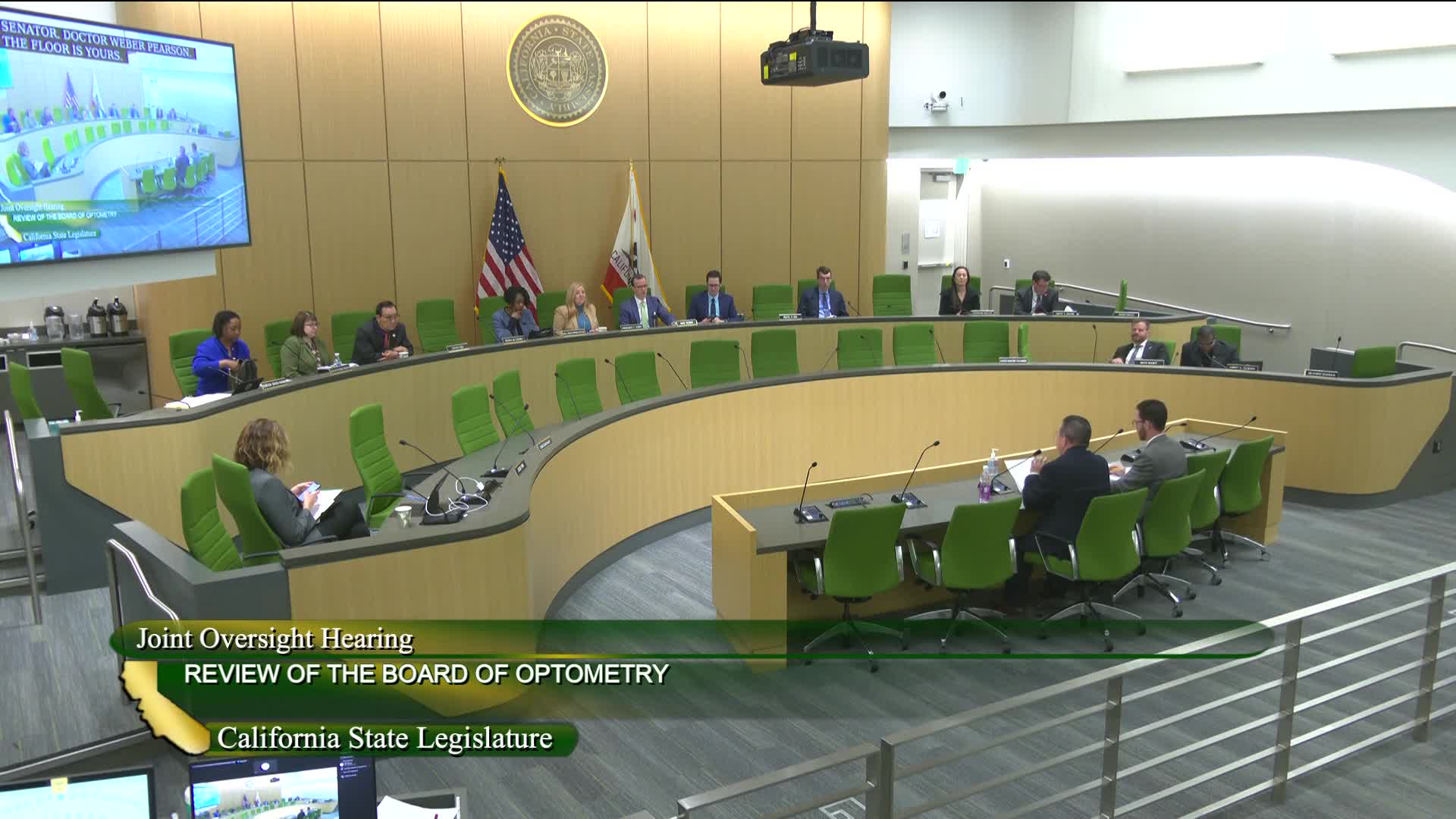
Optometry board rolls out mobile and home‑visit programs as lawmakers press on caps and scope expansion
Summary
The state Board of Optometry described faster licensing times and two newly implemented programs to increase access — a mobile optometric office permit and a home‑residence program — while lawmakers pressed the board about a statutory cap on mobile units and potential scope‑of‑practice changes including radio‑frequency treatment for dry eye.
The California State Board of Optometry told a joint Assembly–Senate sunset hearing it has reduced licensing turnaround times for graduates from months to days and implemented two programs intended to bring eye care to underserved residents: a mobile optometric office permit program and a home‑residence program.
Board President Dr. Jeffrey Garcia said licensing processing had been a top priority and praised staff work: “Our team identified this as an issue and set on a goal of increasing efficiencies, which is resulting in licensing times now reduced to less than 3 days for completed applications,” he said.
Why it matters: Vision screening and timely eyeglasses can affect school performance, child development and access to care in rural and underserved urban neighborhoods. Mobile clinics have been credited by school‑based programs with quickly identifying children who need glasses.
What the board described - Access programs: The board said regulations for the mobile optometric office program took effect in January; applications will be available on the licensing system and the home‑residence program is being rolled out to allow homebound patients to receive care. - Licensing and staffing: The board reported improved licensing turnaround (from roughly three months to under three days for completed applications) and said its licensing call wait times and audit processes have improved. - Fund condition and fees: The board acknowledged a multi‑year structural deficit but reported a modest projected surplus for the current fiscal year. It said recent regulatory fee increases implemented in 2024 brought fees to the statutory cap; the board does not currently plan to pursue further statutory fee increases but may discuss raising statutory caps to permit future regulatory adjustments.
Questions from lawmakers and stakeholders - Mobile‑clinic cap: Multiple lawmakers and mobile‑clinic advocates urged elimination or revision of a statutory cap that initially limits the number of mobile offices an entity may hold (12 for the first renewal period). The board said the cap only applies during the first renewal period and that after the first renewal the limit no longer applies; the board expressed willingness to work with the committee on whether the cap should be removed or adjusted. - Scope of practice and new technologies: Senator Weber‑Pearson raised concerns about proposed regulations allowing radio‑frequency devices to treat dry eye, noting state law definitions of surgery and urging parity in training if optometrists’ procedural authority is expanded. The board said it seeks to balance access and safety and is committed to ensuring appropriate training if scopes change. - Retail compliance and online sellers: The board told the committee it is working on proposals to close perceived regulatory loopholes exploited by some retail optical businesses and online sellers that dispense prescription eyewear without appropriate registration.
Public testimony Vision‑to‑Learn and other school‑based mobile programs urged removal of the cap, saying mobile clinics increase access in school deserts and reach children who would otherwise not receive an eye exam or glasses. Optometry associations and other stakeholders urged modernization of practice rules but emphasized patient safety and appropriate training.
No vote recorded The hearing generated follow‑up questions and requests for data but no formal legislative action was taken at the hearing.
Ending note Committee members signaled support for policies that expand access while emphasizing continuity of care — mobile clinics should link patients into ongoing, local care — and asked the board to return with more data on fund condition, licensing pipeline and compliance measures.