Get Full Government Meeting Transcripts, Videos, & Alerts Forever!
Get email alerts on the Optometry topic
No spam. Unsubscribe anytime.
Optometry board rolls out mobile and home‑based programs; lawmakers press on scope, licensing and retail compliance
Summary
The California State Board of Optometry described improved licensing turnaround and new programs for mobile and home‑based vision care. Legislators and stakeholders urged removal of limits on mobile clinics, stronger enforcement against unlicensed retail optical operations and rigorous standards if scope expansions for optometrists proceed.
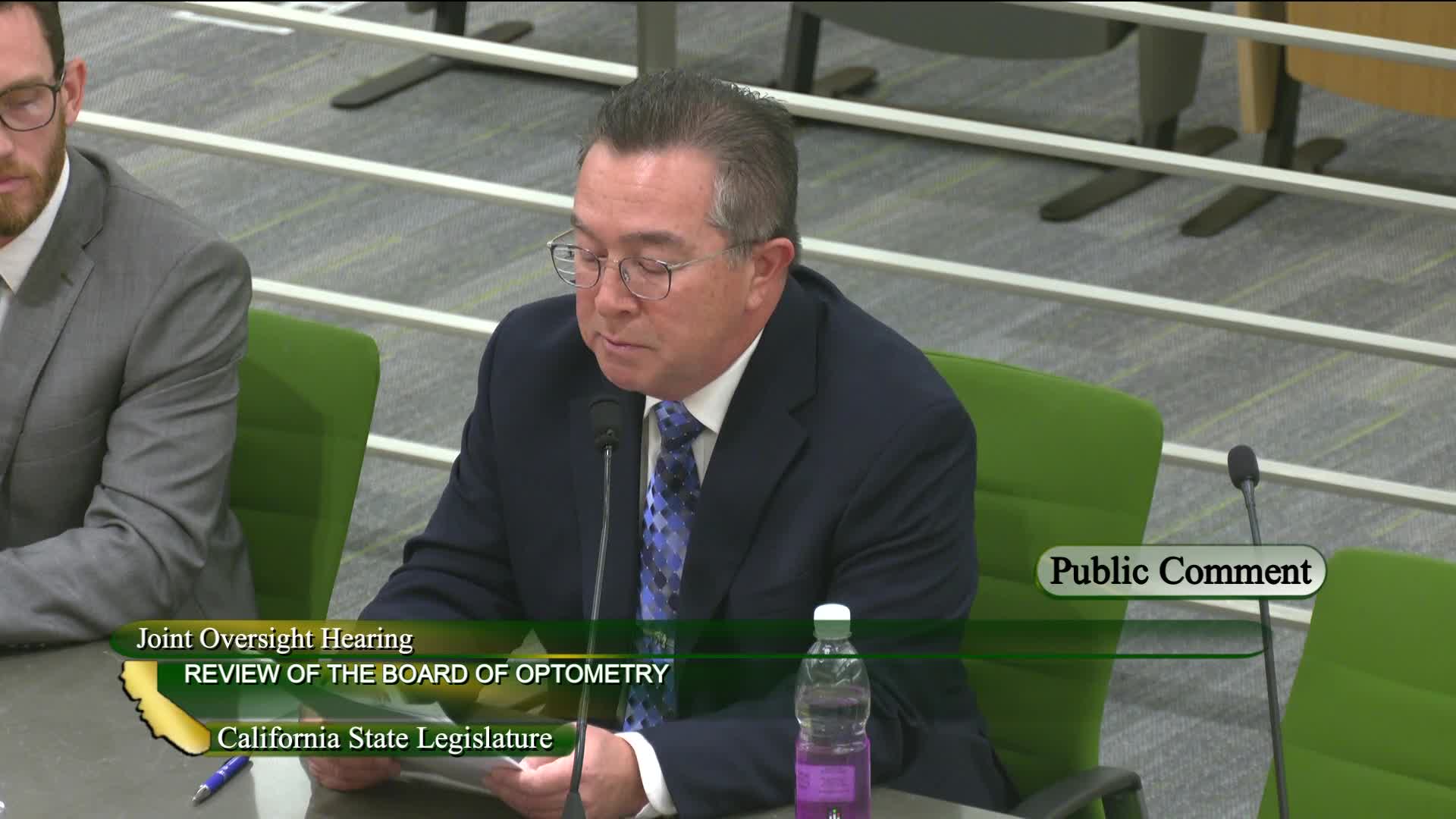
The California State Board of Optometry told the joint Assembly–Senate sunset hearing that licensing processing times have fallen dramatically and new regulations to permit mobile optometric offices and home‑residence care are now in effect. Lawmakers pressed the board to ensure continuity of care from mobile units, to address unlicensed retail optical operations and to treat any scope expansions with training parity to ophthalmologists.
Board President Jeffrey Garcia and Executive Officer Gregory Pruden said the board reduced licensing turnaround for completed applications from roughly three months to under a week and has reconstituted continuing‑education audits to improve compliance. “Licensing turnaround time for new optometry graduates was sitting at nearly 3 months… now reduced to less than 3 days for completed applications,” Garcia said.
Mobile clinics and continuity of care
The board has implemented the mobile optometric office program (regulations effective January 2025). Several lawmakers and witnesses, including Vision to Learn, urged removing a statutory cap that limits the number of mobile clinics or units a provider can operate in its first renewal period; stakeholders argued the limit undermines the program’s intent to increase access for schoolchildren and underserved areas.
Damien Carroll, national director of Vision to Learn, told the committees the nonprofit has served students since 2012 and is prepared to expand into additional regions if limits are removed: “With the help of the legislature and help of the board, Vision to Learn is really poised to help many additional students in new areas of the state,” he said. Committee chairs emphasized that mobile services must be paired with referral and continuity mechanisms so children who receive an initial exam and glasses have a pathway to ongoing local care.
Retail compliance and online dispensing
The board told the committees it is tracking retail entities that may be dispensing prescription eyewear without required registration or licensing and is exploring statutory and regulatory fixes to ensure consumer protections. Multiple legislators asked the board for options to close corporate structures that they said some companies use to avoid California oversight.
Scope of practice and training
Several legislators urged caution before expanding optometrists’ scope to include procedures that alter tissue or require surgical skill. Senator [Weber Pearson] warned the board to ensure that training required for any expanded services is comparable to the standards required for ophthalmologists and physicians. The board said it will work with the Legislature on any scope changes.
Why it matters: vision screening and accessible eye care affect children’s education, older adults’ safety and statewide health equity. The board’s new mobile and home programs aim to reach underserved communities, but lawmakers emphasized the need for continuity of care and adequate workforce pipelines.
Next steps
The board said it will continue outreach to community colleges, look for ways to strengthen licensing and education pipelines, and work with the Legislature to address retail compliance issues and the mobile‑clinic cap.