Get Full Government Meeting Transcripts, Videos, & Alerts Forever!
Get email alerts on the Real Estate Appraisers topic
No spam. Unsubscribe anytime.
California appraisal bureau highlights bias reforms, disaster outreach and funding strains
Summary
At a joint Assembly–Senate sunset review, officials from the Bureau of Real Estate Appraisers described steps taken after AB 948 to address racial and ethnic bias in valuations, new entry pathways into the profession and short-term disaster consumer protections, while warning of long-term fee and staffing pressure.
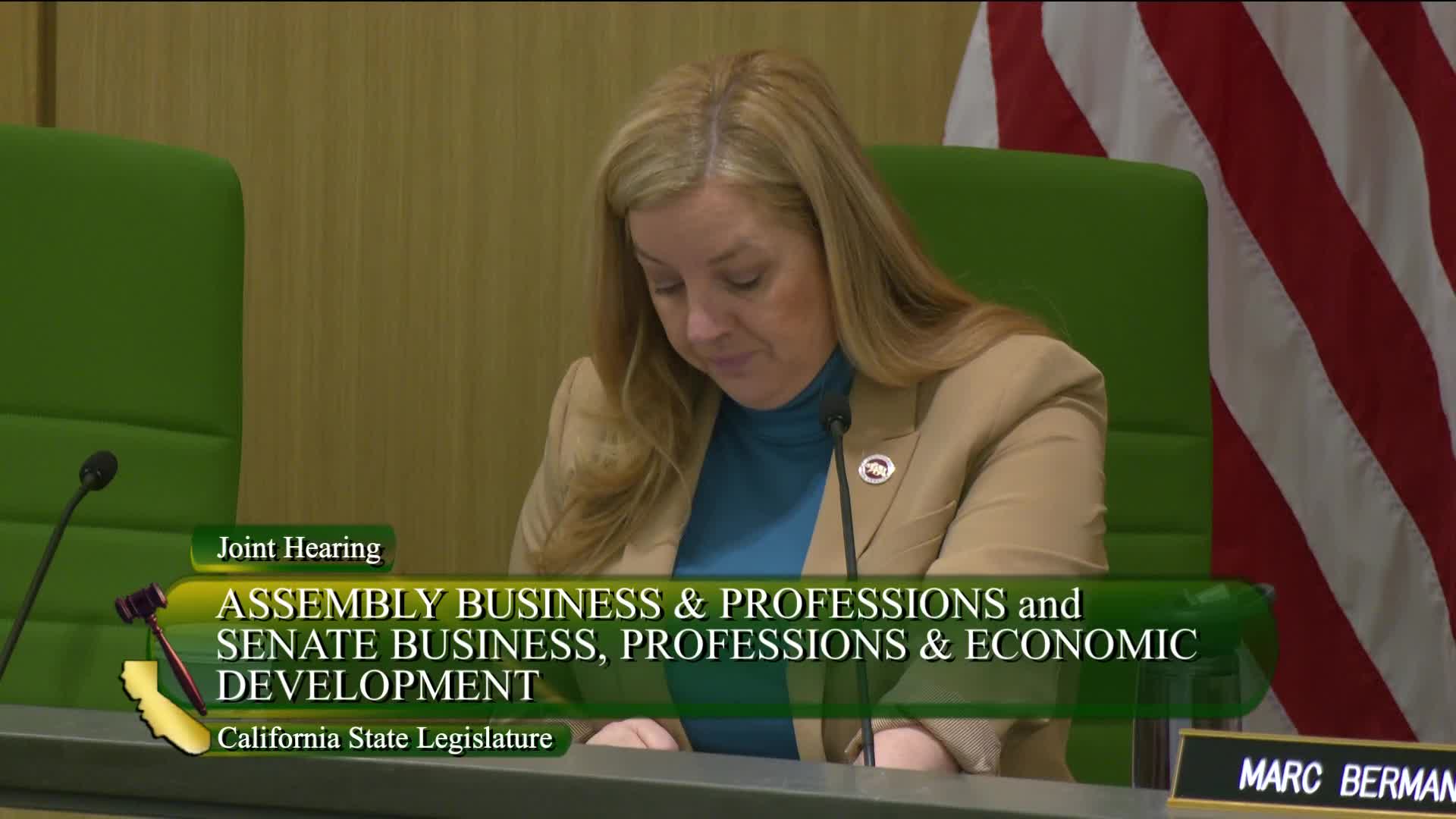
The Bureau of Real Estate Appraisers told a joint Assembly and Senate oversight hearing on Tuesday that it has implemented state and federal measures intended to reduce racial and ethnic bias in home valuations, expand pathways into the appraisal profession and provide consumer guidance for homeowners affected by recent Southern California wildfires.
The hearing is part of a scheduled sunset review that will determine whether the bureau’s statutory authority should be extended beyond its January 1, 2026 expiration. Kimberly Kirchmeyer, director of the Department of Consumer Affairs, and Angela Jamont, bureau chief of the Bureau of Real Estate Appraisers, testified about steps the bureau has taken since its last review.
The bureau said it implemented key requirements of AB 948 (the Fair Appraisal Act), which took effect for sales contracts after July 1, 2022, and requires a buyer notice about the right to an unbiased appraisal and new complaint-tracking and demographic reporting. “This report was finalized and submitted to the legislature on 11/21/2024,” Kirchmeyer said. Jamont described training and regulation changes the bureau has adopted to address appraisal bias and to broaden entry into the profession.
Why it matters: appraisal outcomes feed into mortgage lending and therefore into homebuyers’ access to credit and to the ability of households to build generational wealth. Committee members questioned the bureau about whether reforms will be sufficient in communities historically harmed by redlining and other discriminatory practices.
What the bureau described
- Anti-bias reforms and training: Jamont said the bureau required continuing education and coursework changes: beginning January 1, 2023 applicants must complete at least one hour of cultural competency instruction and license renewals must include at least two hours of elimination-of-bias training. The bureau surveyed licensees in June 2023 and received roughly 2,500 responses (a 27% response rate) to help shape outreach and training.
- Changes to practical experience pathways: Jamont said regulators added additional entry pathways (practicum/experience credits) to reduce reliance on the traditional supervisory model that she said created barriers to entry.
- Disaster response: the bureau told the committees it produced a consumer guide and communications resources for homeowners in recent fire-affected areas, instituted an executive-order fee reprieve for licensees in affected zip codes, and coordinated with the Department of Consumer Affairs’ consumer information center to handle calls.
- Federal engagement and grant funding: Jamont described California’s involvement in national work on appraisal equity, including invitations to present at federal meetings and an MOU with the Department of Civil Rights. The bureau also reported receiving its first federal grant in recent years — a three-year award capped at $120,000 per year, and it received $76,000 this year.
Questions and concerns raised
Committee members pressed the bureau on several points: whether evidence of appraisal bias is anecdotal or supported by studies (Jamont and others said national and state studies document measurable valuation differences by race), how the bureau will handle expected call volumes from disaster areas, and the long-term effect of declining licensee counts on fees.
Senator [Chris] Grayson (first reference), for example, highlighted a sustained decline in license counts and asked whether artificial intelligence and other technology will replace appraisers or can be a tool. Jamont said appraisers are increasingly adopting AI and desktop valuation tools as supplements rather than replacements and emphasized workforce recruitment efforts.
Fiscal and staffing pressures
Witnesses told the committees that the bureau is a relatively small program with relatively few licensees, and that shrinking licensee counts raise per-license fees unless caseloads or administrative costs change. The bureau’s leaders said they are pursuing grants and operational efficiencies (including online customer service tools) to limit pressure for statutory fee increases.
Public comment and stakeholder views
Mike Belota of the Appraisal Institute’s Government Relations Committee commended the bureau’s bias work but urged the committees to confront structural problems: a large portion of appraisal work falls outside federally related transactions (and therefore outside the bureau’s licensing jurisdiction), he said, which contributes to a steady decline in licensed appraisers and upward pressure on fees.
What’s next
The committee will consider whether to continue the bureau’s statutory authority at sunset and has signaled interest in exploring whether California should become a mandatory licensure state (most other states are mandatory). Any statutory changes would return to the Legislature as part of the sunset bill process.
Ending note: the bureau’s testimony framed recent reforms as early steps toward widening access and strengthening consumer protection, while officials acknowledged both continuing evidence of valuation disparities and financial pressures tied to a small license base and rising operating costs.