Get Full Government Meeting Transcripts, Videos, & Alerts Forever!
Get email alerts on the Victim Health Std Testing topic
No spam. Unsubscribe anytime.
Panel advances bill to allow pre-conviction testing for STDs in sexual‑assault cases, with promises to narrow invasive testing
Summary
AB 229 would expand court-ordered pre-conviction testing for HIV to include other sexually transmitted diseases; the committee passed the bill to Appropriations after the author pledged to remove more invasive collection methods and limit testing to less intrusive samples.
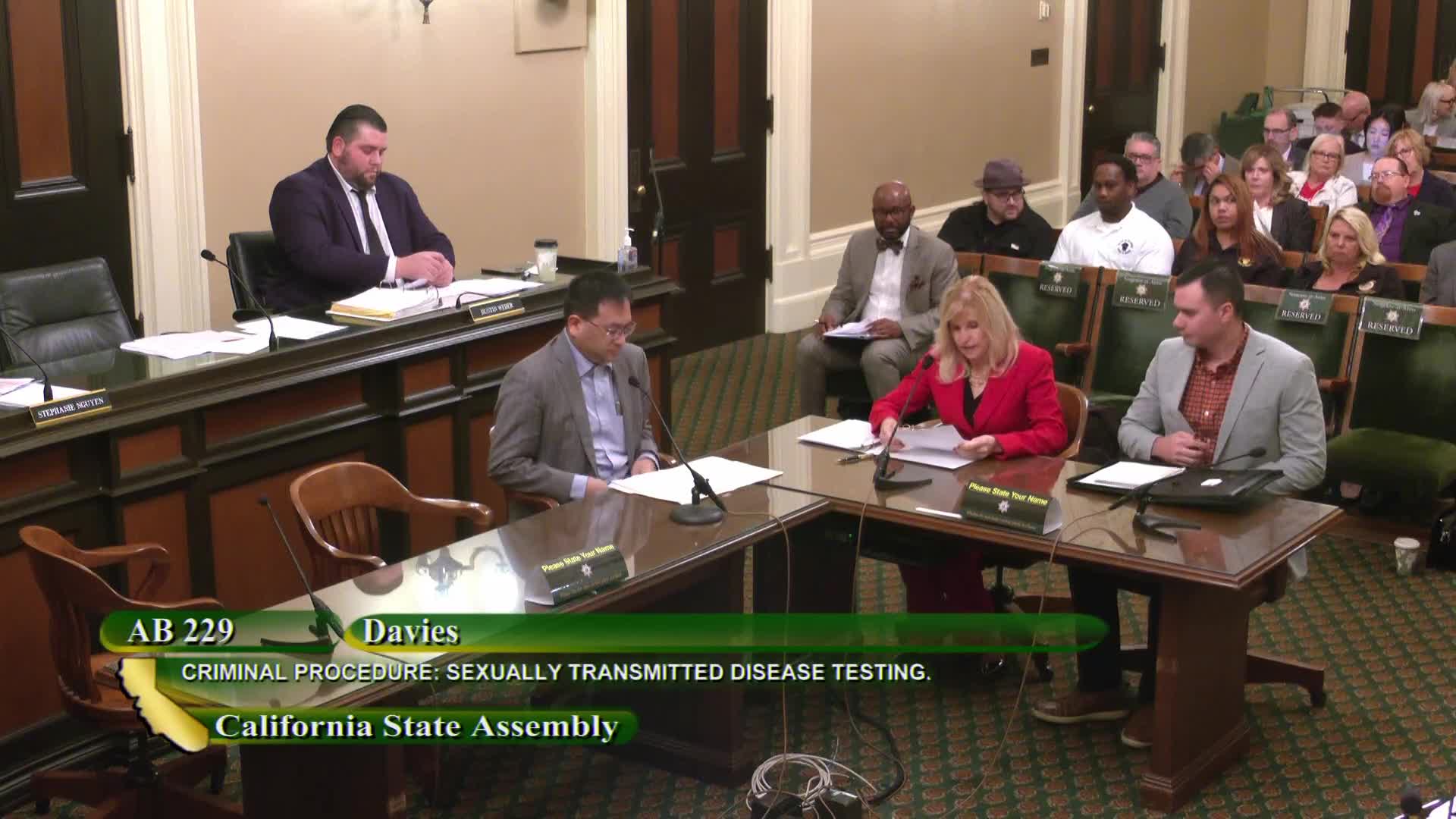
Assemblymember Davies introduced AB 229 to expand existing statutory authority for pre‑conviction testing in sexual‑assault investigations so that tests may include common sexually transmitted diseases (STDs) beyond HIV. She said the measure is permissive: victims must still petition the court and the standard for issuing a warrant remains probable cause.
Michael Fearn of the Conference of California Bar Associations testified in support and emphasized retaining judicial discretion over sample type. Supporters argued broader testing could protect victims’ health by identifying infections that require prompt treatment and by removing stigma around HIV-specific rules.
Opponents, including the California Public Defenders Association represented by Leslie Caldwell, warned AB 229 would allow invasive sample collection (rectal, urethral, cervical discharge) from an accused person based on probable cause before conviction, invading bodily and medical privacy. They argued current law allowing HIV testing already provides a model, and urged the author to limit intrusive testing and better safeguard due-process and medical‑privacy concerns.
Assemblymember Davies committed on the record to amend the bill if it passes committee, removing some of the more invasive sample-collection options and reverting to less-invasive blood, urine, and saliva testing. The committee voted to pass AB 229 to Appropriations; the chair recorded an aye recommendation and members noted the author’s willingness to work with opponents to narrow sample types and privacy protections.
The measure now proceeds to the Appropriations Committee, with follow-up expected on precise language about permissible specimens and parental authority for minor victims.