Get Full Government Meeting Transcripts, Videos, & Alerts Forever!
Get email alerts on the Behavioral Health Funding topic
No spam. Unsubscribe anytime.
California restructures mental health funding under Proposition 1, shifting dollars toward housing and high‑need populations
Summary
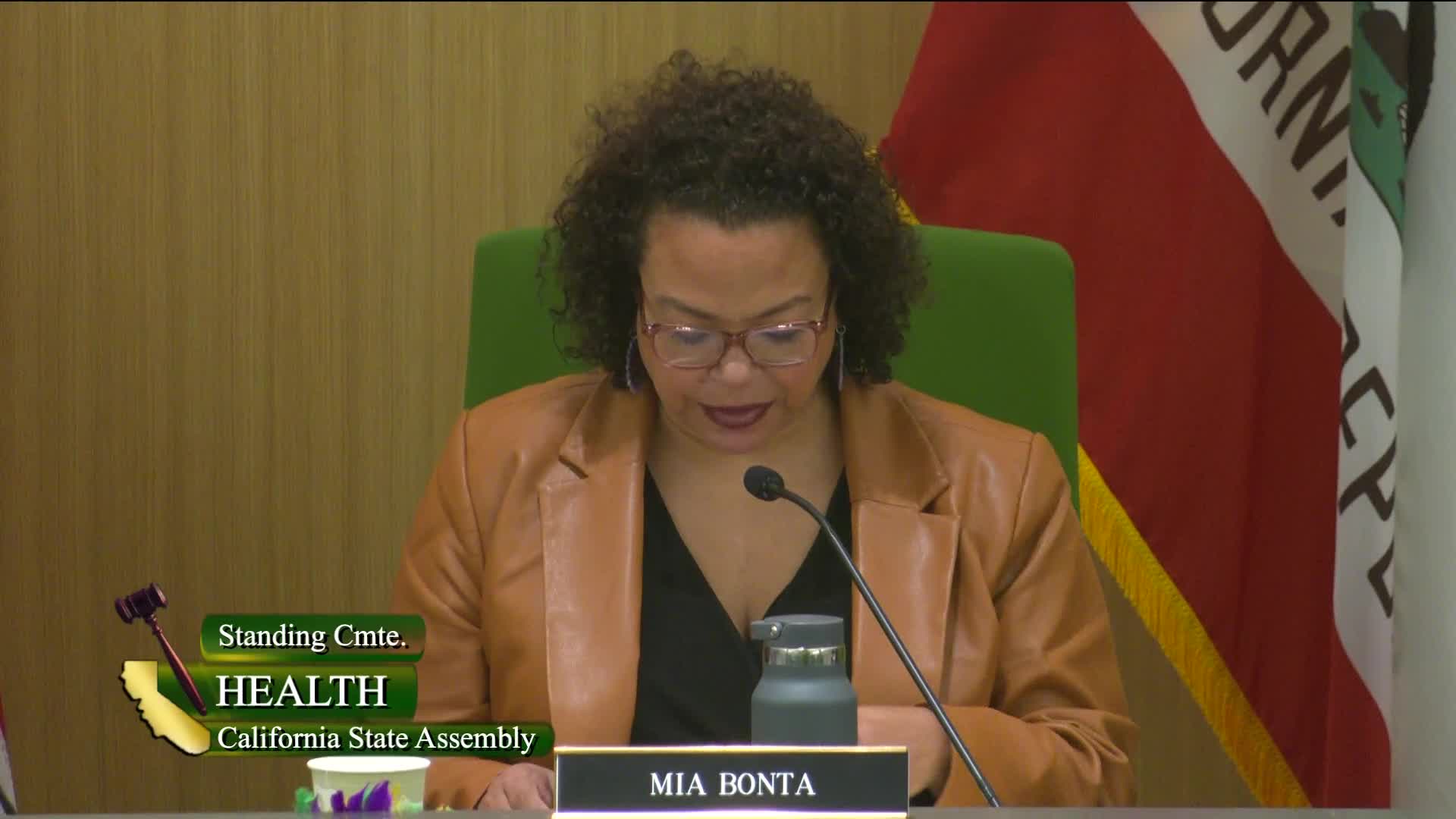
California’s behavioral health financing will change substantially under Proposition 1, state and Legislative Analyst’s Office officials told the Assembly Health Committee on March 4.
California’s behavioral health financing will change substantially under Proposition 1, state and Legislative Analyst’s Office officials told the Assembly Health Committee on March 4. Proposition 1 recasts the Mental Health Services Act (MHSA) as the Behavioral Health Services Act (BHSA), creates a dedicated housing category and increases the state’s retained share of the millionaire’s tax to 10 percent, with the remaining 90 percent going to counties.
The changes “recast” the county funding buckets and add new reporting and planning obligations, Will Owens of the Legislative Analyst’s Office said. Counties must prepare three‑year integrated plans beginning now through June 2026 and, under the new schedule Owens described, the revised funding categories take effect July 2026; counties must submit their first annual expenditure report by January 2029.
Why it matters: The millionaires‑tax revenue stream that funded the MHSA — originally created under Proposition 63 — supplied roughly one‑third of state funding for county behavioral health. Under BHSA, counties will have a new statutory obligation to allocate funds to housing interventions and to use BHSA dollars for substance use disorder services even when there is not a co‑occurring mental health diagnosis. Owens said counties currently receive roughly $10–13 billion annually in state and federal funding for behavioral health and that the share coming from the millionaire’s tax is substantial enough that these category changes will require many counties to alter their budgets and programs.
Key details and timeline: Owens told the committee that Proposition 1 approved a general obligation bond and restructured the tax allocations. The state’s 10 percent share is earmarked as follows: up to 4 percent to the Department of Public Health for population‑based prevention, up to 3 percent for workforce initiatives administered by the Healthcare Access and Information entity (HCAI), and the remaining 3 percent for statewide administration and programs. Counties will continue to receive the majority of BHSA funds but will now report expenditures for behavioral health across all funding sources, not only the millionaire’s tax.
Assemblymembers asked how counties will coordinate with local school districts and whether the BHSA funding will expand youth treatment beds and programs. Owens and subsequent panelists said counties’ integrated plans are the vehicle for local decisions about school‑based early intervention and youth services, and that BHIP (the infrastructure bond program discussed later in the hearing) has had a round targeted to children and youth already.
What was not decided: The committee heard no formal votes. Officials described policy and administrative steps counties must take; actual county budgets and program choices will follow the integrated plan process and state guidance.
Sources and attribution: Quotes and figures in this article come from Will Owens, Legislative Analyst’s Office, and subsequent state presenters during the March 4 Assembly Health Committee informational hearing. The LAO quantified several timing milestones and described the new reporting and planning obligations Owens identified.
Looking ahead: Counties must finalize integrated plans by June 2026 and begin operating under the new funding categories in July 2026. The state will issue further guidance through spring and summer 2025, and the first detailed expenditure reports will be required in January 2029.