Get Full Government Meeting Transcripts, Videos, & Alerts Forever!
Get email alerts on the Financial Aid Fafsa Keda topic
No spam. Unsubscribe anytime.
California officials warn FAFSA rollout setbacks and privacy concerns have depressed aid applications, especially for mixed‑status families
Summary
State student aid officials told the Assembly Budget Subcommittee that delayed FAFSA launches, technical problems and family privacy worries have reduced FAFSA and California Dream Act (CADAA) application rates this year, leaving the Student Aid Commission and segments scrambling to boost outreach ahead of extended deadlines.
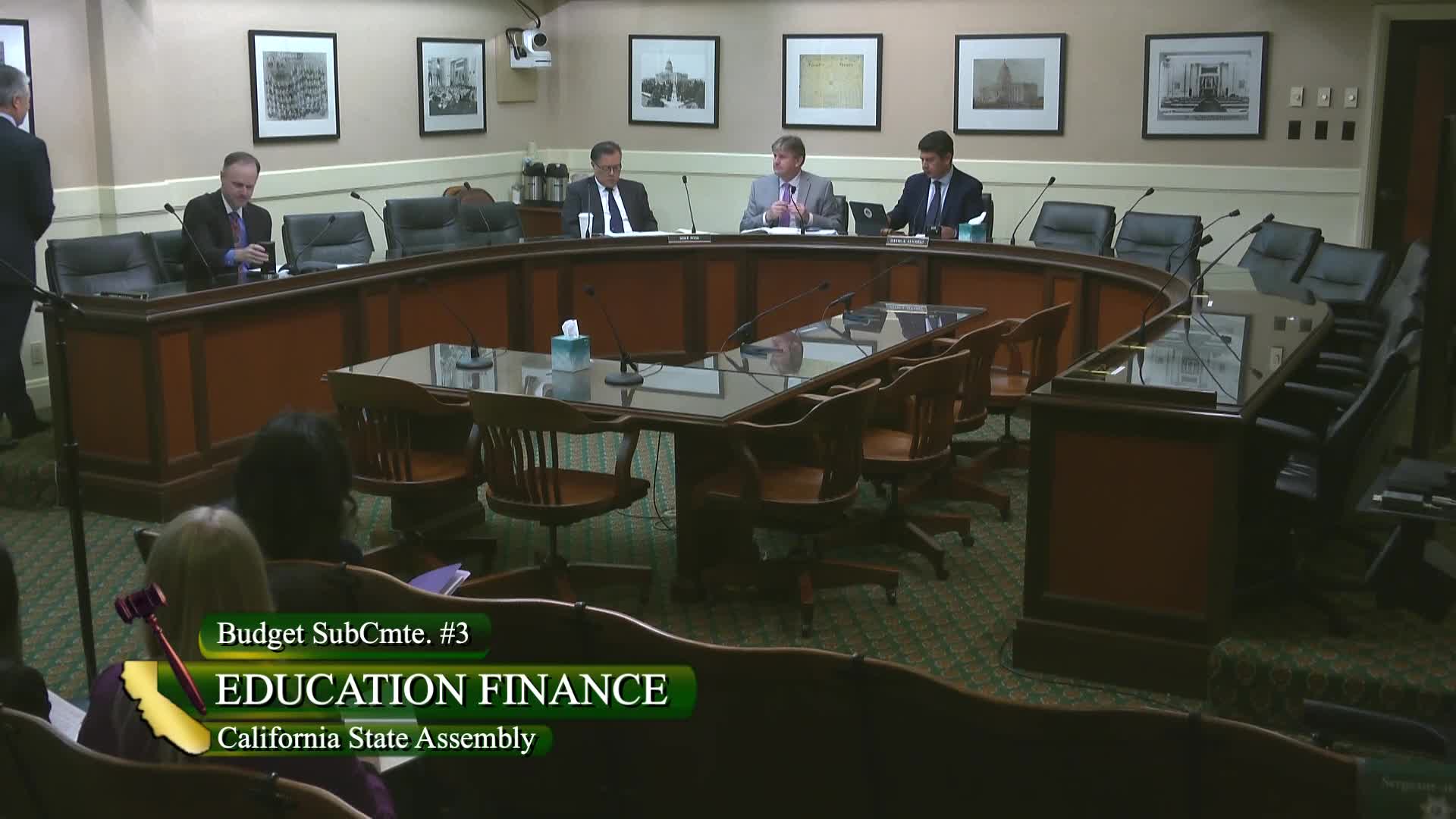
Chair Assemblymember Alex Alvarez convened the Assembly Budget Subcommittee No. 3 hearing on financial aid with an opening focus on application rates for FAFSA and the California Dream Act application (CADAA).
California Student Aid Commission Deputy Director Jake Bremner told the committee the 2024 Better FAFSA rollout had ‘‘technical issues that prevented thousands of students from applying for aid,’’ and that the later FAFSA launch this cycle—delayed from Oct. 1 to Dec. 1—left students about 60 fewer days to apply. Bremner said, as of Feb. 24, high‑school senior submissions for the 2025–26 cycle lagged prior years by roughly 21 percent for FAFSAs and 27 percent for CADAA when compared on a ‘‘days remaining’’ basis, prompting CSAC to request and the executive director to approve a 30‑day extension of the state priority aid deadline from March 3 to April 2.
Bremner said the data show mixed‑status families—households where one or more family members lack a Social Security number—have been disproportionately affected. ‘‘For students from mixed‑status families, there was a 31% decline in applications as of February 24,’’ he said, and even after the deadline extension those filers remained about 10 percent behind prior years. Bremner attributed part of the problem to confusion and privacy concerns about the new FAFSA asking more personally identifiable information than prior versions, and to reduced federal call‑center staffing reported in media coverage.
Representatives from the three public segments described their local outreach and supports. Dr. Apry Medina of the UC Office of the President said UC campuses send multiple financial aid communications and host FAFSA workshops; Noelia Gonzalez of the CSU Chancellor’s Office described monthly emails to high‑school partners and campus workshops; and Gina Brown of the California Community Colleges said colleges employ peer mentors and follow up with students who have incomplete applications.
Bremner outlined statewide steps: Cash for College webinars and 1,400+ local events last cycle, partnership with CalSOAP regional consortia, targeted multilingual materials for mixed‑status families, and 40,000 reminder postcards to students who have not applied. He said CSAC convenes an implementation work group with segments and community partners to coordinate real‑time responses.
Committee members asked about whether returning students were also affected. Bremner said renewal rates were only slightly below prior years and that Cal Grant renewals operate under a different timeline than first‑time filers. He also noted CSAC’s analytic limits: the commission does not routinely receive student‑level enrollment and completion records necessary to track how missing or delayed aid applications affect persistence or completion; CSAC receives aggregate reports but not full unitary student‑level data for all institutions.
Assemblymembers and segment representatives repeatedly urged expanded outreach in the coming weeks and emphasized protecting student data and communicating clearly the tradeoffs for CADAA filers (forgoing federal aid but keeping information in state systems). Bremner said CSAC had posted dedicated resources for mixed‑status families and translated materials into multiple languages.
Looking ahead, CSAC and segment leaders asked for continued legislative and administrative support to bolster outreach and data sharing so officials can better measure the effects of application declines and target resources.
Ending: The subcommittee did not adopt any new policy at the hearing; members said they will follow up on the CSAC data‑sharing limitations and continue monitoring application counts as the April 2 priority deadline approaches.