Get Full Government Meeting Transcripts, Videos, & Alerts Forever!
Get email alerts on the Public Safety topic
No spam. Unsubscribe anytime.
Colleyville police report slight rise in 2024 crimes; detectives point to retail theft and organized rings
Summary
Police Chief Michael Biller told the Colleyville City Council that overall Part 1 crimes rose by 4% (five offenses) in 2024, explained differences between UCR and NIBRS reporting, and highlighted retail theft, organized theft rings and a major counterfeit seizure among the year’s notable investigations.
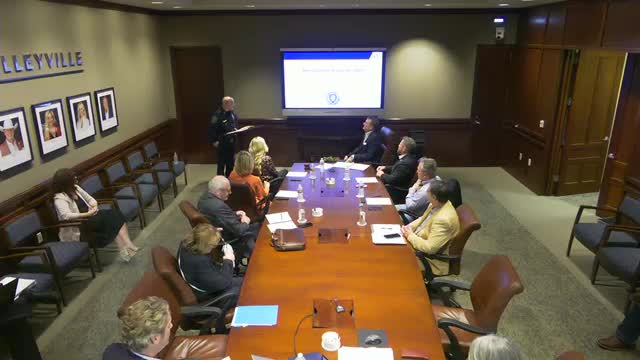
At the Feb. 4 Colleyville City Council meeting, Police Chief Michael Biller presented the Colleyville Police Department’s 2024 crime report, saying the city recorded a small increase in Part 1 crimes while investigators achieved above‑average clearance rates on many offenses.
Biller told council members the Uniform Crime Report (UCR) summary shows a 4% increase — five more Part 1 offenses in 2024 than in 2023 — for a total of 43 Part 1 crimes last year. He said the department recorded one homicide in 2024, a domestic stabbing in which the suspect was known to the victim.
The chief emphasized the change in federal/state reporting standards to the National Incident‑Based Reporting System (NIBRS). “NIBRS collects more information and more crime categories,” Biller said, and that difference changes counts for some offenses; for example, an aggravated‑assault case with multiple victims can count differently under NIBRS than under the older UCR summary.
Why it matters: Biller said the switch to NIBRS gives more detailed data for policing and analysis, and it can make year‑to‑year comparison more complicated. He also pointed to several ongoing investigations and enforcement actions that he said shaped 2024 statistics.
Key figures and trends
- Violent crime: Biller said overall crimes against persons were essentially unchanged year over year. The department recorded one homicide; the previous homicide had been in 2014. Aggravated assaults fell from eight to six incidents. Biller noted that in several assault cases the suspect was known to the victim, and in others a weapon was involved.
- Property and retail theft: From the UCR summary perspective property crime rose about 10%, but he said that when measured under NIBRS categories property offenses show a 21% decrease. Motor vehicle theft increased modestly; burglary of residences declined by about 67% and nonresidential burglaries were down about 40%.
- Retail theft: Biller said “other theft” increased 32% compared with the prior year and that retail theft made up the majority of that category: 71 of 103 incidents (69%). He gave store breakdowns discussed in the presentation: roughly 28% of those retail theft reports involved Walgreens stores and about 39.4% involved Tom Thumb locations. The department has investigated organized groups responsible for repeated thefts at multiple stores; Biller said those groups have resold items on online marketplaces. The department has made multiple arrests in those cases; Biller said roughly 15 arrests have been made in connection with the Walgreens series and two suspects were arrested in a multi‑incident series of wine thefts at Tom Thumb totaling about $6,800.
- Clearance and investigations: Criminal Investigations Division (CID) investigators opened roughly 767 new cases in 2024 (about 63 cases per month) and submitted 2,881 investigative supplements. Biller highlighted the department’s clearance rates versus national averages: a 47% clearance rate on property crimes (national average he cited: 12.1%), and comparably high clearance rates for larceny/theft and burglary categories. Biller explained why a violent‑crime clearance rate can appear to exceed 100%: when cases from prior periods are cleared in the present reporting period, those clearances count toward current clearance statistics.
- Organized theft and technical aids: The department credited license plate reader data, commercial datasets and multi‑agency cooperation for several recent arrests. Biller described instances of suspects traveling from other regions, conducting surveillance in higher‑income neighborhoods and targeting parked vehicles or retail locations. He said collaboration with Texas DPS and other agencies is ongoing on several active investigations.
- Counterfeit luxury goods seizure: Biller described an investigation that led to the seizure of a large quantity of counterfeit luxury goods and accessories (he estimated the retail value of the items in the millions). Officers worked with brand representatives and the district attorney’s office to inventory items at a secure warehouse; Biller said the items are held pending court orders for destruction.
- Crimes against society and online referrals: The department reported a decline in drug and weapons law violations in NIBRS counts, and Biller noted the department receives referrals from the National Center for Missing and Exploited Children (NCMEC) and regional partners for online exploitation cases that are then investigated locally.
- Patrol activity and traffic: Calls for service for patrol rose about 11%. The department saw a 32% increase in traffic stops and a roughly 60% increase in arrests overall. Crash data show Colleyville Boulevard as the city’s top corridor for crashes; John McCain Boulevard experienced a notable jump in reported crashes (Biller cited a 78% increase year over year). Council members asked whether U‑turns were contributing to incidents along Colleyville Boulevard; Biller said the department would analyze crash locations and contributing factors to inform any recommendations to the Traffic Advisory Board.
Community feedback tool
Biller also reported the department had launched the PowerEngage citizen feedback survey the previous week: 59 surveys were sent, 38 responses received (a 64% response rate). Of those, 36 responses were positive (about 94.7%), one neutral and one negative response that the department used to re‑contact a resident and complete a delayed report.
Quote
“We’re solving a lot of the cases and I think that’s just due to the great investigative work of our team,” Biller said while summarizing CID results.
What’s next
Biller said several felony‑level and multi‑agency investigations remain active and that department staff will continue targeted enforcement at repeat retail targets and busy traffic corridors. He also said the department will provide more granular crash‑location analysis to council and the Traffic Advisory Board.
(Transcript excerpts: Chief Michael Biller presentation and Q&A recorded during the Feb. 4 Colleyville City Council meeting.)