Get Full Government Meeting Transcripts, Videos, & Alerts Forever!
Get email alerts on the Adaptive Reuse topic
No spam. Unsubscribe anytime.
Business groups and developers back tax credits to convert vacant commercial space into housing
Summary
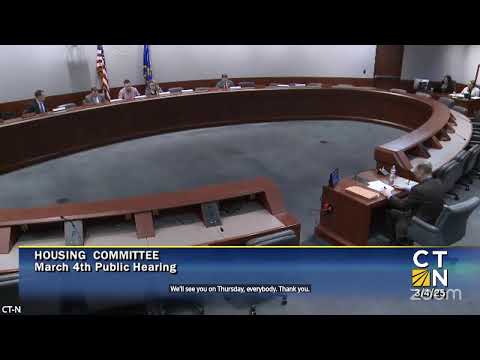
The Connecticut Business & Industry Association and housing developers told the Housing Committee SB 1263 — a proposed tax credit for converting commercial buildings to residential use — would help revitalize urban cores and reduce office and retail vacancy by unlocking private investment for housing redevelopment.
The Connecticut Business & Industry Association (CBIA) and other witnesses urged the Housing Committee to support SB 12 63, a proposal that would create tax credits to incentivize the conversion of commercial buildings — including office space and hotels — to residential units.
Grace Brangwyn of CBIA said steep office vacancy rates in Hartford and parts of Fairfield County create an opportunity to repurpose existing buildings into housing. "This bill provides tax credits to commercial building owners as an incentive to convert to residential use," she said, adding the policy can reduce conversion costs and accelerate new housing supply in walkable urban neighborhoods.
Several witnesses and members of the committee discussed the scope of buildings covered by the credit. Brangwyn recommended expanding the credit to include industrial buildings in addition to office and retail, noting environmental remediation and building code requirements can be significant but surmountable when credits reduce financial barriers.
Supporters noted adaptive reuse can preserve neighborhood amenities, reduce demolition waste, and place housing close to jobs and transit. Lawmakers asked for clarifying language on the size and duration of credits, environmental remediation standards for former industrial sites, and how such incentives would interact with local zoning and permitting processes.
No formal vote was taken. Committee staff were asked to examine potential inclusions (industrial buildings), environmental cleanup expectations, and whether the credit should be paired with other state incentives or local approvals to encourage conversions.