Get Full Government Meeting Transcripts, Videos, & Alerts Forever!
Get email alerts on the Release Based Cleanup topic
No spam. Unsubscribe anytime.
Connecticut officials push to replace Transfer Act with release-based cleanup rules amid stakeholder concerns
Summary
State environmental and economic development officials outlined a multi-year effort to replace the Transfer Act with release‑based cleanup regulations, citing stalled cleanups and economic losses; stakeholders raised concerns about residential coverage, timing and implementation details including PEP/LEP roles and IT systems.
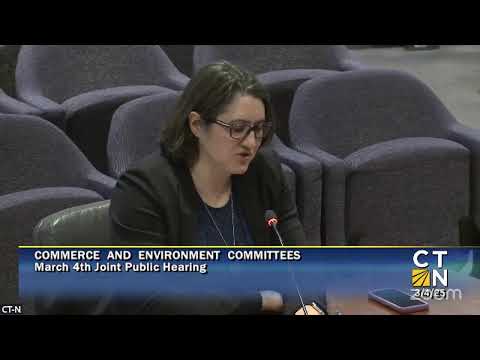
Connecticut officials told a joint meeting of the legislature’s Environment and Commerce committees that they are seeking to replace the state’s Transfer Act with a release‑based cleanup regulatory framework intended to speed cleanups and unlock redevelopment opportunities.
“We are long overdue to eliminate the Transfer Act system, and relieve businesses and residents of the economic burdens of that program,” Katie Dykes, commissioner of the Connecticut Department of Energy and Environmental Protection, told the committees. She and officials from the Department of Economic and Community Development said the new approach aims to harness market incentives to prompt faster remediation and reuse of contaminated properties.
Why it matters: Connecticut remains an outlier in relying on property transfers to trigger many cleanups. Officials said roughly 5,000 properties have entered the Transfer Act since it took effect and fewer than 500 have completed cleanups since 1985, a backlog they said has held back investment in city centers and transit‑oriented sites.
What officials described - Process and timeline: DEEP said a years‑long stakeholder process produced the draft release‑based cleanup regulations (RBCRs). The department reported more than 60 working‑group meetings, 10 subcommittees, 12 stakeholder sessions in 2024 and roughly 150 days of public comment on successive drafts. The draft regulations were provided to the working group in December 2023 and reissued for public comment in July 2024 with a three‑month comment period. - Statutory changes and schedule: DEEP and DECD told the committees they seek statutory amendments that would allow a transition date to the new release‑based framework of March 1, 2026. The regulations are scheduled for an initial review by the legislature’s Regulations Review Committee on March 25, 2025. - Implementation tools: Officials described an online case‑management system for filings and public tracking (referred to in testimony as the department’s REACT system). DEEP said the contractor for that software is under way and officials are “hopeful” the system will be live by the end of the summer ahead of the March 2026 effective date. - Private‑sector roles: The RBCRs would create a new category of permitted environmental professionals (PEPs) to handle smaller or routine releases and preserve licensed environmental professionals (LEPs) for more complex work and for audits of the program. DEEP said PEPs would be permitted (not licensed) and subject to department oversight, training requirements and auditing. - Economic rationale: The Department of Economic and Community Development (DECD) supported the change as an economic competitiveness measure. DECD testified that regulatory alignment with neighboring states and reduced transaction costs could spur redevelopment; DECD economists provided an estimate that the change could yield about 2,100 new construction jobs, $3.78 billion in new GDP and $115 million in additional state revenue over five years.
Stakeholder concerns raised at the hearing - Residential properties: Multiple speakers, including bankers, realtors and municipal officials, pressed for clarity about how the RBCRs would treat single‑family and multifamily residential properties—especially owner‑occupied versus investor‑owned units. DEEP said the final draft includes exemptions and clarifications for owner‑occupied single‑family properties but acknowledged continued conversation is needed for multifamily and rental housing. - “Lower bounds” and entry criteria: Environmental professionals and business groups asked for clearer thresholds (the legislation and regulations use the phrase “lower bounds”) that determine when a discovery triggers reporting and full regulatory oversight. EPOC (the Environmental Professional Organizations of Connecticut) asked that some timing requirements tied to parcel‑wide sampling be relaxed so more sites could pursue a site‑wide voluntary cleanup pathway. - Durable closure and market certainty: Lenders and transaction attorneys urged assurances that a DEEP‑approved closure will be durable so buyers, sellers and banks will not be forced to re‑test or reopen matters later. Multiple witnesses said market acceptance of the department’s closure determinations is critical to avoid “re‑opening” cleanups at the time of sale and to protect financing. - Implementation capacity and staffing: Witnesses and committee members asked if there will be sufficient numbers of LEPs and PEPs to handle an expected increase in reported releases once the RBCRs take effect. DEEP and DECD said they are assessing staffing needs; DECD noted the agency proposed up to six additional positions to OPM but those were not included in the governor’s submitted budget.
What DEEP and DECD said they will do - Continue stakeholder engagement: DEEP repeatedly pledged to keep working with stakeholders, including homeowners, bankers, realtors and environmental professionals, and to provide draft guidance, forms and training materials before the program’s effective date. DEEP officials said they would respond to stakeholder “white papers” and asked for time to work through outstanding issues. - Provide lists and metrics: DEEP said it is preparing a list of properties still open in the Transfer Act (street address, town, date of enrollment) and will share that with legislative staff. DEEP and DECD also described existing and planned public metrics to track time frames and audits, an expansion of existing efforts led under a DEEP “20 by 26” process improvement initiative.
Voices at the hearing - Katie Dykes, commissioner, Connecticut Department of Energy and Environmental Protection (DEEP) - Emma Simono, deputy commissioner, Environmental Quality, DEEP - Graham Stevens, chief, Water Protection and Land Reuse, DEEP - Brandon Shane, legal director, Environmental Quality Branch, DEEP - Matt Pugliese, deputy commissioner, Department of Economic and Community Development (DECD) - Binu/Banu Chandy, director, Office of Brownfield Remediation and Development, DECD - Brent Hennebery, president, Environmental Professional Organizations of Connecticut (EPOC) - Sam Haydock and David Melcher, environmental professionals (EPOC) - Peter Myers, Connecticut Business and Industry Association (CBIA) - Art Quarry, Connecticut Bankers Association, and Jim Heckman, Connecticut Realtors - Lauren Garrett, mayor, Hamden (testimony on a local park example)
Direct quotations taken from testimony include Commissioner Katie Dykes’ description of the policy goals: “We are long overdue to eliminate the Transfer Act system, and relieve businesses and residents of the economic burdens of that program.” DECD Deputy Commissioner Matt Pugliese summarized the trade‑off at stake: “We can’t let perfection be the enemy of progress as we move forward.” Graham Stevens, DEEP bureau chief, said the department’s intention is to “create predictability in our expectations on time frames” and to “track our progress and success” with public metrics.
What the committees asked for and next steps Committee members asked for a written update on how DEEP and DECD plan to respond to outstanding stakeholder white papers; several legislators requested an initial reply by March 11, 2025. DEEP agreed to share its responses and to continue meetings with bankers, realtors and environmental professional groups. DEEP also said it will provide the Transfer Act property list to legislative staff.
No formal votes were recorded during the hearing. The committees will consider statutory language tied to the regulations and will review DEEP’s regulations at the Regulations Review Committee meeting scheduled for March 25, 2025. If the regulations move forward, the department and stakeholders said they expect a months‑long implementation period in which guidance, forms and an online filing and tracking system will be finalized.
Context and limitations This account is based on the joint committee hearing record and on testimony from DEEP, DECD and stakeholder groups. The article does not infer outcomes beyond the hearing record and does not assume votes or final regulatory approval. Where testimony provided numbers or dates, those are recorded as stated by witnesses; if an item was described in testimony as subject to change, that is noted above.
Looking ahead If the RBCRs are adopted and implemented as described, officials and stakeholders said they expect more prompt cleanups and more site redevelopments in Connecticut’s urban centers. The committees pressed DEEP and DECD for implementation detail and sought written responses to outstanding stakeholder points ahead of the regulations’ review date.
Ending note: DECD’s Brownfields office and DEEP’s leadership said they will continue to refine implementation materials and to work with lenders, realtors, municipalities and environmental professionals to try to ensure that regulatory closure translates into market confidence and financing certainty.