Get Full Government Meeting Transcripts, Videos, & Alerts Forever!
Get email alerts on the Rental Assistance topic
No spam. Unsubscribe anytime.
Philanthropy‑backed direct rental assistance pilot endorsed to speed help for households on voucher wait lists
Summary
Advocates and philanthropic partners asked the committee to enable a direct rental assistance pilot (section 16 of HB 7112) that would route private philanthropic funds through DOH to provide cash assistance directly to tenants, protect recipients' other benefits, and evaluate whether direct payments improve housing stability and landlord uptake.
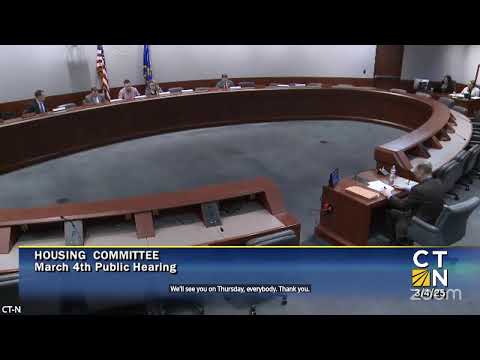
Philanthropic and nonprofit advocates told the Housing Committee they support a pilot program in HB 7 1 1 2 that would allow private funds to be used to provide direct cash rental assistance to tenants rather than paying subsidies to landlords as traditional Housing Choice Vouchers do.
Sanah Shah, director of policy and advocacy at the Connecticut Project Action Fund, said the pilot would provide flexible cash assistance to tenant households, reduce administrative burdens, expand landlord participation, and potentially improve housing stability and mobility. The pilot aims to serve roughly 50 households initially in Norwalk with Melville Charitable Trust and national research partners conducting outcome analysis.
"Direct rental assistance offers a simpler, more predictable solution," Shah told the committee, noting the bill includes language ensuring assistance is not counted as income, which would otherwise risk disqualifying recipients from other benefits.
Advocates described the pilot as a research‑driven test to compare direct cash assistance versus vouchers on measures including housing stability, landlord acceptance, and administrative cost. Committee members asked about coordination with local housing authorities and whether the Department of Housing would administer the program directly to streamline access and avoid HUD administrative hurdles.
Shah and others said the state authorization is needed because local public housing authorities typically must route actions through HUD, a step that can slow implementation; state administration would allow a philanthropic pilot to scale more quickly and provide research to inform policy decisions.
Lawmakers asked for clarity about eligibility, benefit cliffs, and how the pilot would prioritize households already waiting on federal voucher lists. Advocates said the pilot explicitly targets people on voucher waiting lists to reduce time to housing by using philanthropic funds while evaluating the model.
No final action was taken at the hearing; committee staff were asked to review statutory language, benefit interactions and data safeguards for future drafts or demonstration projects.