Get email alerts on the Budget topic
No spam. Unsubscribe anytime.
Georgetown ISD projects $3.7 million shortfall; trustees weigh staff cuts, larger class sizes and program reductions
Summary
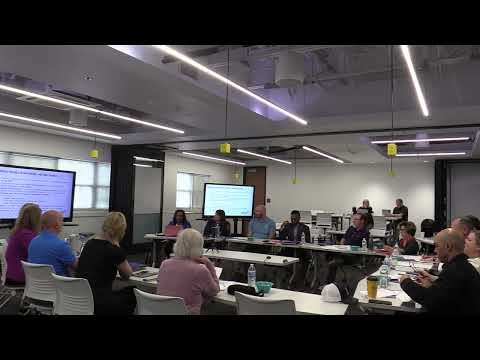
Georgetown Independent School District staff told trustees on March 3 that preliminary estimates show a roughly $3.7 million deficit for the 2025–26 fiscal year and outlined a range of cost-cutting options that would affect staffing, class sizes and student programs.
Georgetown Independent School District staff told trustees on March 3 that preliminary estimates show a roughly $3.7 million deficit for the 2025–26 fiscal year and outlined a range of cost-cutting options that would affect staffing, class sizes and student programs.
The district's chief financial officer, Jennifer Hannah, presented early revenue and expenditure assumptions and cautioned that many figures could change depending on the outcome of the Texas legislative session and certified property values. She said the district is treating these figures as a starting point for three months of “painful but necessary” budget decisions leading up to adoption next spring.
Hannah said the district's preliminary revenue estimate is about $168.4 million and that the district would send roughly $18.3 million in recapture to the state under current assumptions. Using a demographer's projection of 14,060 students and a 93% adjusted prekindergarten attendance rate, the district is using an average daily attendance figure of about 13,076 for funding projections. Hannah described several legislative proposals under consideration — including Senate Bill 26 and House Bill 2 — but warned that “nothing about this funding flows directly to the district budget” and that constrained allocations would not by themselves erase the projected deficit.
Trustees and staff discussed how different proposals from Austin could affect district finances. On the House side, Hannah said a proposed $220 increase to the basic allotment would translate to roughly $3.1 million in new revenue for the district but that state rules requiring that 40% of that increase be used for compensation would reduce the district's discretionary gain to about $1.8 million. She also noted proposed changes to special education funding, new or expanded allotments (for fine arts, high-school advising and career/college outcomes), and possible reductions or simplifications to multiple "hold harmless" calculations that have shielded some districts from revenue swings in prior years.
Using the district's current assumptions, Hannah said the projected shortfall for 2025–26 — before any compensation increases — is approximately $3,700,000, which represents about 21% of the district's projected ending fund balance if no changes are made.
To close that gap, staff presented a menu of options with estimated savings amounts: eliminating five elementary assistant principal positions (estimated $375,000), reducing other central and campus positions (about $300,000), increasing middle- and high-school secondary class sizes (estimated $1.26 million and $1.38 million, respectively), and reducing campus and department budgets by roughly 5% (about $411,000). Additional proposals discussed for further savings included high-school scheduling changes (a potential $1.7 million savings if implemented in 2026–27), reducing teacher-support positions such as interventionists and librarians (about $1.18 million), and pausing approval of new FTE requests.
Several trustees cautioned about the trade-offs. Trustee Baldwin said the cuts under consideration would hit core academic supports — librarians and interventionists — and urged the board to weigh the student experience as it evaluates reductions. Other trustees asked for program-level utilization and cost data so the board could compare savings against student impact. Staff committed to returning program utilization and cost information at the April board meeting where trustees will discuss budget options further.
Staff also outlined potential revenue strategies: increasing attendance, accepting out-of-district transfers into underutilized campuses such as Frost, San Rita and San Gabriel (staff estimated a best-case addition of roughly 300 students, which would yield modest revenue), and exploring a voter-approved tax rate election (VATER) if the board chooses to pursue additional locally approved tax capacity. Hannah cautioned that even a $220 proposed increase to the basic allotment would not keep pace with inflation and that many details remain subject to the legislative session and to certified property valuations from the Williamson Central Appraisal District.
Hannah and other staff reminded trustees that none of the preliminary deficit scenarios included a compensation increase for employees and that the board retains the ability to amend the budget later if the legislature provides additional funding. Trustees asked staff to provide more granular program-level budget and utilization data and to model the student- and staff-impact trade-offs for the options presented. The board did not take any formal action at the workshop; staff said they will return revised proposals in April and continue the conversation through May toward a proposed budget for adoption.
The board workshop concluded after about 40 minutes of budget discussion; staff emphasized that these are early, conservative estimates and that many numbers could change as legislative and appraisal information becomes final.
AI generated
The text on this page is AI generated. Summaries, highlights, analysis, and video transcripts are all produced from the original source material.
AI can make mistakes, so if you spot one, and we will fix it for everyone.
Note: the source content is unaltered by us. Any content source we link to, be it a video, an audio recording, or a document, is presented exactly as its publisher released it. That publisher is usually a government body, sometimes an individual official or another organisation.