Get Full Government Meeting Transcripts, Videos, & Alerts Forever!
Get email alerts on the Student Assignments topic
No spam. Unsubscribe anytime.
Wake County staff outline earlier, expanded public engagement for 2026–27 student assignment plan
Summary
Staff told the Board at a MARC 4 work session that they will open outreach earlier, add multiple summary reports during the process, and restructure messaging so families can see how feedback shaped recommendations for the 2026–27 enrollment plan.
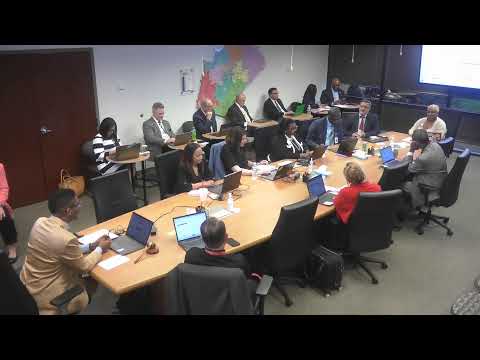
Wake County Schools staff told the Board at a March work session that they plan to expand and move earlier the public engagement activities tied to the 2026–27 student assignment (enrollment) plan, and to make it clearer how community feedback influences final recommendations.
The update, presented by Miss Pulliam, a staff presenter on student assignment, said the district will restructure its website and community messaging, produce multiple public-engagement summary reports throughout the process rather than only at the end, and continue multiple input formats including regional sessions and open houses. “We’re here to talk to you about just the public engagement plan, not the plan itself,” Pulliam said.
Why it matters: staff emphasized that early and clearer engagement makes community input more useful while the plan is still being developed. Pulliam noted the district’s intent to show the “continuum” from past feedback to current recommendations so families can see how their input was used.
Staff said lessons from the 2025–26 cycle include community requests for clearer evidence that feedback affected outcomes, strong interest in multiple ways to participate, and demand for more accessible planning information. To address that, the presentation said the district will partner with communications staff and community liaisons, expand digital tools and the project website, and produce interim engagement summaries so families can track how ideas are being incorporated in near real time.
Pulliam said the district expects smaller-scale open houses this year because it projects opening one new school in the coming cycle. She also said staff recently released projected enrollment figures to principals and will return to the Board with updated graphics in May showing spatial distributions of projected crowding and where portable classrooms are in use. “By the time we see you in May, we’ll have fully updated graphics to describe this projection,” Pulliam said.
Staff flagged specific communities for early or additional outreach: Morrisville (for an upcoming high school planned to open in 2027–28), a northern Raleigh cluster concerned about feeder alignment (Sycamore, Barton Pond, Pine Hollow), the Apex area (feeder alignment and opening of Pleasant Plains), White Oak and Turner Creek (cap and underutilized school issues), and Southeast Raleigh (starting with a digital-format outreach to identify meeting times). Pulliam said the district will also re-engage the Hilltop area (supporting swing space for Fuquay‑Varina Elementary) and that renovation projects at schools such as Balcon Elementary and Fuquay Arena Middle will be made clearer as a factor that can affect assignment recommendations.
On timing, Pulliam proposed an earlier public hearing date — October 21 — during staff’s public-feedback window so the Board would have time to consider hearing remarks and for staff to prepare responses before a November vote. The presentation also referenced Board policy 41‑50 (section a), which Pulliam said provides four guiding pillars for assignment recommendations: student achievement, stability, proximity and operational efficiency.
Board members who spoke praised the outreach plan and urged staff to maintain transparency and early notice to families. Several members reiterated that families find it difficult to connect early engagement to the final assignment plan and asked staff to keep summaries and timelines clear and accessible.
The district provided one explicit enrollment figure during the presentation: staff said the system is projected to serve 62,420 students in the coming year. Other numeric projections and graphics were described as forthcoming and will be updated for the Board’s May briefing.
What’s next: staff will update the public website, begin regional outreach promptly, return with updated projected-enrollment maps and graphics in May, and seek Board feedback on the proposed October public hearing timing and the draft engagement schedule.
Ending: Pulliam asked Board members to send any additional feedback to staff as they finalize the outreach calendar and materials for the coming months.