Get Full Government Meeting Transcripts, Videos, & Alerts Forever!
Get email alerts on the Substance Use Treatment topic
No spam. Unsubscribe anytime.
Residents, nonprofit leaders urge Denton County to use opioid settlement funds to support Solutions of North Texas
Summary
More than 30 speakers during public comment on March 4 pressed the Denton County Commissioners Court to help preserve services at Solutions of North Texas and to distribute opioid settlement dollars broadly; County leaders said no county opioid funding has been cut and clarified the county's settlement receipts.
On March 4, 2025, during the Denton County Commissioners Court public-comment period, dozens of residents, recovery-service clients and nonprofit leaders urged county officials to provide funding and support for Solutions of North Texas and other treatment providers as opioid-related deaths and treatment gaps persist.
Speakers described personal recoveries and urged a countywide, multi-agency approach to distributing opioid settlement funds and other supports. Kathy Travis, president of the board of Winning the Fight, told the court, "I'm here to save a life," and several other speakers described family members lost to fentanyl-laced drugs.
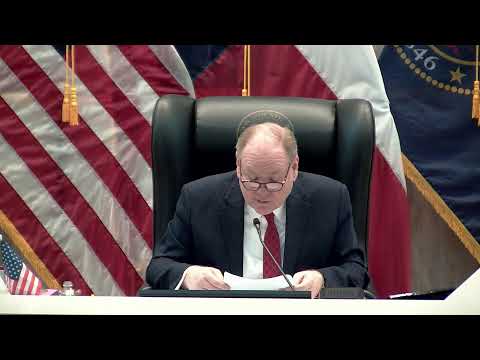
The testimony followed remarks from County Judge Eads disputing social-media criticism of the court and of his office. Eads said the county has been a long-time partner to Solutions of North Texas and other nonprofits and that "No county funding has been cut or pulled from Solutions of North Texas. Let me repeat. No county funding has been cut or pulled from Solutions of North Texas." He also said Denton County has received $424,602.68 in opioid settlement money to date and that interest earnings of about $25,000 are available to use.
Scott Wiesenbaker, founder of Solutions of North Texas, told the court the organization provided large amounts of low-cost treatment this past year: "This past year, I gave away over $487,000 worth of treatment," he said. Casey Riley, the group's director of financial operations and development, described personal experience with recovery and said Solutions provides intensive services for people who cannot afford for-profit treatment: "Without recovery, I would be dead." Numerous other current and former clients gave similar first-person accounts, saying they had received housing, counseling and peer support through Solutions.
Several nonprofit leaders who spoke to the court asked commissioners to consider distributing opioid settlement funds across agencies and programs rather than directing them to a single provider. Pam Gutierrez, executive director of Denton County MHMR Center, and leaders from other nonprofits urged a collaborative approach that includes treatment, housing and wraparound services.
Court members and the judge acknowledged the speakers, said they valued the testimony and said county staff and the court would continue the work of developing a comprehensive plan for the opioid settlement funds. Several commissioners noted that allocating county funds requires balancing requests from many nonprofits and ensuring taxpayer dollars are spent appropriately.
The public comment session lasted for more than an hour and included about 30 registered speakers. Many of the speakers were current or former clients of Solutions of North Texas and other local providers who asked the court to sustain or expand the low-cost services that, they said, prevent homelessness, reduce jail recidivism and save lives.
The court did not take an immediate funding vote during the public-comment time but pledged to continue discussions with nonprofits, city partners and state agencies to develop recommendations for any allocations of opioid settlement funds.
Ending: Court staff said a work group including practitioners, advocates and nonprofits is being assembled to recommend a comprehensive approach for the commissioners court to consider.