Get Full Government Meeting Transcripts, Videos, & Alerts Forever!
Get email alerts on the Boards Commissions topic
No spam. Unsubscribe anytime.
CivicLex report finds uneven representation and functionality across Lexington boards; council to form subcommittee
Summary
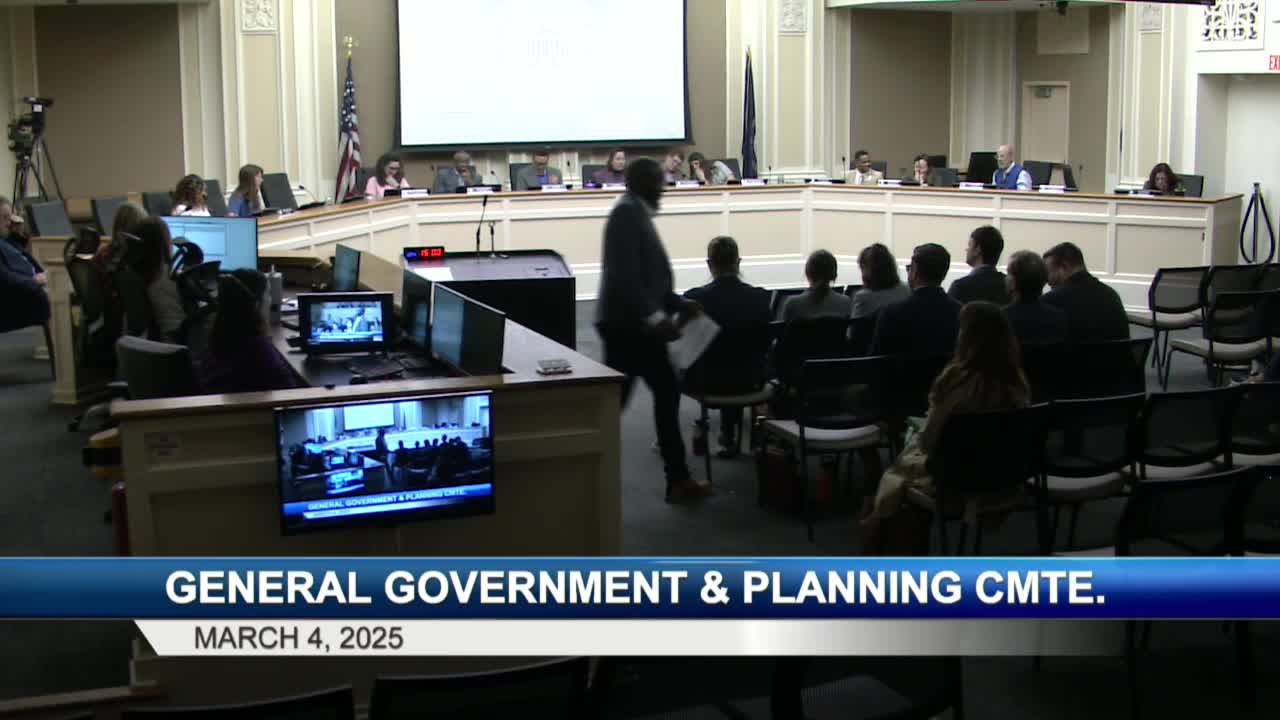
CivicLex and partner CivStart presented a 90‑page assessment March 4 showing uneven representation and functionality across Lexington’s 67 boards and commissions and offered 54 recommendations to improve recruitment, technology use, transparency and accessibility.
CivicLex and partner CivStart presented a 90‑page assessment March 4 on Lexington’s boards and commissions, identifying uneven representation, inconsistent processes and technology gaps and offering 54 recommendations to improve recruitment, functionality, accessibility and transparency.
Kit Anderson, deputy director of CivicLex, told the General Government and Planning Committee the study mapped 67 boards and commissions and that the consulting team attended 41 boards and commissions meetings, conducted surveys of members and staff and held 260 face‑to‑face public conversations and a high‑school focus group.
“We were trying to gather data and information about the boards and commissions that currently exist,” Anderson said, summarizing the project’s three main goals: inventorying boards, assessing what is and isn’t working, and proposing recommendations.
What the study found and recommended
- Representation gaps: The consultants reported that younger people, renters and Hispanic residents are underrepresented on boards and commissions. The presentation cited that about 16% of Lexington residents are aged 20–29 while only 2% of board members are in that age group; about 44% of housing units are renter‑occupied while 91% of board members reported being homeowners; Hispanic residents were reported as underrepresented compared with county demographics.
- Functionality and capacity: Observers noted inconsistent meeting processes, recordkeeping and staff support. The report highlights high vacancy rates on some boards, unclear roles and instances of boards operating outside their scope.
- Technology and accessibility: The report identified uneven technology use across boards (hybrid meetings, Google Drive, Granicus modules), recommended document management improvements and suggested digital‑literacy training for some members.
- Recommendations and next steps: CivicLex and CivStart proposed 54 recommendations across four priority areas (representation, functionality, accessibility and transparency). The teams will publish anonymized data and tailored “snapshot” reports for individual boards; staff will receive draft snapshots on March 10 and have two weeks to respond. Council member Lynch and Vice Mayor Wu said they will convene a council subcommittee to work through implementation steps.
Council response and implementation discussion
Council members welcomed the report. Council member Curtis, citing his own demographics (20–29 age bracket, renter and resident of a low‑representation district), urged actionable steps to build trust and broaden recruitment. CivicLex representatives said practical changes—clearer online information, consistent agendas and minutes, broadened recruitment outreach and improved meeting functionality—could increase trust and participation.
Vice Mayor Wu and Council member Lynch said the report’s peer‑city comparisons were useful and that the recommendations should be tailored to Lexington’s government operations. Staff described plans to release board snapshots for staff feedback (two‑week response window with a March 21 deadline) and to anonymize and publish the project’s underlying data to support implementation planning.
Ending: Council members said they will form a subcommittee to consider legislative, budgetary and staffing steps to implement the recommendations and to avoid shelving the report. CivicLex said the snapshots and published data will inform the subcommittee and future action.