
Avondale strategy panel spotlights workforce, housing and public‑private partnerships
Get AI-powered insights, summaries, and transcripts
Sign Up Free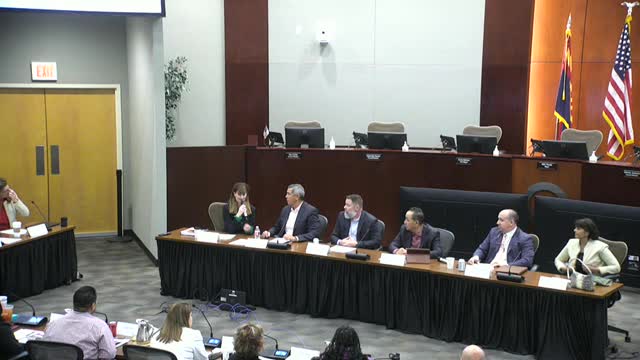
Summary
Business, education and development leaders told Avondale city officials that workforce training, targeted housing and stronger public‑private partnerships are central to sustaining growth and attracting employers to the city.
City business, education and development leaders urged Avondale city officials at a March 4 work session to sharpen efforts on workforce development, preserve design standards for infill and coordinate public‑private partnerships to attract employers.
The economic‑development and housing panel included executives from Estrella Mountain Community College, Brookfield Residential, the Southwest Valley Chamber of Commerce, Valley Partnership and Westmark. Panelists emphasized skills pipelines from high schools and the community college into construction trades, health care, cybersecurity and advanced manufacturing.
“Community college system is uniquely American,” said Jonathan Robles, interim associate vice president for community, alumni and foundation relations at Estrella Mountain Community College, stressing the college’s role in local workforce pipelines and its goal to increase completers from 1,053 to 1,300 by 2026. Robles said EMCC has about 10,000 students, a semester withdrawal rate that fell from 18% to 13%, and a three‑year fundraising campaign, Empower Ed, with a $500,000 college goal.
Eric Toon, senior vice president of land at Brookfield Residential, said a persistent shortage of skilled construction labor and supply‑chain pressures make public‑private workforce partnerships essential. “We need to figure out ways to entice our youth to enter into construction, engineering and planning,” Toon said.
Panelists and councilmembers discussed existing training programs and employer incentives. Sintra Hoffman, president and CEO of Westmark, pointed to the region’s workforce academies and a new regional data dashboard Westmark is developing with Arizona State University, which she said will help recruiters and economic developers make investment cases.
Chamber and business leaders said they can help match employers with training and internships. Jeff Campos, president of the Southwest Valley Chamber of Commerce, described the chamber’s role in connecting businesses and promoting workforce training across six West Valley cities.
Councilmembers asked panelists how to expand access to career pathways. Panelists recommended expanding internships and work‑based learning starting in middle and high school, using micro‑transit and school‑based training locations to address transportation barriers, and encouraging businesses to open their doors for classroom visits or virtual tours.
The panel also discussed land and development matters. Clark Princell, president and CEO of Valley Partnership, called for “certainty” around infrastructure and water to attract long‑term capital and said cost of financing is an issue for large projects. Brookfield described the company’s Alamar master‑planned community in Avondale and a public‑private park partnership that split costs with the city.
Councilmembers and staff said the strategic‑planning process will fold the panel input into the city’s economic goals and site readiness work. Councilmember White and others pressed the group for concrete steps to increase internship opportunities and earlier exposure to trades in elementary or middle school.
Panelists and councilmembers agreed on central themes: build stronger K‑20 to employer pipelines, protect design and quality in infill redevelopment, and use partnerships to speed training and site readiness. The session was part of the council’s two‑day strategic‑planning series.